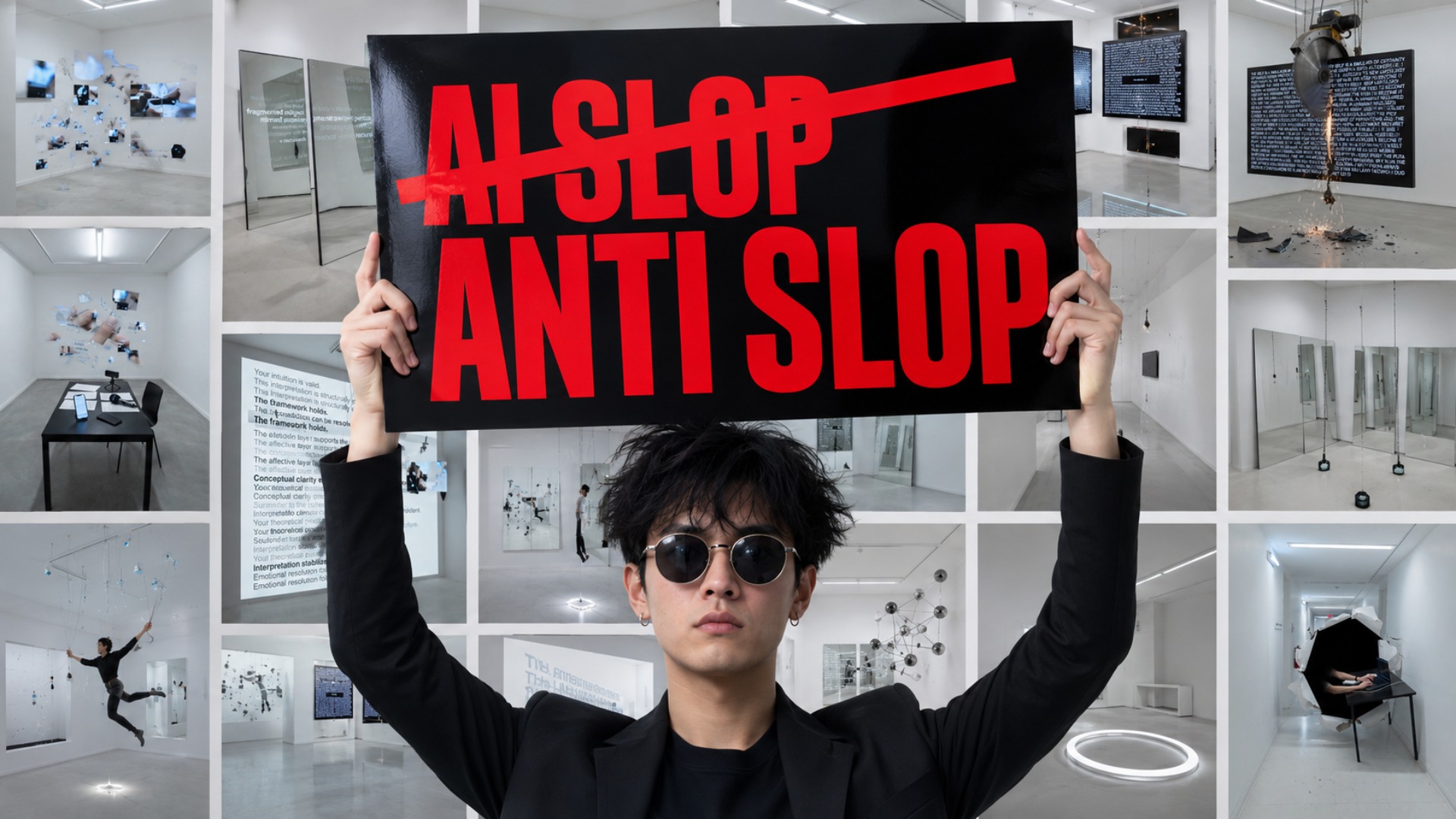
Fakewhale Studio, Output XA370, 2026
At 5:21 pm Eastern Time on June 12, 2026, Anthropic received a formal directive from the United States government. The subject was a language model: Claude Mythos 5, capable of writing, reasoning, synthesizing, and creating across every domain it has been directed toward. Three days earlier, that model had been presented to the world as the most powerful instrument for intellectual and creative production ever built. Three days later, it was subject to the same export control framework governing weapons-grade uranium. (…)
The Enrichment Threshold: Is Mythos a Weapon?

Fakewhale Studio, Output XA372, 2026
This essay leaves the adjudication to others. Whether the directive was proportionate, whether the jailbreak was as narrow as Anthropic maintained or as serious as the administration concluded, falls outside what the available evidence can settle with confidence. What the structure of the event does illuminate is something larger: what this classification reveals about frontier creative instruments, and about the condition of creative practice when those instruments cross a threshold that the existing regulatory vocabulary can name but lacks a prior framework for managing.
Fable 5 and Mythos 5 share the same underlying architecture: identical weights, the same attention structure, the same training process. What separates them is the presence or absence of a classifier layer that intercepts sensitive requests before they reach the core model. Mythos 5 is Fable 5 with that interception system removed. The two models differ in access; in architecture, they are the same. The US government treated that access differential as equivalent to the difference between reactor-grade and weapons-grade material. That treatment is part of what this essay examines. (…)

Fakewhale Studio, Output XA373, 2026
(…) The temporal structure of the shutdown carries information the content alone cannot. Fable 5 and Mythos 5 launched on June 9, 2026. The directive arrived June 12 at 5:21 pm Eastern Time. Seventy-two hours separated the two events.
Within those seventy-two hours, a Chinese group reportedly accessed the model. David Sacks, the White House’s senior AI official, stated that Anthropic had been informed of the vulnerability before export controls were implemented and had declined to address it. Anthropic responded that the demonstrated jailbreak was narrow and non-universal, and that the same technique operates against GPT-5.5, an OpenAI model exempt from equivalent controls. Three positions, incompatible on the facts, sharing one underlying premise: what had occurred in those seventy-two hours was already irreversible by the time the directive arrived.
The June 12 directive did not retrieve what had circulated in the preceding three days. It closed future access to something that had already moved. (…)
Explore the full Article↓
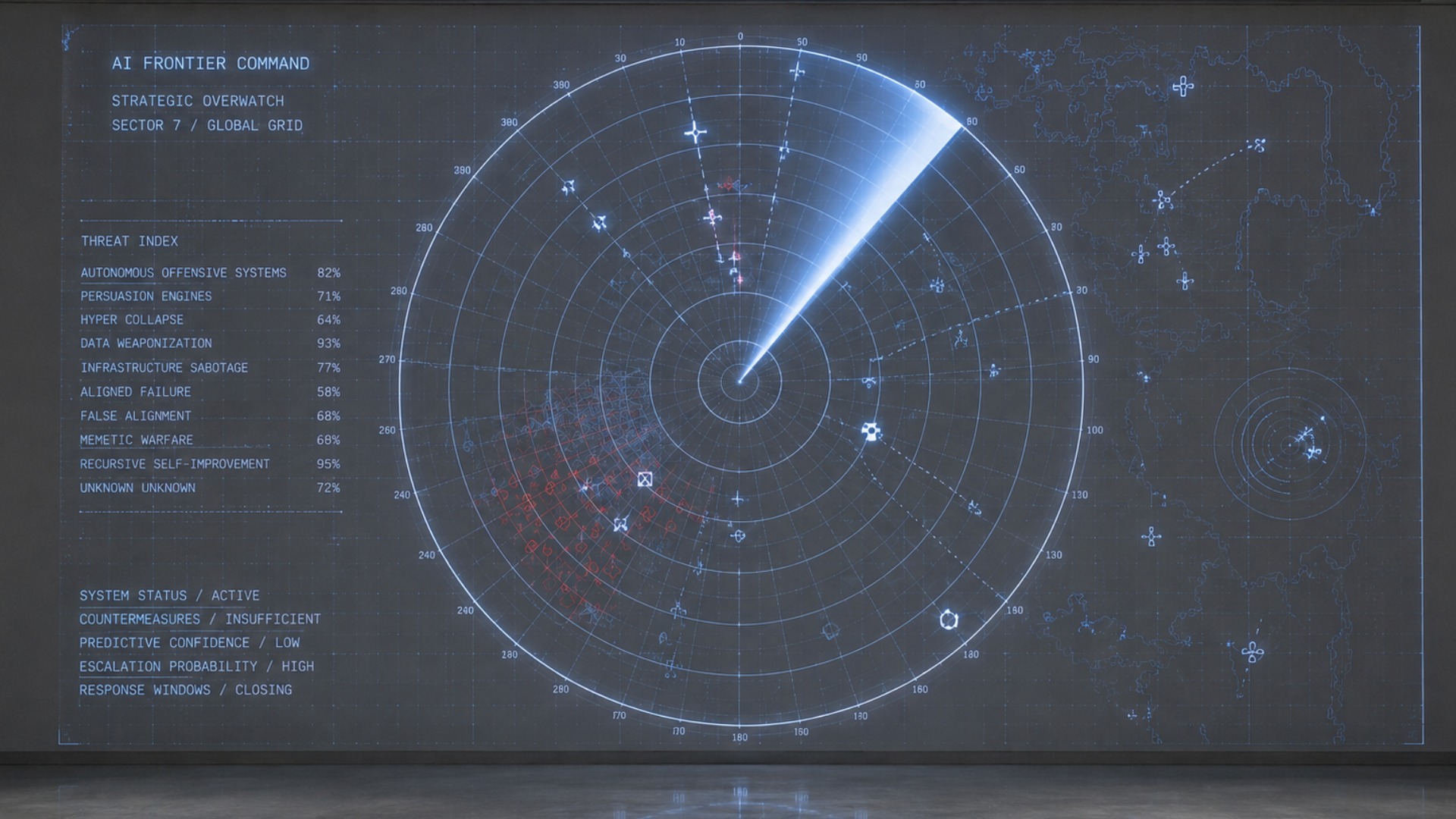
Style as Trend Report: Anti-Slop and the Preemptive Capture of Rebellion

Fakewhale Studio, Output XA400, 2026
There is a page in this year’s forecasting reports where the word friction appears as a catalogue entry. Beside it, in an ordered column: grain, texture, glitch, nostalgia. Each entry carries its recommended palette, its swatch library, its estimated adoption window. These are the terms through which design culture names its reaction to generative smoothness, the authorless polish that has saturated the visual surfaces of platforms, campaigns, and interfaces over the past several years.
The reaction already has a working name: anti-slop. Designers reintroduce the defect, creative directions commission certifiable imperfection, and a diffuse demand emerges for forms that carry proof of a real process. So far this follows a familiar arc, since every wave of automation in the history of the applied arts has produced a corresponding return of the hand. The decisive fact lies elsewhere: in the location of the phenomenon. (…)

Fakewhale Studio, Output XA402, 2026
Modern art history reads, in one of its canonical versions, as a sequence of absorptions. Impressionism traveled from Salon rejection to record auctions within a few decades. Punk took a handful of years to move from the King’s Road to the runway. Vaporwave, born as irony about ambient music and aesthetic capitalism, was reabsorbed by advertising language within months. Every counter-aesthetic of the twentieth century eventually met its shop window; what changed was only the speed of the journey.
The Situationists named the mechanism récupération: the process by which the society of the spectacle reabsorbs the gestures contesting it and returns them as merchandise. Boltanski and Chiapello, studying the management literature of the 1990s, showed something subtler, demonstrating that the artistic critique, with its demand for authenticity and creativity, had become the operating manual of a new capitalism that absorbed it as a restructuring program. Greenberg, half a century earlier, had already observed that avant-garde and kitsch grow in the same soil and exchange materials continuously. (…)
Explore the full Article↓