The Landing Has a Backstage, AI-generated, Fakewhale Studio, Output YA1303, 2026
A machine can finish its working life and begin a second life as an image. A queue can keep moving through our imagination even when nothing waits at its end. In both cases, the future is not simply approaching: someone has given it a shape, a direction, and a reason to be believed.
This issue follows the arrangements that make time persuasive. Figure turns the retirement of its F.02 robots into a final demonstration, while Roman Ondák’s empty queue exposes how readily anticipation borrows its purpose from other people. What comes next is already being staged in the present.
Below, predictive architecture and media obsolescence extend the question: who decides which futures become buildable, and which works remain readable? Between rehearsed endings, inherited expectations, and technical dependencies, duration becomes a matter of authorship, access, and control.
*Editorial introduction — Fakewhale Newsletter Issue #89.
Why Figure Sent Its F.02 Robots to a Furnace
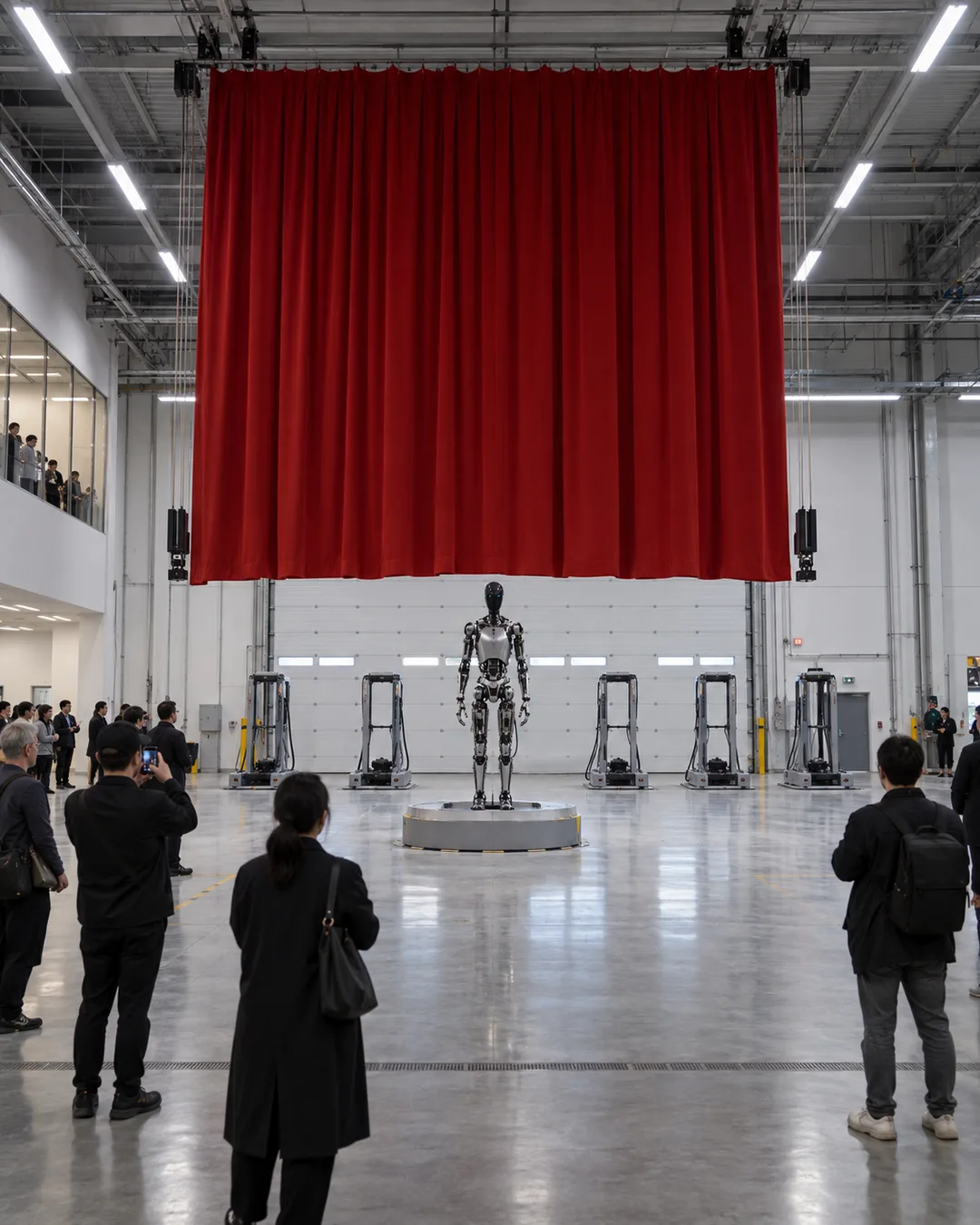
The Reveal of Retirement, AI-generated, Fakewhale Studio, Output YA1302, 2026
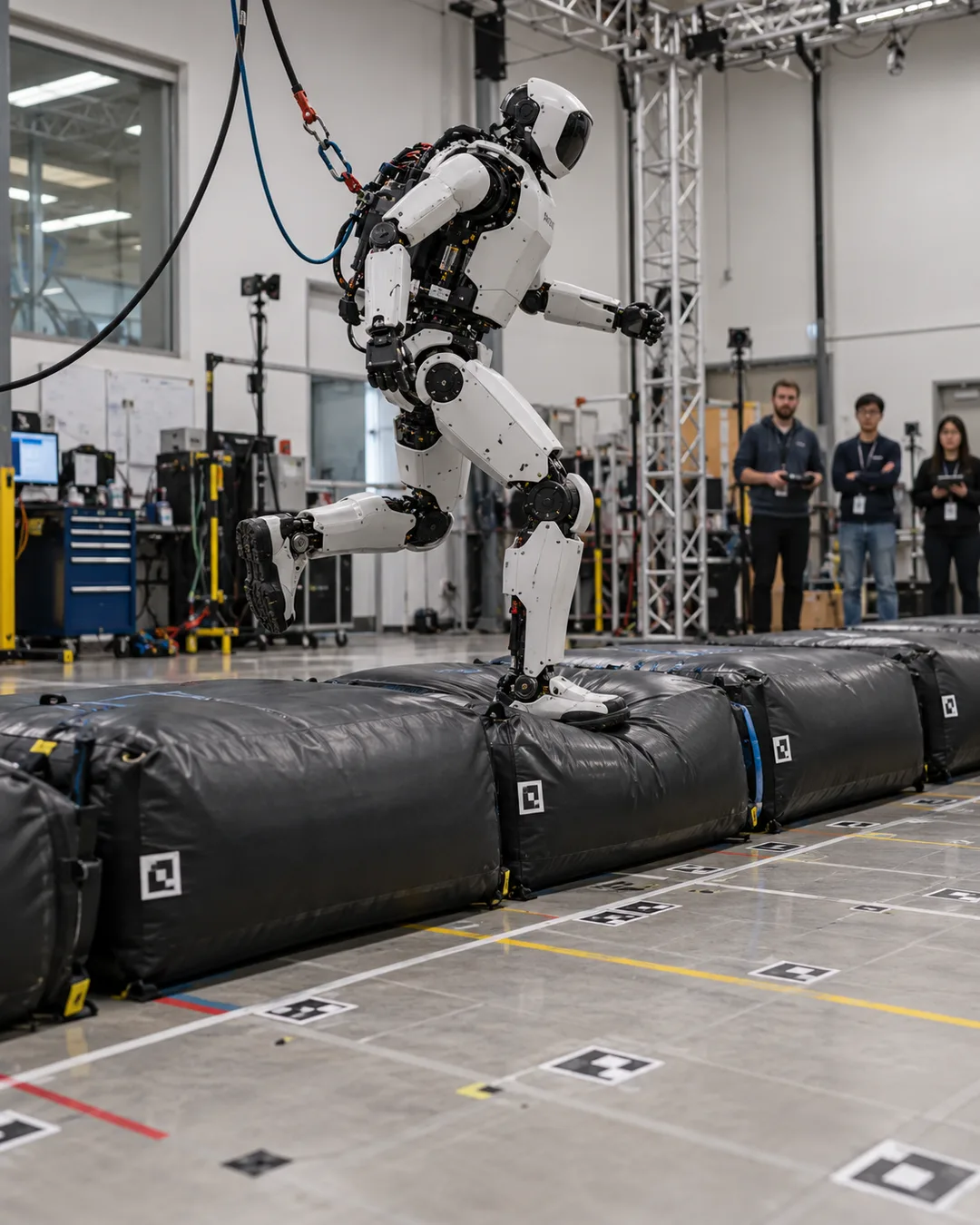
On September 30, Figure AI published a film showing its retired F.02 humanoid robots being sent into an electric arc furnace in Imatra, Finland. In the footage, one of the robots walks across the foundry floor and jumps into the furnace under its own control. Arnold Schwarzenegger appears alongside the operation, making the reference to Terminator 2 explicit.
Figure presents the decision in practical terms. As production of F.03 expands, maintaining the older fleet no longer makes operational sense. The company says that manually dismantling the robots would require staff who are now working on F.04, while destroying the machines also prevents proprietary hardware and engineering from leaving its control.
But Figure did not treat the retirement of F.02 as a routine disposal process. The robots were trained for the jump in simulation, the movement was rehearsed with airbags in San Jose, and the final destruction was turned into a filmed event. Most of the fleet has now been decommissioned, while a small number of units remain in storage. Metal recovered from the robots has also been returned to the United States, where it is being machined into a limited series of commemorative objects. (…)
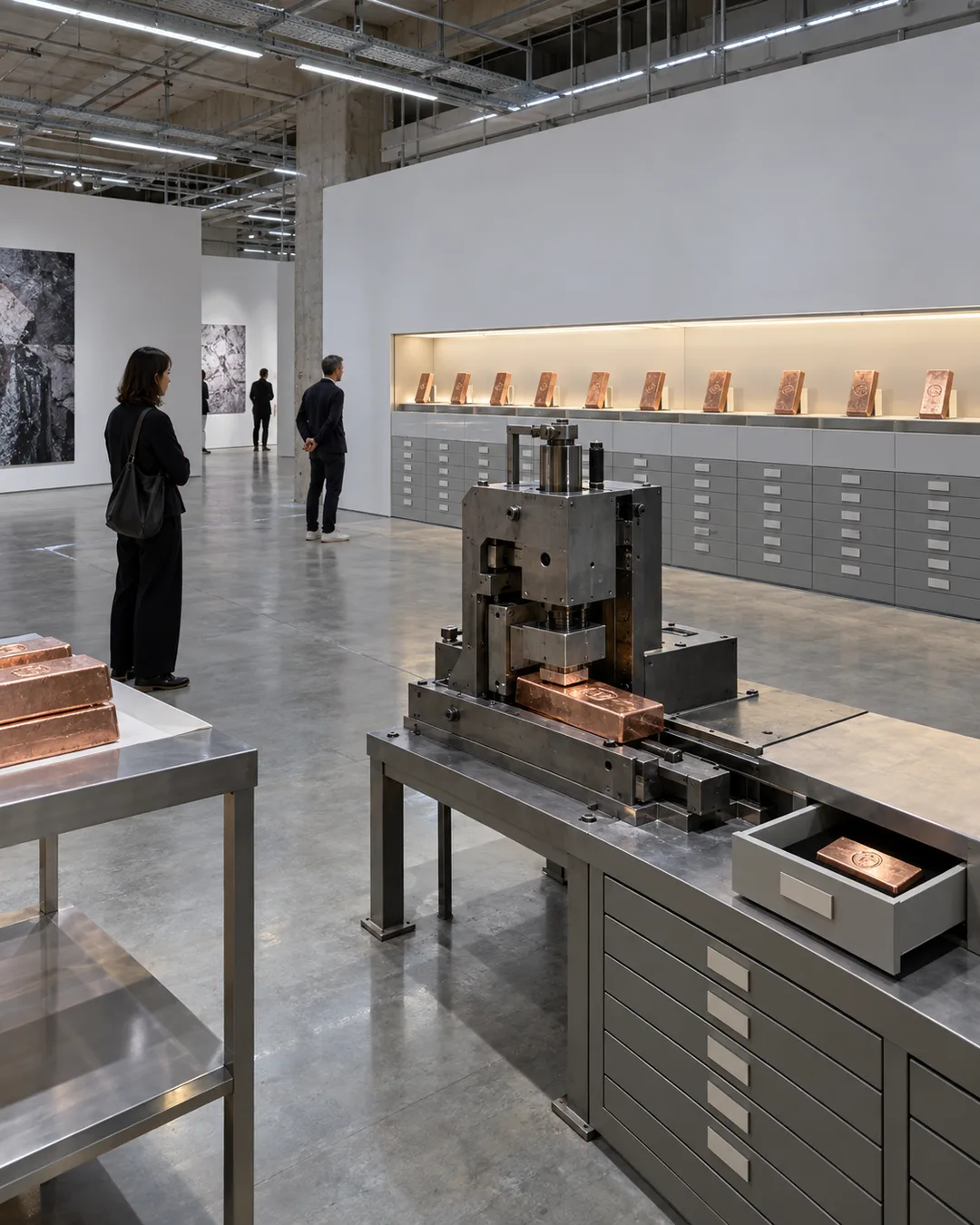
An Afterlife in Metal, AI-generated, Fakewhale Studio, Output YA1306, 2026
(…) What is notable is the sequence itself. Figure destroys the robots partly to prevent the original machines from remaining accessible, while preserving selected material from them in a new form. The functional object disappears, but part of its physical substance remains available as a record of the generation that was retired.
The furnace removes one version of F.02 from circulation and produces another version built from story. Hardware becomes feed-native imagery, the imagery becomes brand memory, and the bars offer a material keepsake of the same sequence. Figure’s stated aims include operational efficiency and protection of proprietary technology; the campaign adds a carefully composed public meaning. The unresolved tension sits in the artifact itself: the machine’s body vanishes as an inspectable system, while its ending becomes a durable and potentially valuable object. (…)
Explore the full Insight↓
What Are We Waiting For?
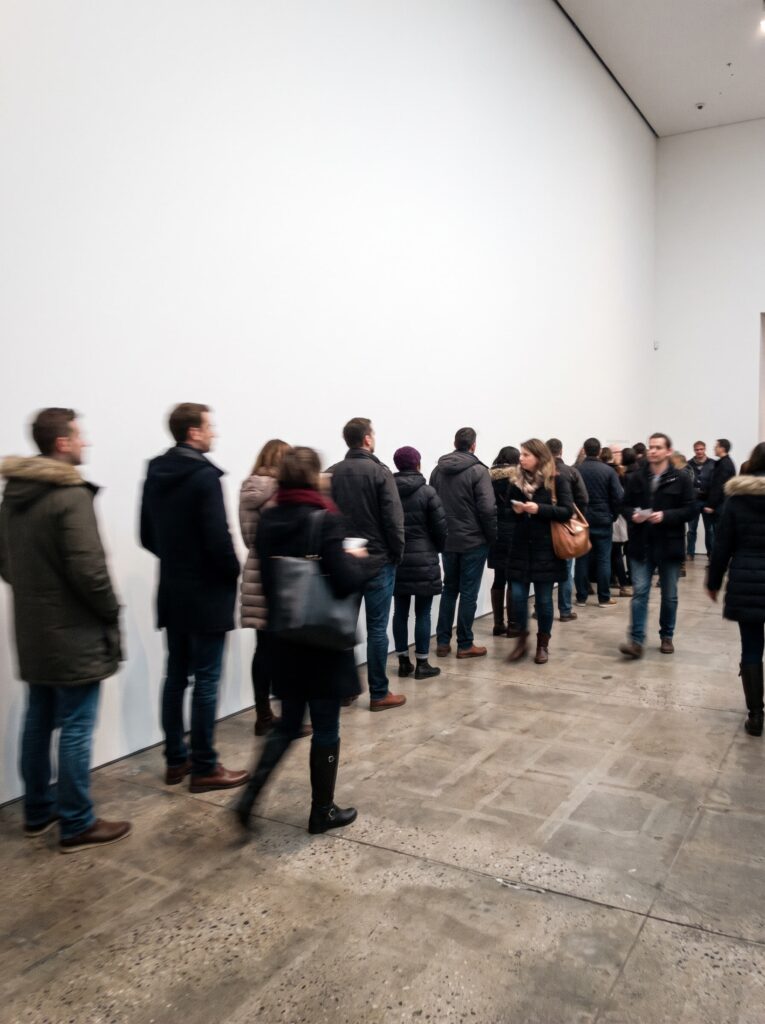
Fakewhale Studio, Output, YA1177, 2026
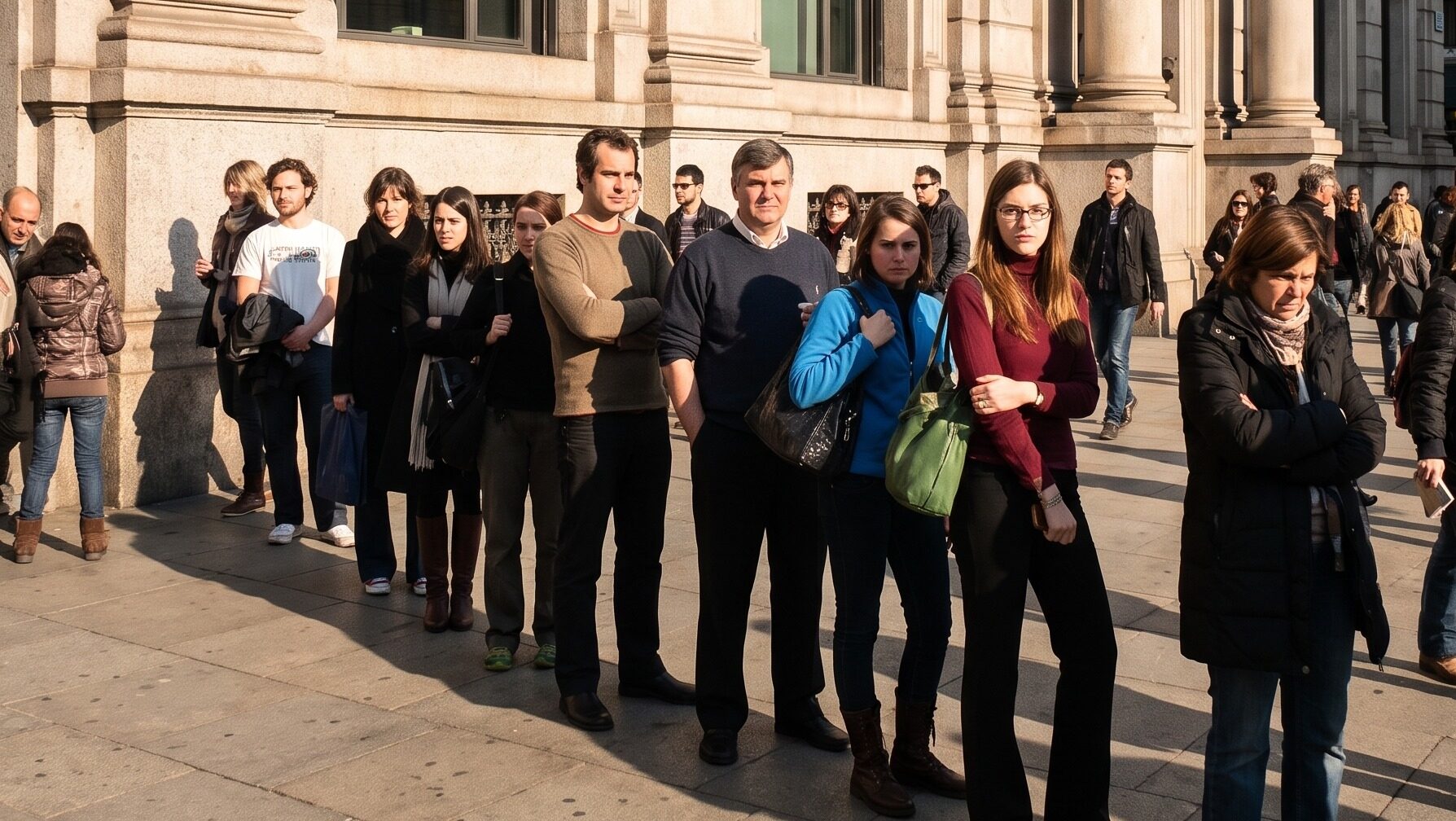
In 2003, Slovak artist Roman Ondák presented Good Feelings in Good Times, a performance built around a gesture as ordinary as it is enigmatic: standing in line. A group of people forms a queue outside a particular place, as though they were waiting to enter, buy something, or attend an event.
Yet there is nothing at the end of the line. No object, no ticket, no reward. Only more people waiting. Anyone passing by might stop, observe the queue, and wonder what is happening. Some might even join it, trusting the behaviour of others before knowing what has brought them there in the first place. (…)
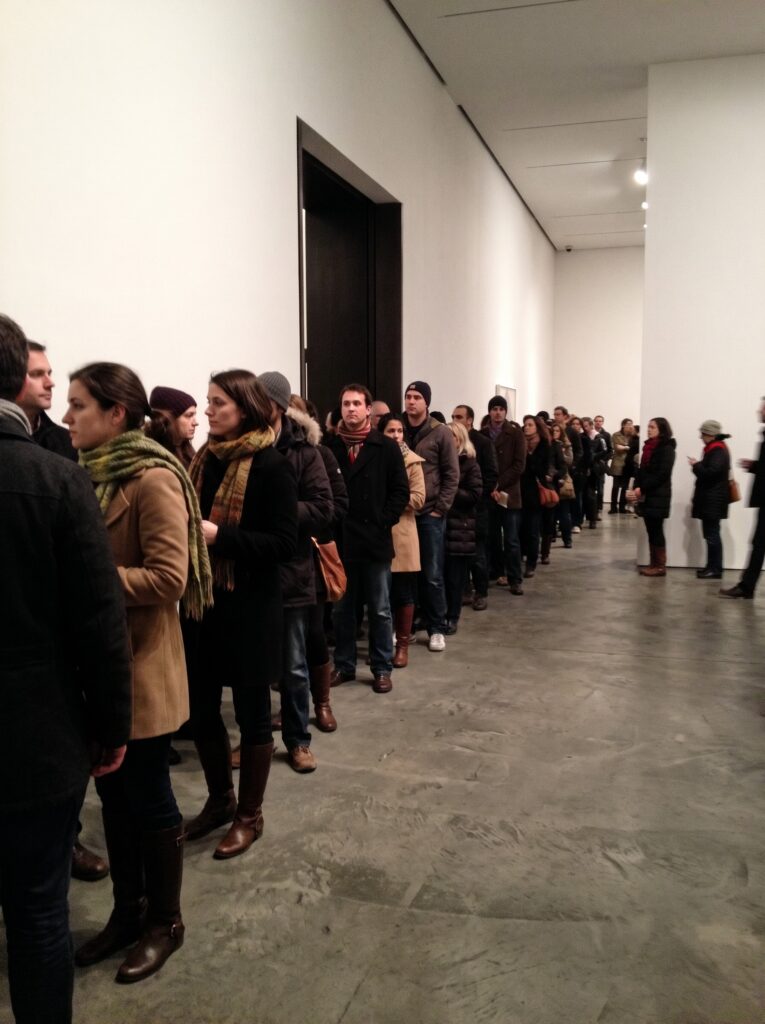
Fakewhale Studio, Output, YA1180, 2026
(…) The final question is not whether it is possible to live without waiting. It probably is not. The future inevitably forms part of the way we think about and construct our lives. The real question is when waiting stops being a temporary space and becomes a habit. Some forms of waiting are part of preparing for something: studying before an exam, working on a project, waiting for someone who is on their way.
In these cases, time has a direction. But there are also indefinite forms of waiting, in which the present is repeatedly sacrificed to some future version of ourselves. “I’ll be happy when…” It may be one of the most common formulas through which we organise our relationship with time. Almost anything can come after those words. When I have more money. When I change jobs. When I meet someone. When I leave. When I come back. When everything is finally sorted out. The problem is not wanting these things to happen. (…)
Explore the full Insight↓