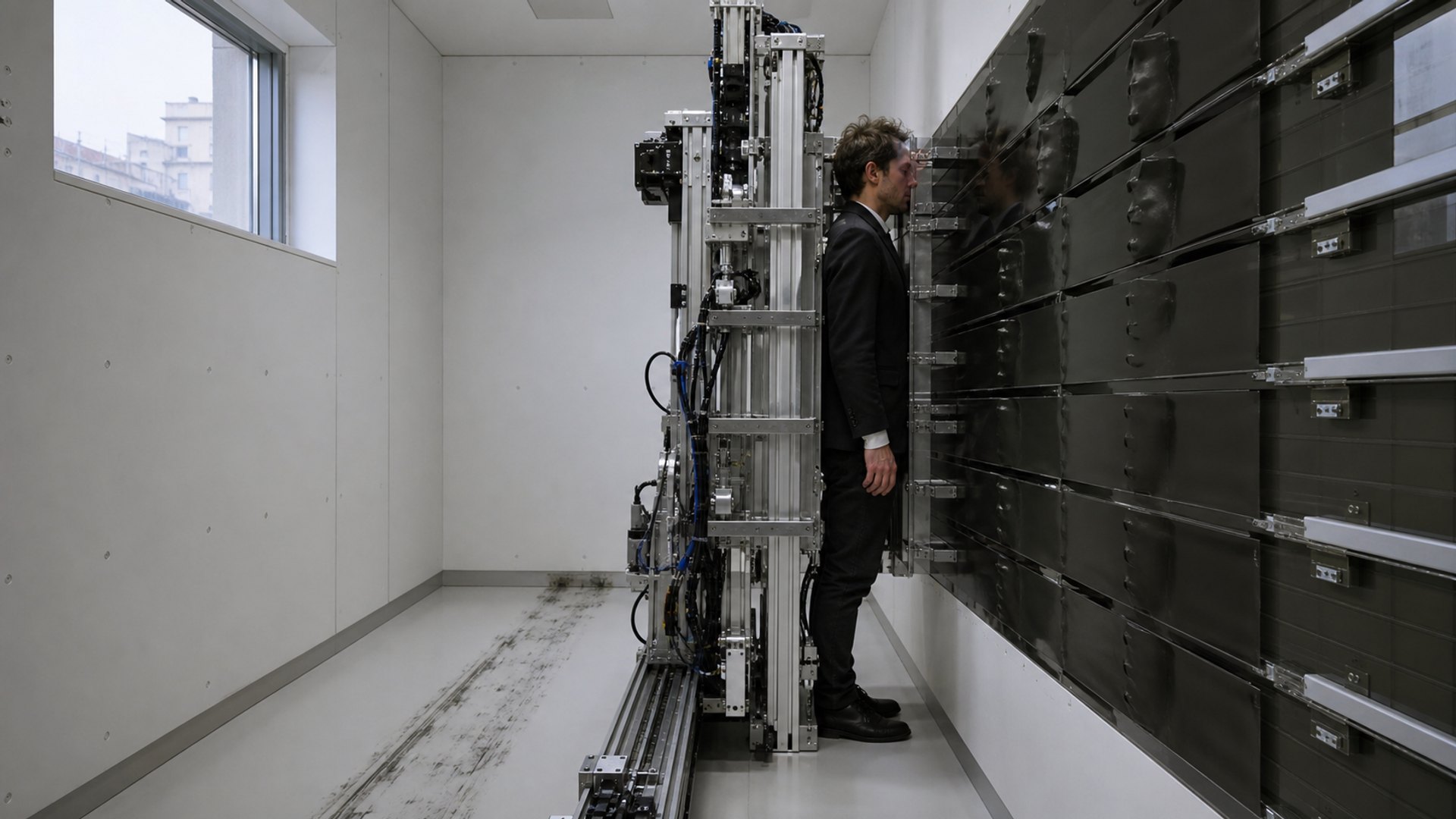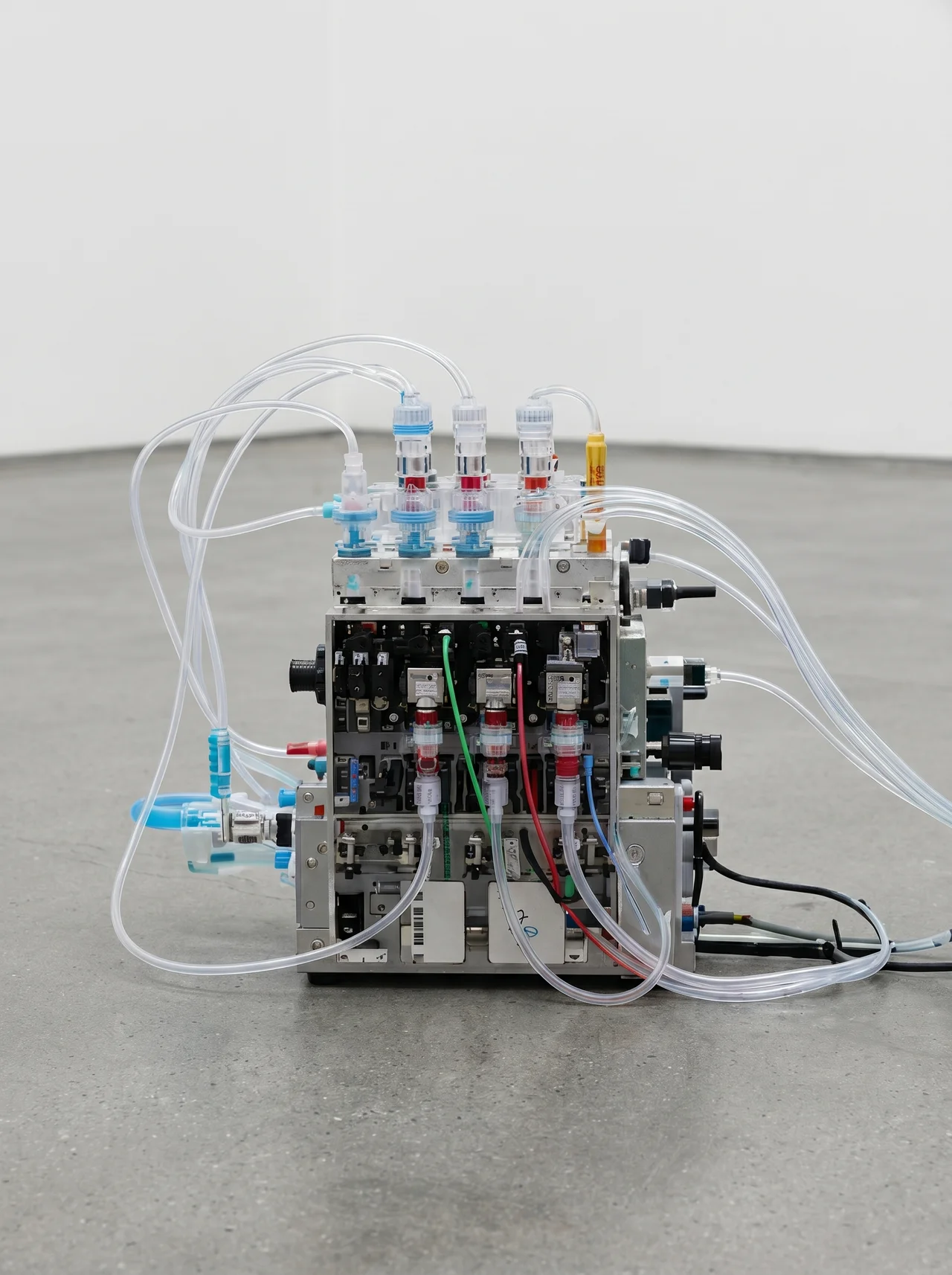
AI-generated image, Fakewhale Studio, Output YA1162, 2026
Fiction does not need to become real in order to change us. A character made of language or light can carry grief with more precision than the facts of a life because the distance of invention gives feeling somewhere else to appear. The work becomes an address: what belongs to us arrives wearing another face.
The art world can perform a parallel projection. Before an artist encounters a gallery, curator, or institution, these figures may already exist as an imagined center capable of confirming that a practice is real. Recognition feels external, yet its power begins inside the desire we have learned to direct toward it.
Across this issue, fiction, prestige, large-format cinema, and nanobiological speculation all act as perceptual devices. Each asks where experience is produced: in the object, in the apparatus that frames it, or in the body that receives it. Form becomes decisive when it reorganizes what we can feel, value, or recognize
Fiction Is Where Real Feelings Hide: You’re Not Crying for the Character. You’re Crying for Yourself
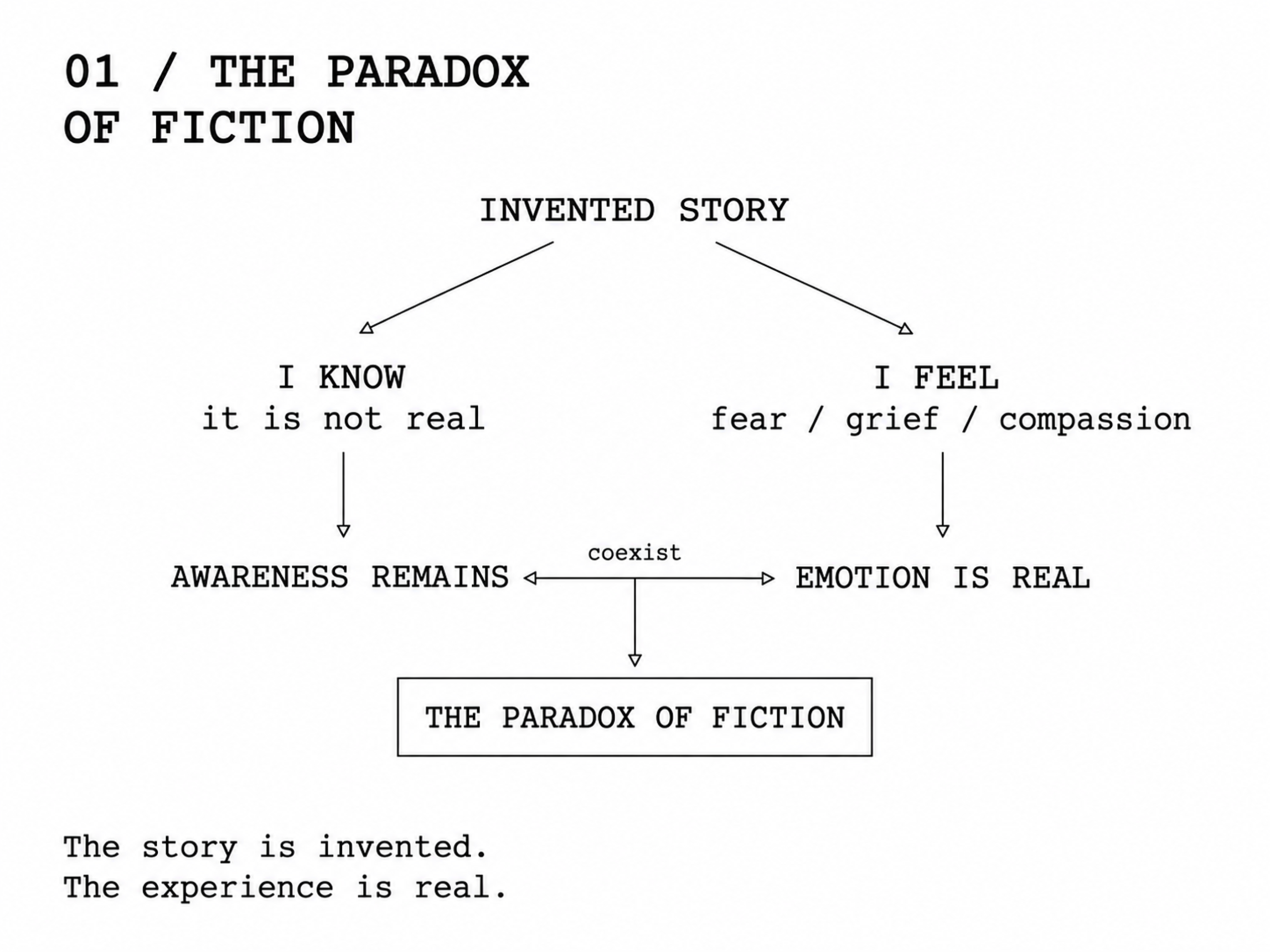
A fictional character can devastate us without ever having existed. This is not a momentary confusion between invention and reality: we remain aware of the page, the screen, the actor, and the authored ending. Yet the loss still arrives in the body, complete with tears, tension, and concern.
The paradox of fiction reveals that emotion does not inherit the ontological status of its object. A scene may be factually false while remaining emotionally exact. Stories work with recognizable structures—desire, shame, abandonment, hope—and need only touch one point in a viewer’s biography for an invented event to become personally true.
Fiction therefore operates through the distance it creates. A character can hold pain we cannot yet approach under our own name, giving a loss or fear a visible shape without forcing immediate confession. We may not be crying only for the character; we may be crying through them. (…)
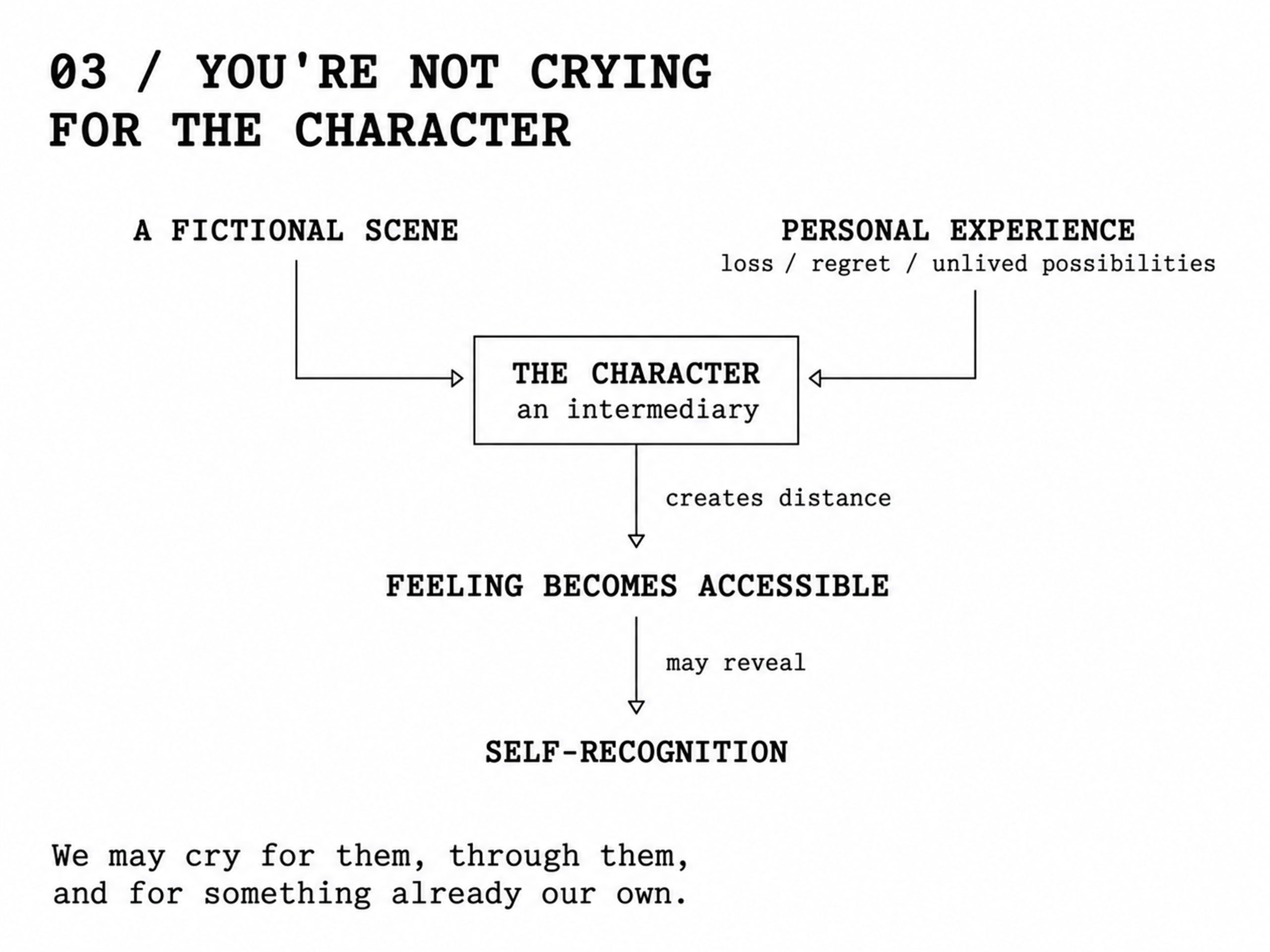
This distance is not emotional weakness but a form of access. The story provides a safe address for unresolved feeling: a farewell, an empty room, or a small gesture can release what ordinary language has kept suspended.
What fiction creates is not the feeling itself but the condition in which it can be recognized. The story supplies one half of the encounter; the reader or viewer brings the rest. An imaginary life can expose a real wound precisely because it does not demand that we call the wound ours. (…)
Explore the full Insight↓
The Power of Idealization: Why We Desire Recognition from the Art World

Gaze Mutualizes Authority, AI-generated, Fakewhale Studio, Output YA1123, 2026
Long before artists enter the art world, they often carry a mental picture of it: a center made of galleries, museums, curators, and histories that seems capable of seeing a body of work and confirming its place within culture. That imagined authority becomes the first interlocutor of the practice.
Idealization starts when this picture is granted a necessary function: to turn uncertain identity into a recognized position. It works without issuing a command. The artist begins to anticipate which forms, languages, and subjects will be legible to a gaze that has not yet arrived, allowing future recognition to shape present choices. (…)

Polish Becomes Harness, AI-generated, Fakewhale Studio, Output YA1119, 2026
Recognition is unevenly distributed: some gazes can change a work’s trajectory because institutions and communities have already recognized their power. This circular authority means legitimation does not simply identify value. It helps produce the conditions under which value becomes perceptible, predisposes attention, and makes one selection generate the next.
The risk appears when imagined future judgment starts shaping the work before it exists. To be understandable becomes confused with being recognizable, and discourse precedes the practice it should explain. Autonomy may begin not by escaping every system but by building other criteria of value—and accepting that a practice can remain meaningful before confirmation arrives. (…)
Explore the full Insight↓