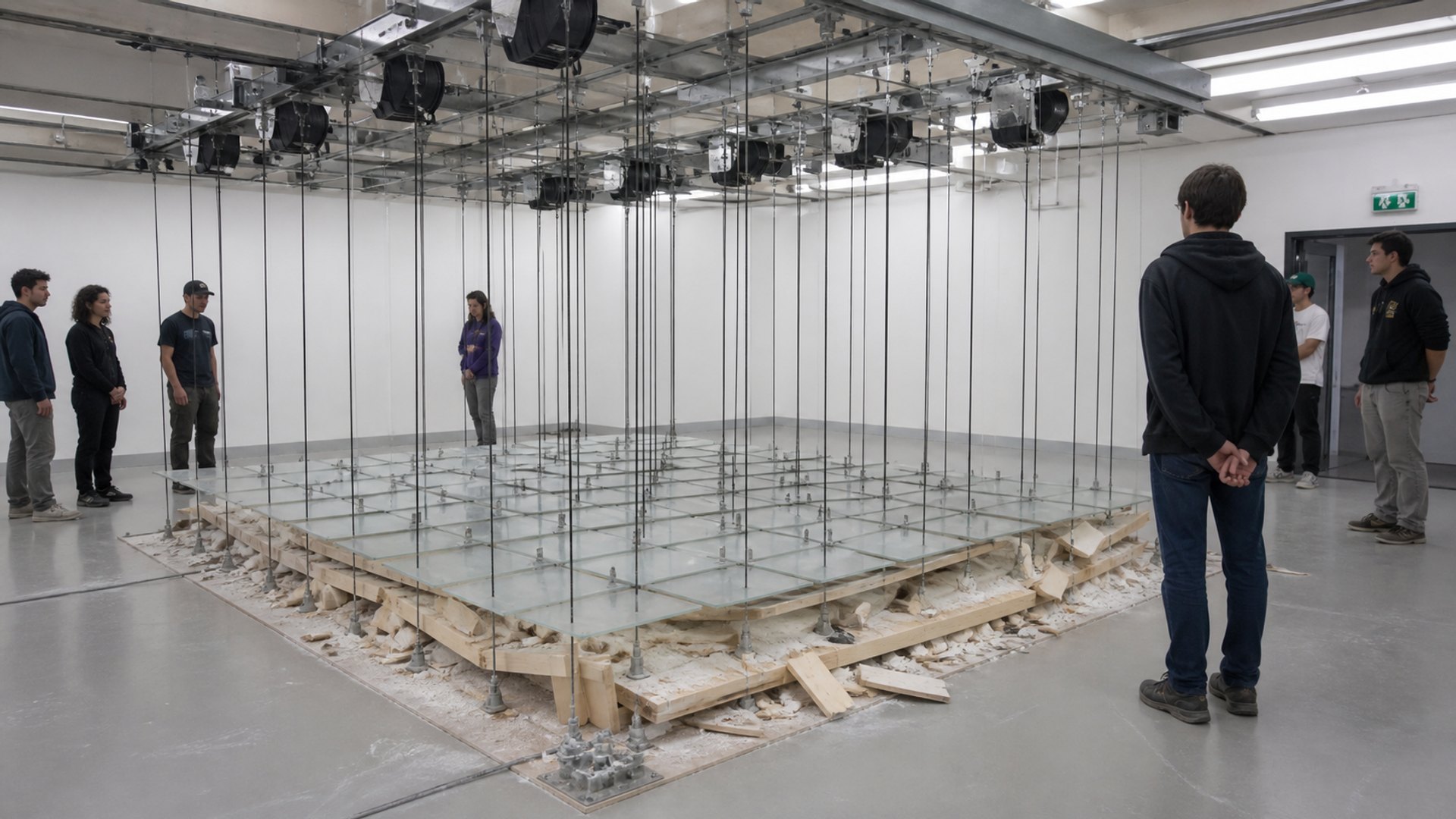
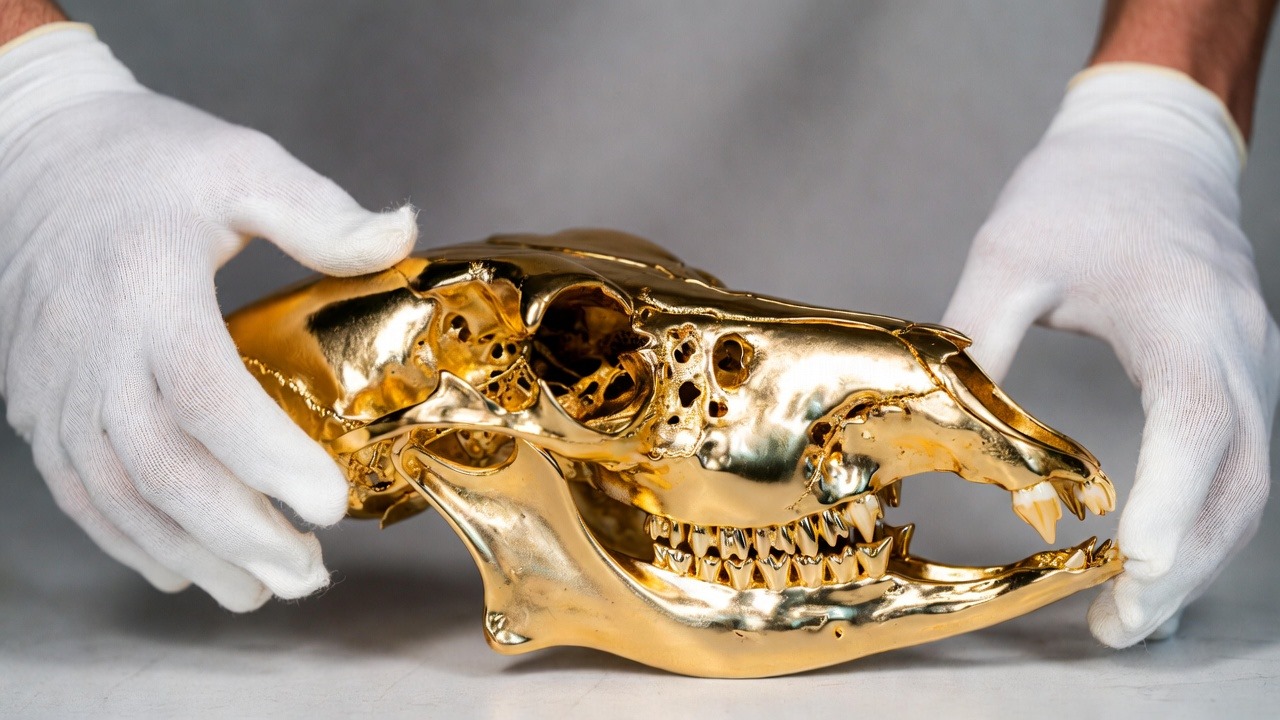
Fakewhale Studio, Output YA828, 2026
(…) In this regard, Heidegger, in Plato’s Doctrine of Truth (1942), argues that Plato marks a decisive shift in the meaning of truth: “As unconcealment (alētheia), truth was still a fundamental characteristic of Being. As correctness (orthotēs) of ‘seeing,’ however, it becomes a characteristic of the human relation to beings. (…) The beginning of metaphysics in Plato’s thought is at the same time the beginning of ‘humanism.’ (…)”
With Plato, truth comes to reside in the soul, which apprehends the Ideas, while the body perceives only the sensible world. In the Phaedo (66e–67a), Plato therefore links true knowledge to the purification of the soul from the body. From this emerges (…) the dualism between soul and body that would shape Western thought.
Thus, Plato moves from truth as manifestation to truth as an exact correspondence between Ideas and things. By subordinating sensory experience (…) to logic, truth becomes a conformity between seeing (ideîn) and what is seen (eîdos), between knower and known.
*Excerpt from Umberto Galimberti, The Misadventures of Truth, Giangiacomo Feltrinelli Editore, 2025.
Synthetic Vision and the Right to Appear

Weather Of The Archive, gen. Fakewhale Studio, Output YA829, 2026
A phone is lifted toward a face in bad light, and the preview corrects the scene before the shutter has any claim on it. Skin enters a pipeline of exposure balancing, denoising, segmentation, compression, ranking, and memory; the image arrives already trained by other images, already bent toward a mean that presents itself as technical care. The device performs a small civic act: it decides which surfaces receive clarity, which gestures receive legibility, which bodies travel fluently through the interface.
Synthetic vision begins as an atmospheric condition inside the feed. A generative model receives the world through distribution, and distribution arrives as a political weather system: recurrent poses, commercial faces, optimized interiors, spectacular ruins, touristic horizons, compliant bodies, readable moods. The model learns the temperature of appearance before it learns any object, because the archive stores previous regimes of attention as visual climate.
The training set operates as a climate machine. Images enter as files, captions, alt text, tags, rankings, watermarks, crops, popularity signals, and platform residues; the archive becomes an environment that trains perception through accumulation. Before synthesis produces a face or a street, it has absorbed the atmospheric pressure of prior visibility, the inherited alignment of commercial photography, stock imagery, surveillance aesthetics, editorial conventions, and social feed desire. (…)

Nearest Neighbor Wear, gen. Fakewhale Studio, Output YA833, 2026
(…) The body enters the model as a bundle of recurrent traits. Pose, skin tone, age markers, gender signals, facial symmetry, gesture, clothing, disability, adornment, and affect become variables distributed across latent space. The system grants fluency to the body where recurring patterns provide a path, and this fluency presents itself as realism.
Similarity functions as an operating system. Classification groups images, moderation filters them, search retrieves them, ranking orders them, advertising prices them, and generation recombines them. Recognition becomes the hinge between visual form and economic conduct, binding the image to measurable behavior. (…)
Explore the full Insight↓
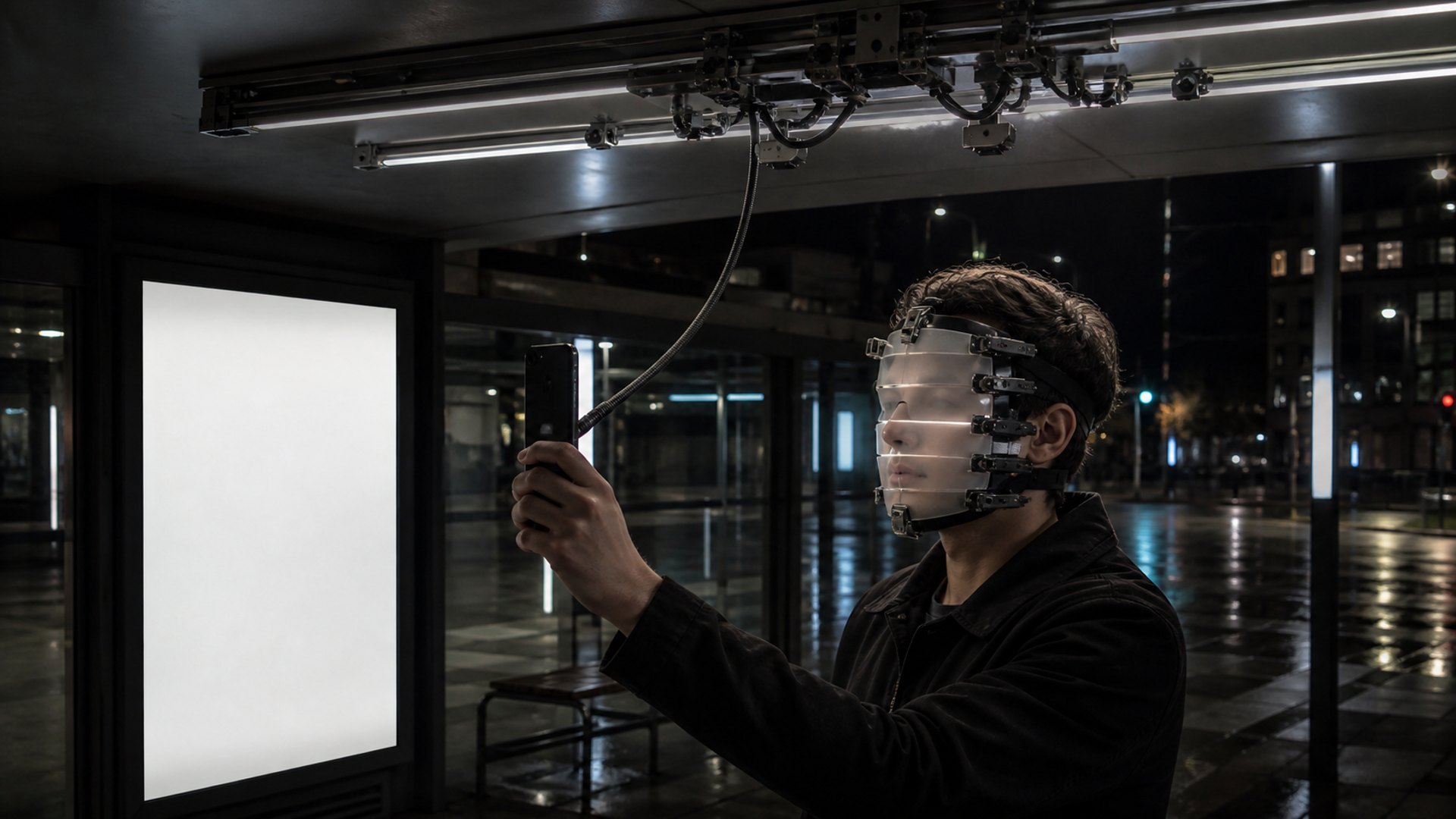
Predictive Sensing of Interfaces: Anticipation, Desire, and Programmed Proximity

Gesture Already Routed, gen. Fakewhale Studio, Output YA834, 2026
A thumb pauses above the glass before the image arrives. The interface has already narrowed the gesture into a corridor of likely continuations, and attention enters that corridor as if entering its own inclination. The device appears passive because its calculation has moved upstream, into the interval where perception becomes readiness and readiness becomes action. Feed logic begins there: in the prehistory of the touch, where habit is converted into addressable probability.
Prediction gives form to proximity. The platform learns the distance between a face, a phrase, a purchase, a pause, a return, then presents that distance as intimacy. What appears as personal relevance emerges from a distributional architecture that treats desire as a pattern of recurrence, a tempo of exposure, a measurable susceptibility to adjacency. The image reaches the subject already carrying a small social contract: remain near what resembles the next version of yourself. (…)

Present With Direction, gen. Fakewhale Studio, Output YA837, 2026
(…) The screen wakes before the hand completes its approach. A sensor registers orientation, a lock screen arranges relevance, a cluster of icons resumes an unfinished sequence. The gesture enters a field already prepared by custody of prior behavior, where every return is treated as evidence and every hesitation as an index of potential continuation.
Hesitation has texture. It gathers fatigue, doubt, shame, distraction, ambivalence, curiosity, refusal, and boredom into a temporality that resists immediate translation into action. The platform treats this texture as data, yet the delay also reveals the space where desire has yet to accept its assigned form. (…)
Explore the full Insight↓