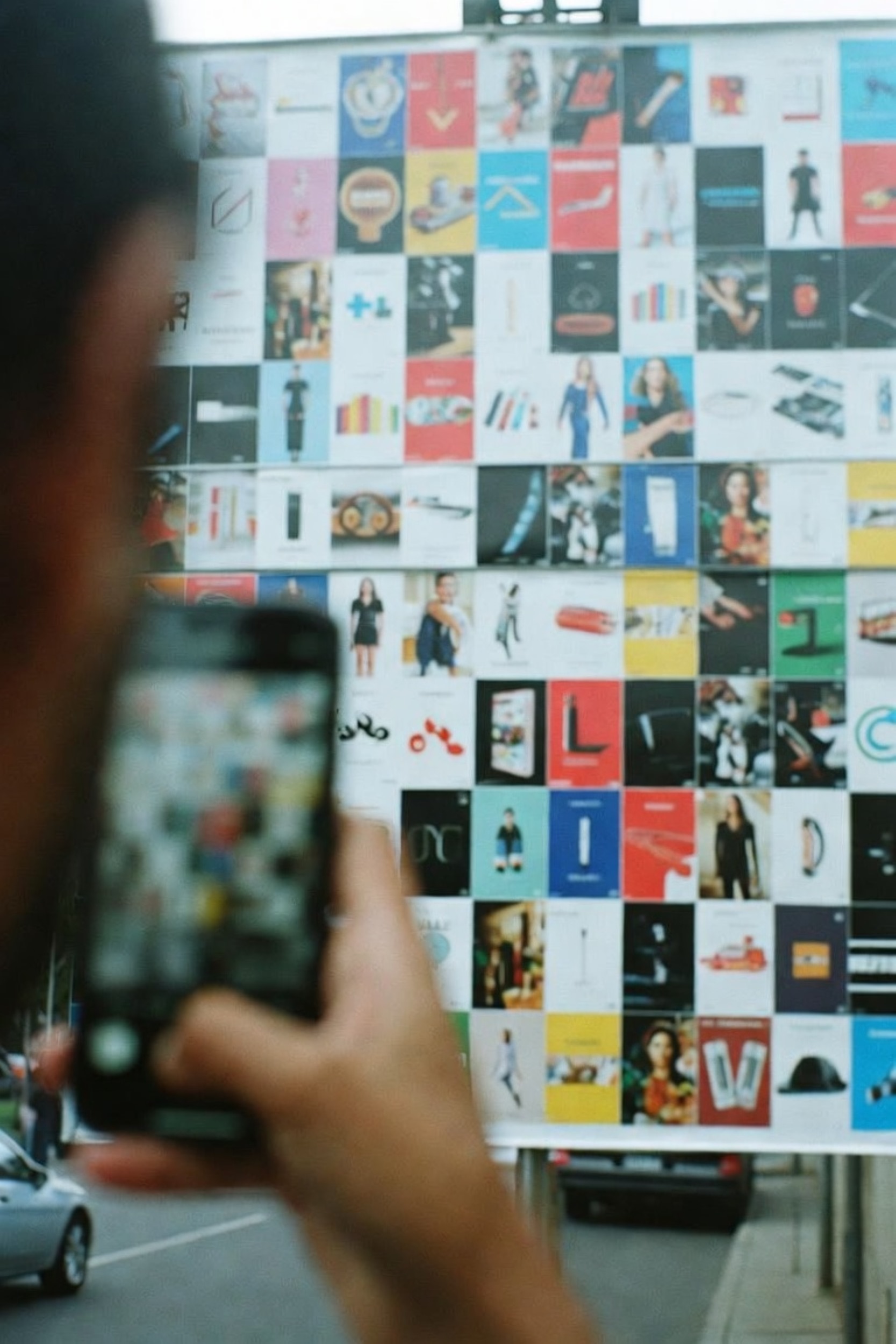
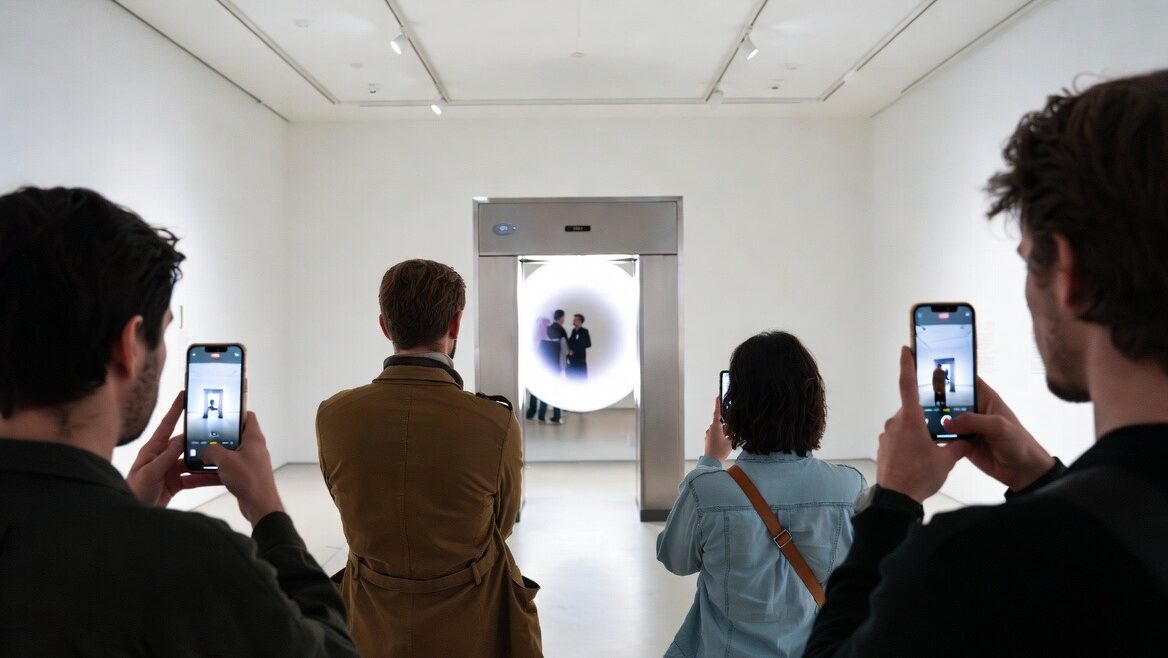
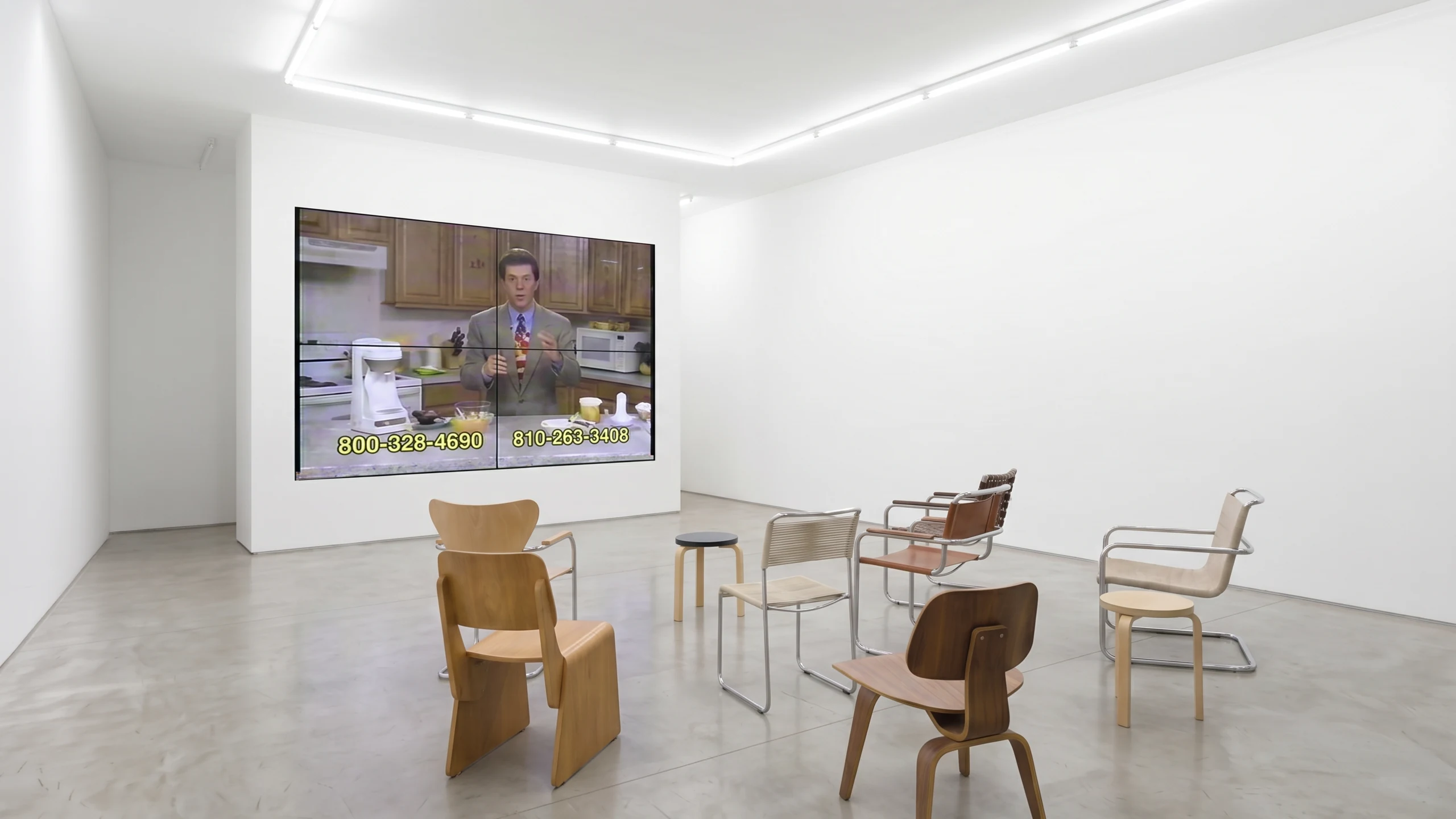
Fakewhale Studio, Output XA427, 2026
A signed urinal, a canvas painted almost uniformly black, four minutes and thirty-three seconds of silence, a block of ice pushed through a city for nine hours until it vanished. Attempts spread across a century, each aiming at the same impossible feat: a work that means nothing. All of them failed, and failed in the loudest possible way, because each gesture became one of the most discussed, most interpreted, most meaning-laden objects in the history of art. Whoever went looking for silence produced the most lasting noise.
The paradox holds exactly, with no way around it. In art, the attempt to say nothing is the thing that says the most, and the will to empty a work fills it to the brim. Every time an artist declared the intention to eliminate meaning, taste, emotion, narrative, the world answered with libraries of interpretation, and the emptied object was refilled by other hands, with a punctuality that starts to resemble a law. (…)
Can a Work of Art Mean Nothing? Anatomy of a Necessary Failure

Literary theory holds a name for the limit point of this dynamic: the zero degree. The idea of a white writing, neutral, withdrawn from every style and every connotation, a writing that merely states without coloring what it states. But the same thinking that formulated the hypothesis pronounced its own sentence against it: the zero degree of writing is still writing, neutrality immediately becomes a recognizable style, the absence of manner is the most refined of manners. The flight from meaning produces a new meaning, that of the flight itself, and the circle closes behind whoever believed they had stepped outside it. (…)

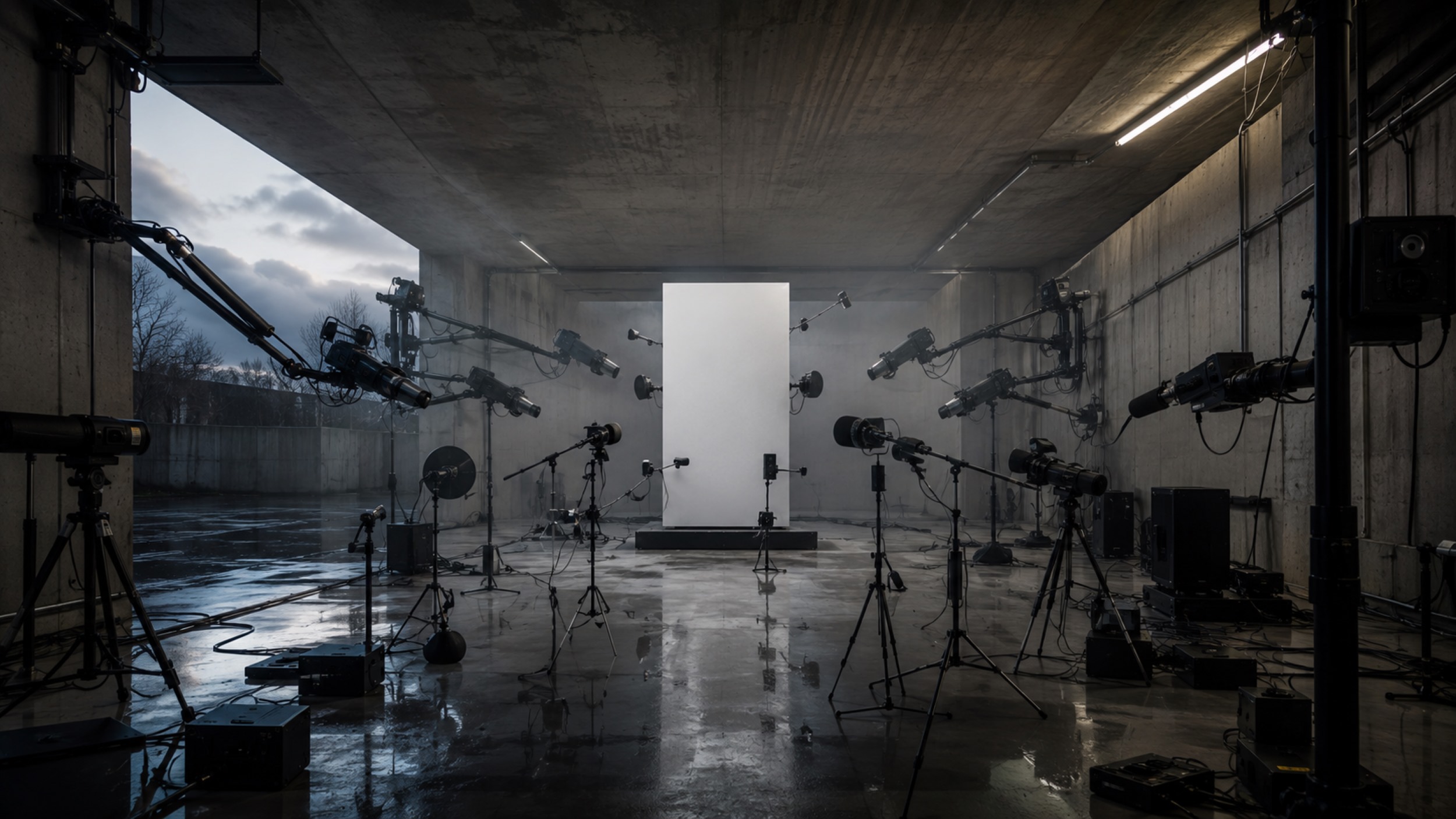
Fakewhale Studio, Output XA430, 2026
(…) The first strategy is indifference. If meaning is born from taste, from expressive choice, from intention, then one can attempt to choose without choosing: take an ordinary industrial object, anonymous, selected precisely because it neither attracts nor repels, and deposit it inside the field of art without adding anything to it. This is the logic of the readymade, and its inventor was explicit about the anesthetic nature of the operation: the object had to be chosen in a state of total visual indifference, free of both attraction and repulsion. The outcome is well known. The signed urinal became the most discussed work of the twentieth century, the one generating more pages of commentary, more meaning per square inch, than almost any painted masterpiece. Indifference, put on display, became the most eloquent gesture of the century.
Apparatus and gaze, then, close the pincers from both sides. Context speaks when the object falls silent, and the viewer completes what the context leaves open. No point in the circuit allows meaning to be stopped, because meaning is never a property of the object that can be removed, it is an event occurring in the encounter, and the encounter is the only condition under which a work exists at all. The opening question now stands ready for its answer, and it is a strange answer, a no worth more than most yeses. (…)
Explore the full Insight↓
From the Expressive Image to the Functional Image: Art as Raw Material for the Attention Economy

Fakewhale Studio, Output XA489, 2026
The thumb descends before the image has been understood. A figure appears, holds the gaze for a fraction of a second, and gives way to a face, a room, an artwork, a body, an advertisement. The sequence offers no perceptible end. Each image promises that the next might be more exact, more surprising, or closer to a desire the ranking system has yet to disclose.
A functional image is constructed principally to obtain a measurable effect: stopping scroll, generating a click, extending watch time, provoking reaction, producing a share, or directing behaviour. Function precedes meaning because it governs form before interpretation begins. The image enters distribution protocols with an assigned task. (…)

Fakewhale Studio, Output XA487, 2026
(…) An artwork enters the feed through reproduction. It loses scale, matter, viewing distance, ambient light, installation duration, and relation to neighbouring works. Such loss belongs to every act of documentation, but the platform adds another stage: reproduction becomes an interchangeable item within a personalised ranking sequence.
Defending expressive images does not turn opacity, slowness, or inefficiency into automatic virtues. It preserves the possibility that form may follow its own problem instead of the platform’s measurement conditions. Some images need to capture; others must retain the capacity to repel, wait, confuse, or remain marginal. (…)
Explore the full Insight↓