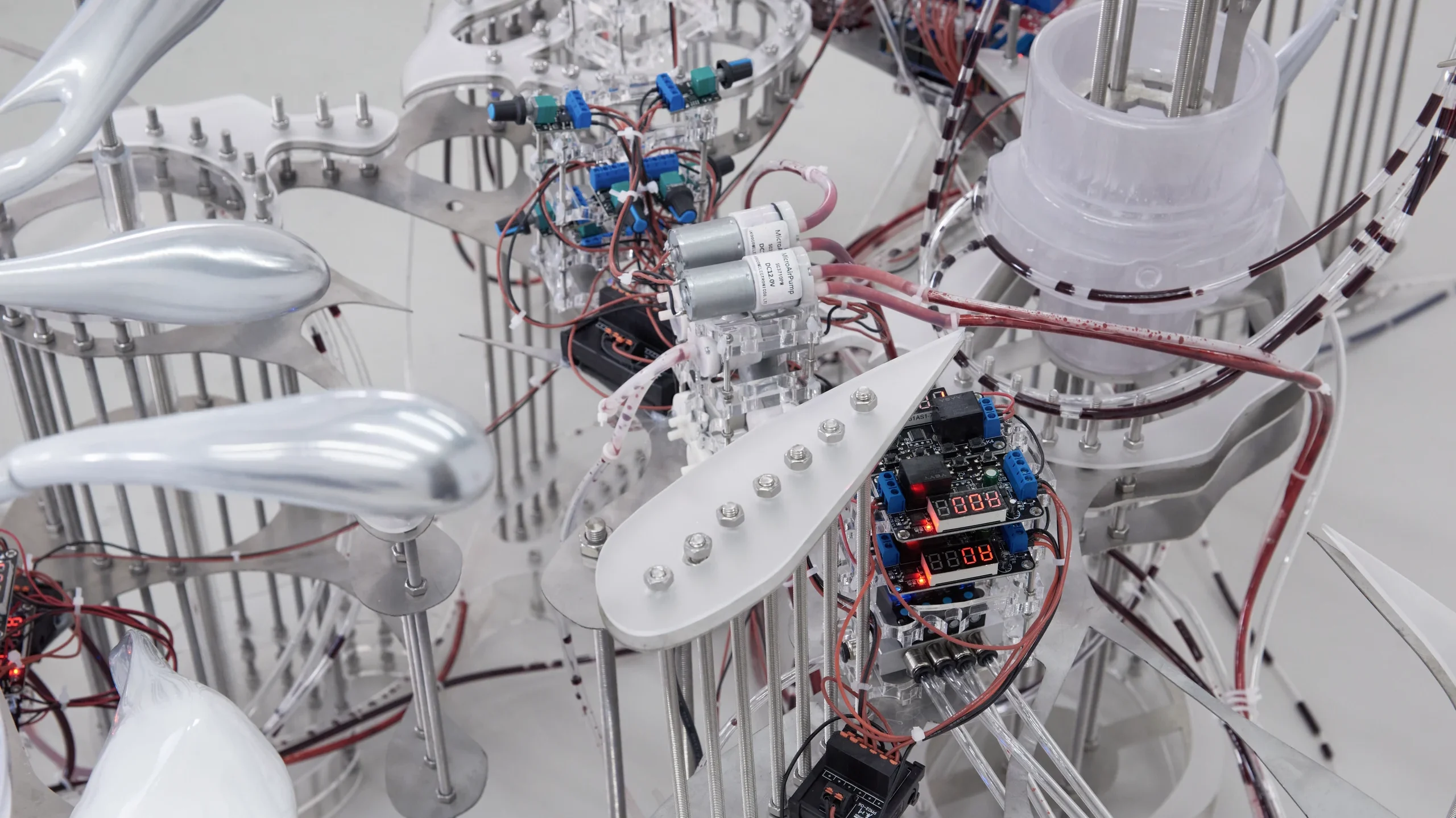
Fakewhale Studio, Output XA416, 2026
A finger stops over an image for less than two seconds; the pause feels empty, barely an event, yet the interface records its duration, compares it with previous pauses, and returns it to a ranking system already preparing the next image. The gesture belongs to the viewer; its residue belongs to an infrastructure the viewer will never see in full.
Alienation now enters through this minimal interval. It appears inside the distance between an action and the system that acquires it, between the pleasure of looking and the dataset produced by that pleasure. Connection supplies the surface, extraction supplies the metabolism, and algorithmic sorting converts a private hesitation into an operational signal through which we participate continuously while the conditions of participation withdraw from view. (…)

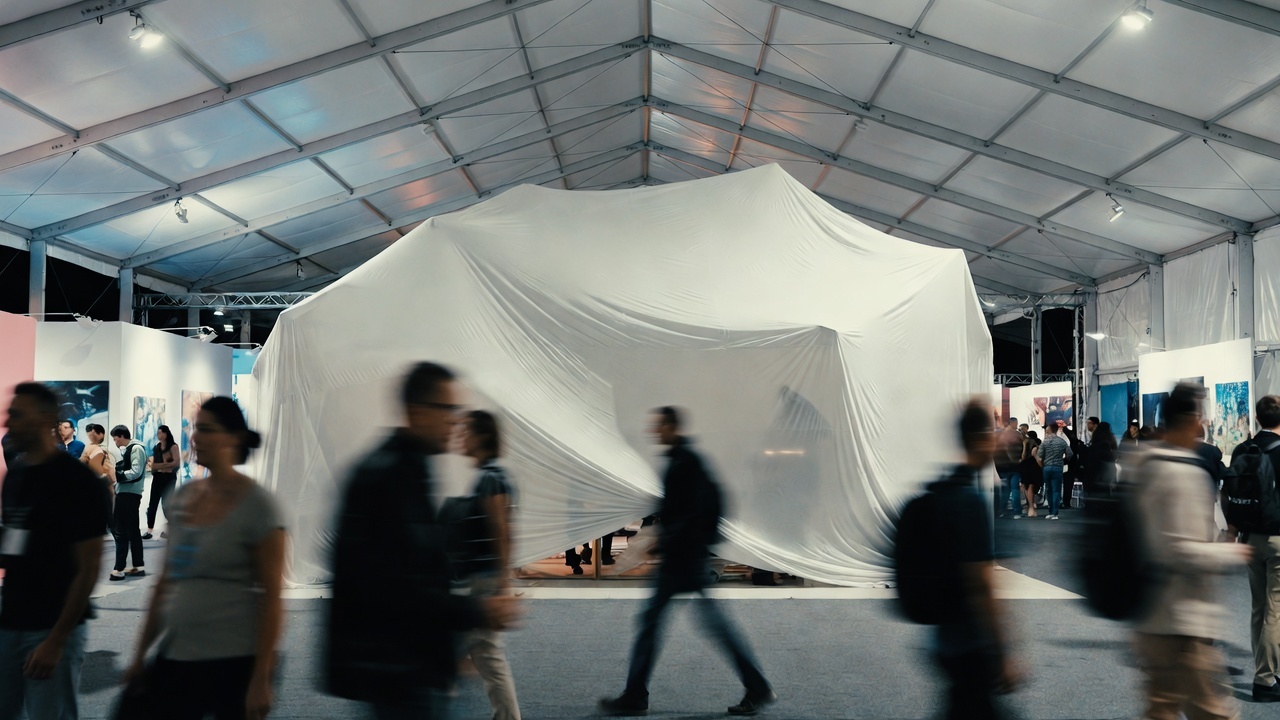
Fakewhale Studio, Output XA486, 2026
A finger stops over an image for less than two seconds; the pause feels empty, barely an event, yet the interface records its duration, compares it with previous pauses, and returns it to a ranking system already preparing the next image. The gesture belongs to the viewer; its residue belongs to an infrastructure the viewer will never see in full.
Alienation now enters through this minimal interval. It appears inside the distance between an action and the system that acquires it, between the pleasure of looking and the dataset produced by that pleasure. Connection supplies the surface, extraction supplies the metabolism, and algorithmic sorting converts a private hesitation into an operational signal through which we participate continuously while the conditions of participation withdraw from view.
Marx described this fracture through the factory, the wage, and the commodity; his worker encountered human activity in a foreign form: as an object owned elsewhere, a rhythm imposed by machinery, a value accumulated by another subject. The platform modifies every term while preserving the separation as the factory expands into device ecology, the work shift dissolves into notification rhythm, and the product becomes a behavioral profile assembled from ordinary life. (…)

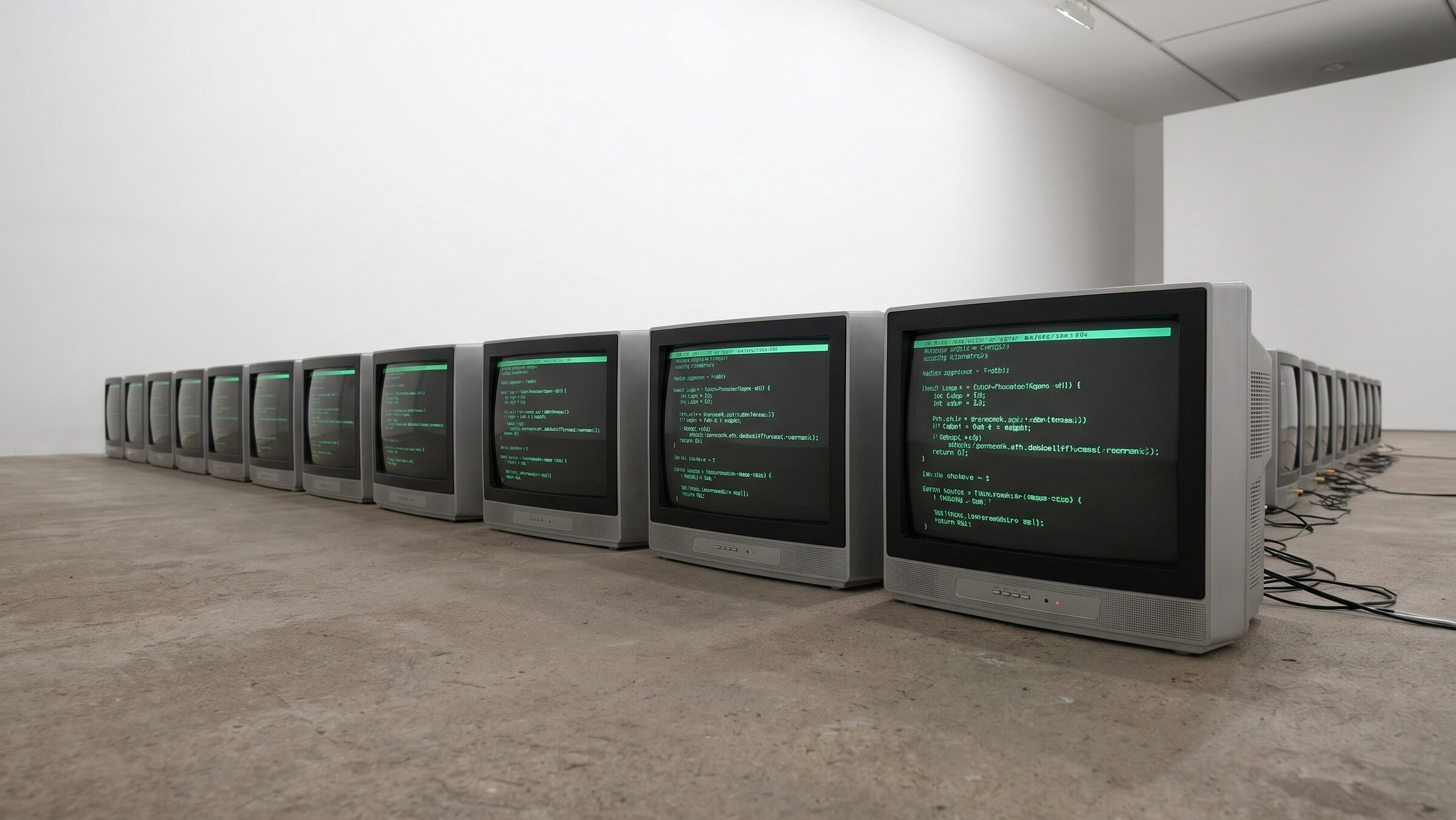
Fakewhale Studio, Output XA488, 2026
(…) The persistence of this anatomy gives Marx an unexpected proximity to the present, while exposing the limits of treating his analysis as a completed verdict. Capitalism has concentrated ownership, intensified extraction, and distributed vulnerability with brutal asymmetry; the same historical system has mobilized technological development, mass production, medicine, infrastructure, and levels of material security that have transformed life for large populations, especially in the West, binding both trajectories into the same apparatus.
Alienation offers the sharper point of entry because it keeps both trajectories visible. It names a material separation from product and process, and an epistemic separation from the knowledge of what our activity sets in motion.
The issue reaches beyond whether capitalism produces benefits or damage, concerning our capacity to recognize ourselves in the world those benefits and damages compose and to influence the protocols through which that world keeps being produced. (…)
Explore the full Article↓
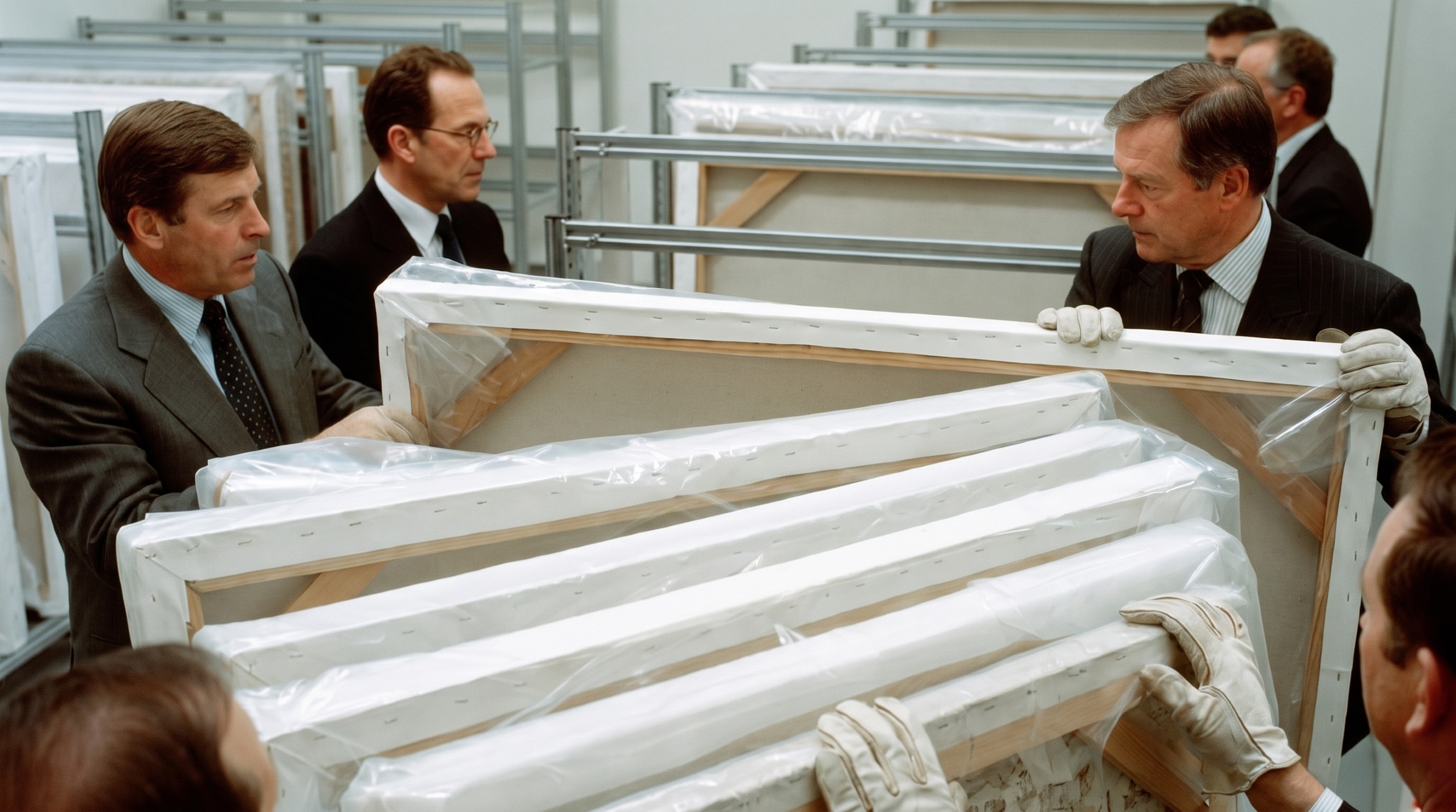
Fakewhale in Dialogue with 00 Zhang

00 Zhang — Replica 002 Catalyst, 2026
We have been following 00 Zhang’s work for some time now, and what continues to strike us is the way she explores the sensibility she calls “double-sided exile” — that entangled feeling of dislocation and connection. A Chinese-born, London-based artist (b. 1996, Zhejiang) who uses it/she pronouns, 00 Zhang investigates the potential of a new form of collective imagination capable of transcending the borders of national identity, gender, and religion. Her multifaceted practice, which spans sculpture, installation, CGI animation, and interactive digital game environments, blends embodiment with complex cybernetic concepts, constructing imaginary worlds that occupy real space and transport viewers between corporeality and the virtual realm. In this interview, we wanted to enter the heart of her research: the integration of real and virtual, the use of gaming as a form of self-portraiture, and the fluid, alien consciousness she inhabits. (…)

00 Zhang — Numero, 2025
Your practice is deeply rooted in the concept of “double-sided exile,” that entwined sensation of dislocation and connection. How did this idea originate, and in what ways does it guide your construction of imaginary worlds that occupy physical space?
This thinking originated in and was shaped by Edward Said’s Orientalism, which I first read around 2016. Said’s analysis of how cultural identities are constructed through representation was particularly important to me: the idea of the “East” can be produced through the gaze of the “West,” while that gaze can also be internalized, repeated or strategically performed.
At the time, I believe we are the generation that is progressively less attached to national borders, cultural identities, gender categories, and religion. We grew up with an additional dimension: the cyber realm. URLs, online communities, virtual worlds and gaming environments offered spaces in which identity could remain fluid, provisional, and self-constructed. My Prototype series, which began around 2018, developed from this condition. The figures and worlds in the series do not belong fully to one culture, one body or one reality they operate as unstable vessels through which identity can be continuously reconstructed. (…)
Explore the full Dialogue↓