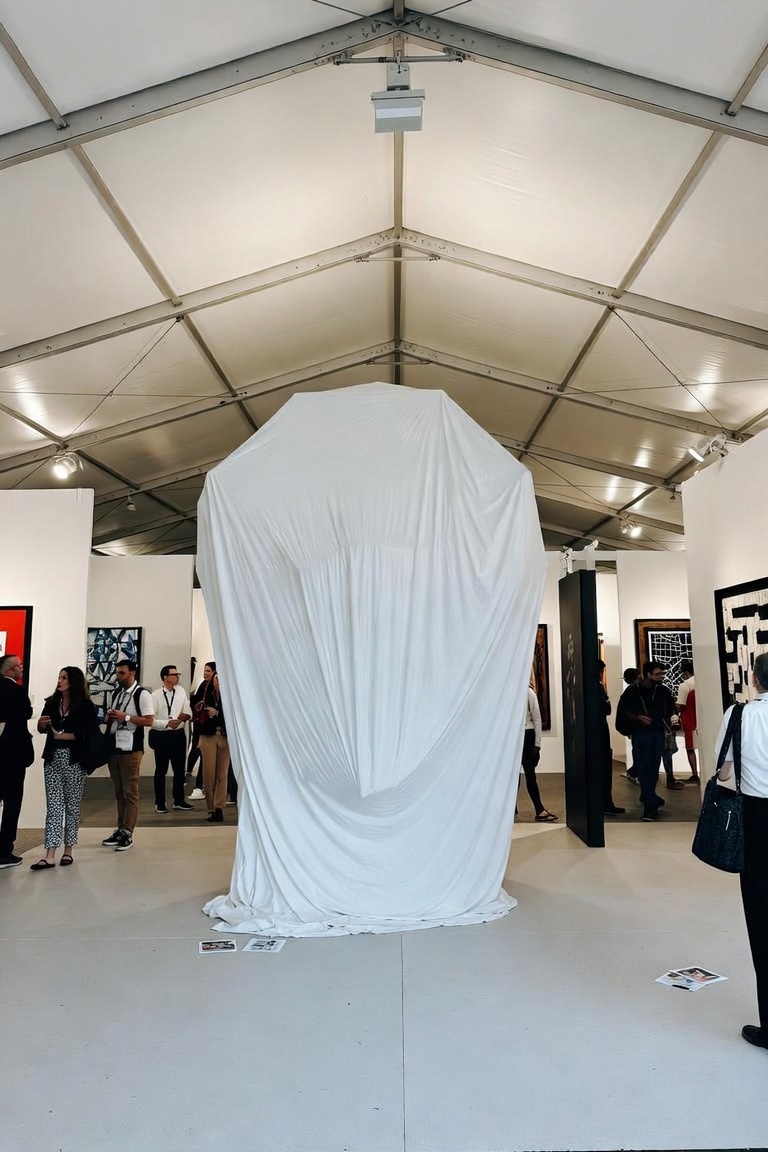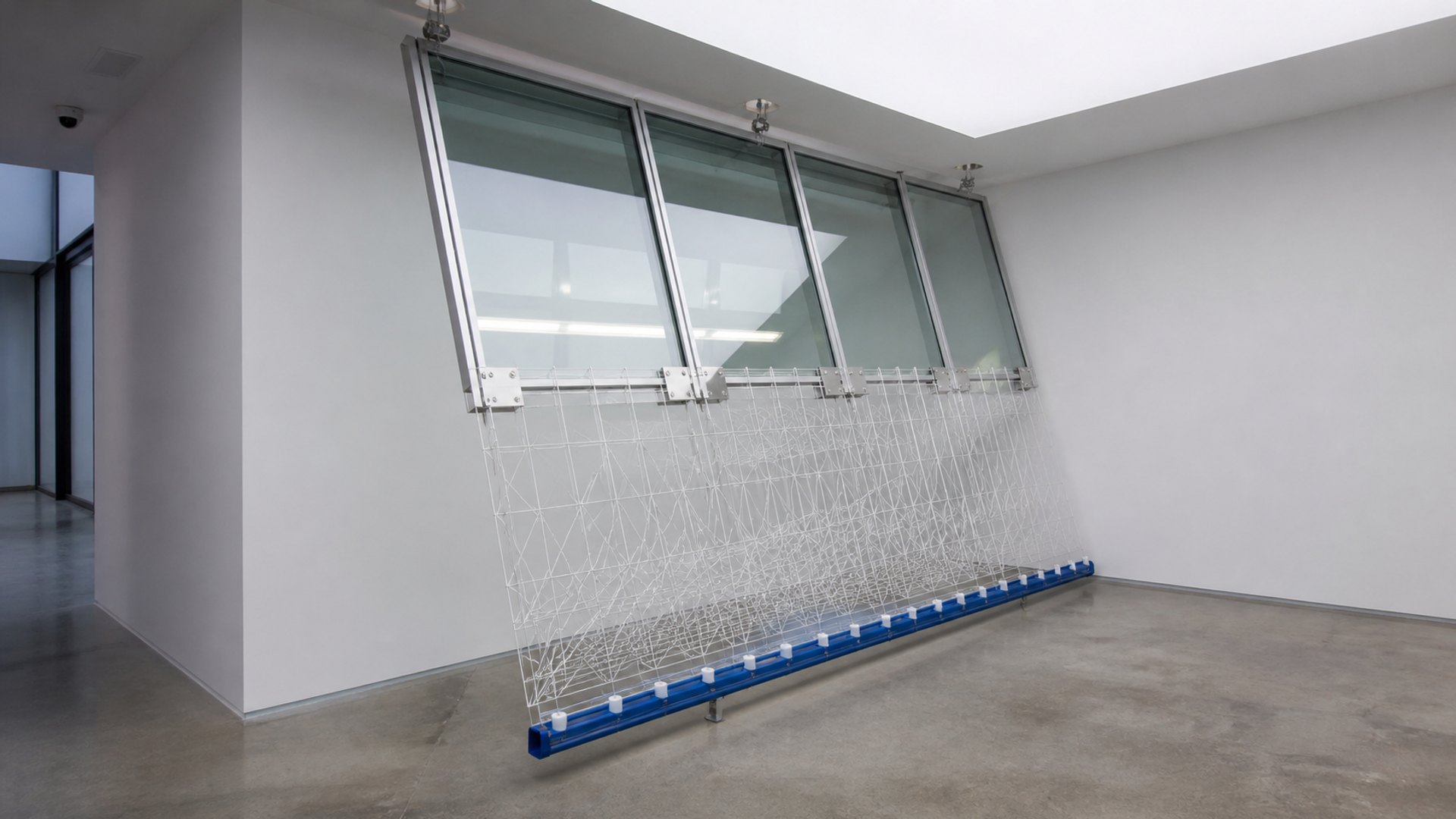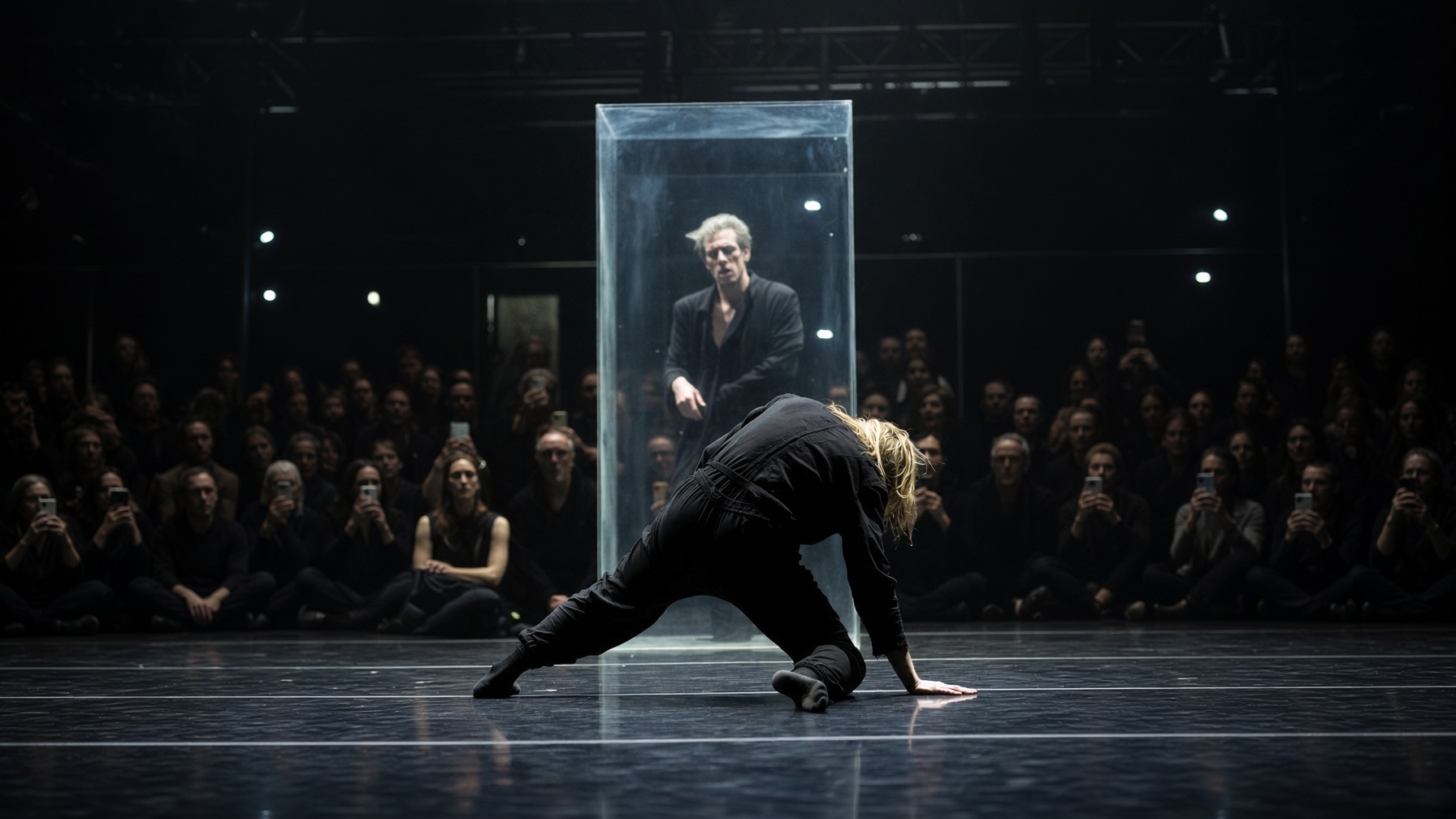
AI-generated image, Fakewhale Studio, 2026
Every artwork arrives twice: once as a structure known from inside, and again as a partial surface reconstructed by another gaze. The artist sees references, failed attempts, decisions, and years; the public receives an image, a tension, perhaps only ten percent. The loss is not an error in communication. It is the condition through which the work becomes public.
Fame begins inside the same gap. Talent may produce the work, but visibility is built through repetition, documentation, relationships, scarcity, timing, and institutional confirmation. What circulates is never the whole practice. It is a legible world assembled around a name until recognition precedes understanding.
Across this issue, the gaze, the market, the art fair, and the architectural render all organize what can be seen before the encounter is complete. The question is not how to eliminate mediation, but which part of a work survives it—and who gains authorship when the image arrives first.
*Editorial framing for Fakewhale Newsletter Issue #86.
The Approximation of the Gaze: The Work You Never See
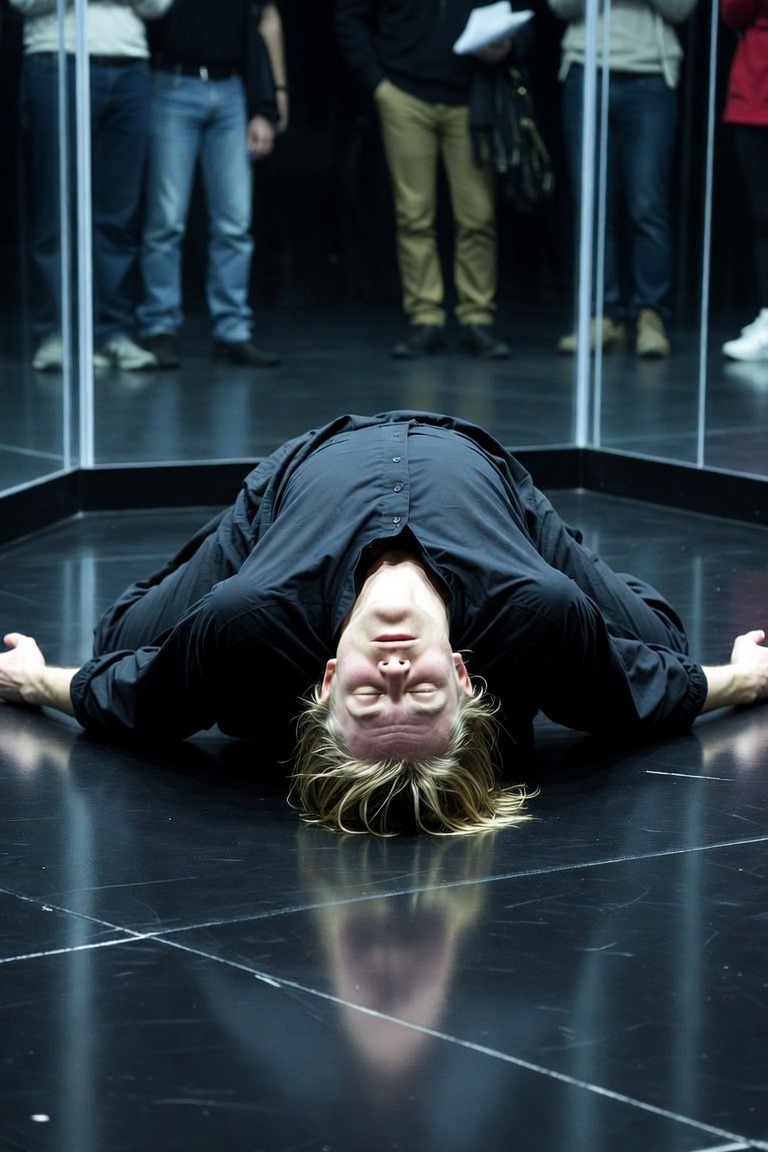
AI-generated image, Fakewhale Studio, Output YA1163, 2026
When almost anything can become a subject, the subject alone no longer determines the weight of an image. Framing, rhythm, context, language, and the device of presentation move to the foreground. The question changes from what we are seeing to why we are seeing it in precisely this way.
For the artist, a work carries the total system that produced it: research, references, mistakes, formal decisions, personal experience, and links to everything that came before. The viewer encounters only the result. What feels like a dense architecture from inside may appear from outside as a color, a composition, a symbol, or a sensation.
This distance cannot be solved by explanation alone. Perception works through approximation, selecting perhaps ten or twenty percent and reconstructing the rest through a personal and collective archive. Meaning is lost, simplified, and transformed, but this partial synthesis is also what makes reception possible. (…)

AI-generated image, Fakewhale Studio, Output YA1165, 2026
No one looks from zero. Familiar forms help us orient ourselves, yet recognition can arrive so quickly that it is mistaken for understanding. A work may be placed within an available aesthetic, political, or technological category even when its position is more unstable than that category allows.
The decisive question is therefore not how to transmit everything, but what must survive loss. An image, contradiction, tension, or sensation can cross the distance even when the structure behind it remains invisible. The artist works within complexity; the public receives through approximation; the work exists between those two conditions. (…)
Explore the full Insight↓
How Fame Is Made: 10 Rules Behind Successful Artists
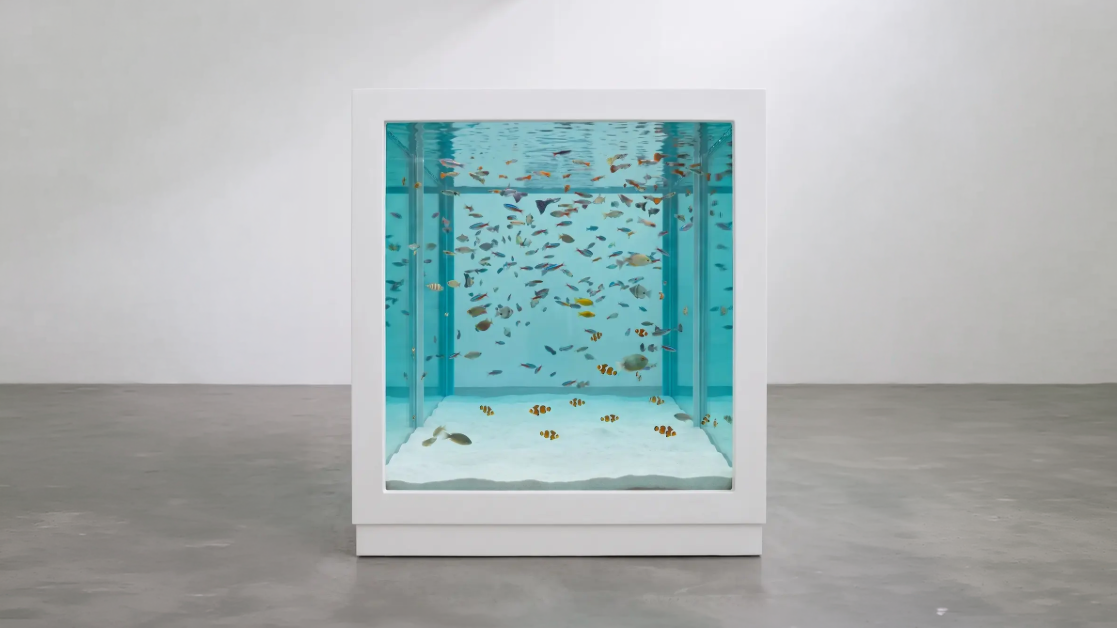
AI-generated image, Fakewhale Studio, Output YA1163, 2026
A comforting idea persists in the art world: make good work, remain authentic, and recognition will eventually arrive. History repeatedly shows otherwise. Talent matters, but it does not explain why some practices remain invisible while others become names, positions, and durable cultural presences.
Fame is assembled through visibility, timing, relationships, repetition, scarcity, narrative, and institutional validation. Making the work and making the work encounterable are different forms of labor. Images must circulate, contexts must accumulate, and a recognizable world must take shape around the practice before attention can become memory.
Recognition often precedes understanding. Continuity allows one encounter to connect with the next; networks carry the work into new rooms; scarcity gives attention gravity; and institutions convert dispersed interest into legitimacy. None of these mechanisms can substitute for substance, but substance alone does not create reach.
The final rule is duration. Careers are built through accumulation: exhibitions, collectors, reviews, collaborations, failures, revisions, and periods when nothing appears to happen. From outside, success looks sudden only because the years of invisible construction are noticed late. Longevity eventually produces what strategy cannot fabricate quickly: history. (…)
Explore the full Insight↓