Looking Familiar: The Art of Being Second — Fakewhale LOG.
An image can reach us already carrying the authority of another image. A material can arrive with centuries of meaning, or with a price attached before the artist begins. Looking is never entirely innocent: memory, names, surfaces, and institutions prepare what the eye is ready to recognize.
This issue moves between familiarity and darkness. Looking Familiar asks what repetition does with the authority it inherits; The Aesthetics of Black follows surfaces that redirect light, absorb detail, or give pigment the force of physical weight. Recognition offers a foothold, while black unsettles the habits that make a form seem immediately readable.
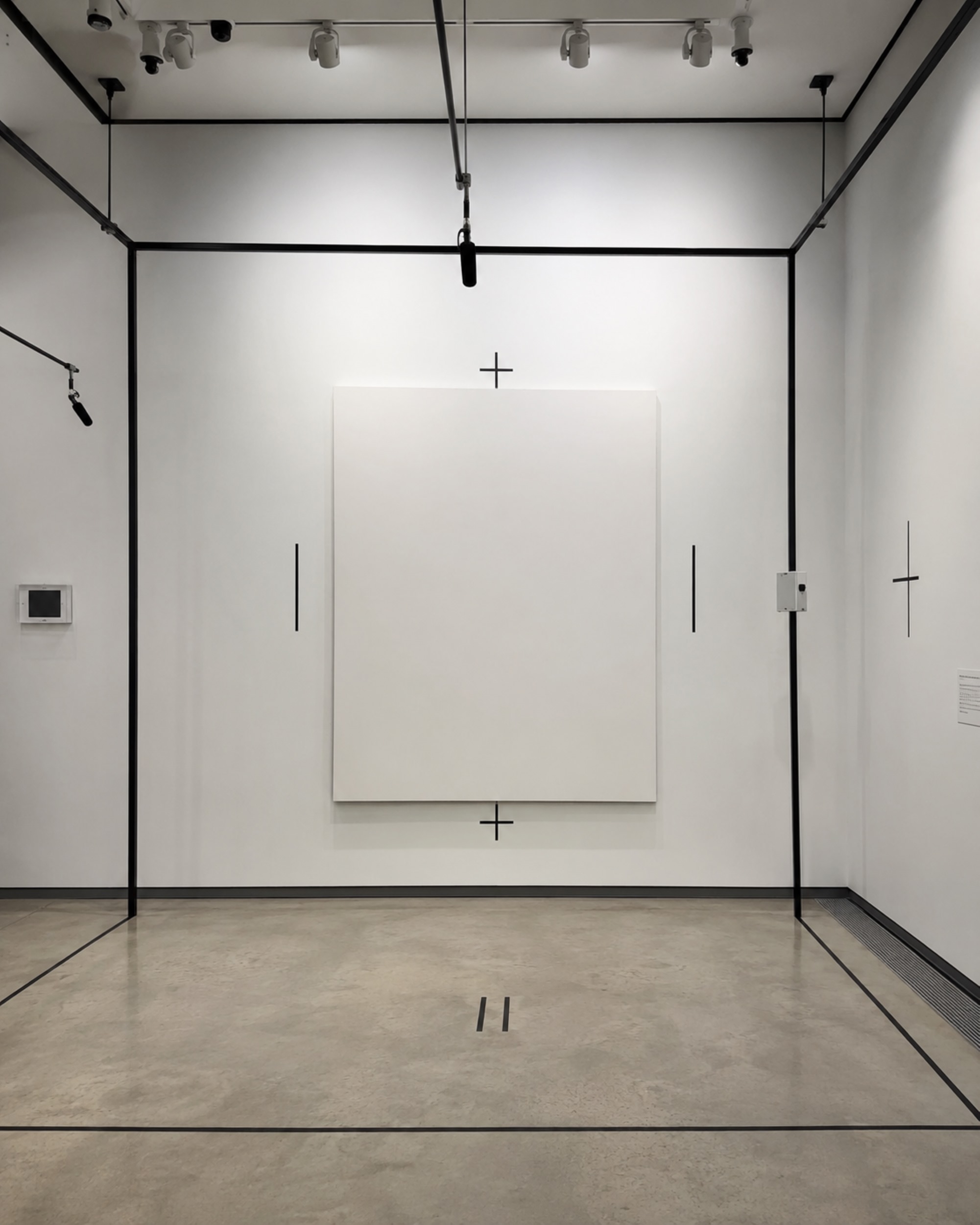
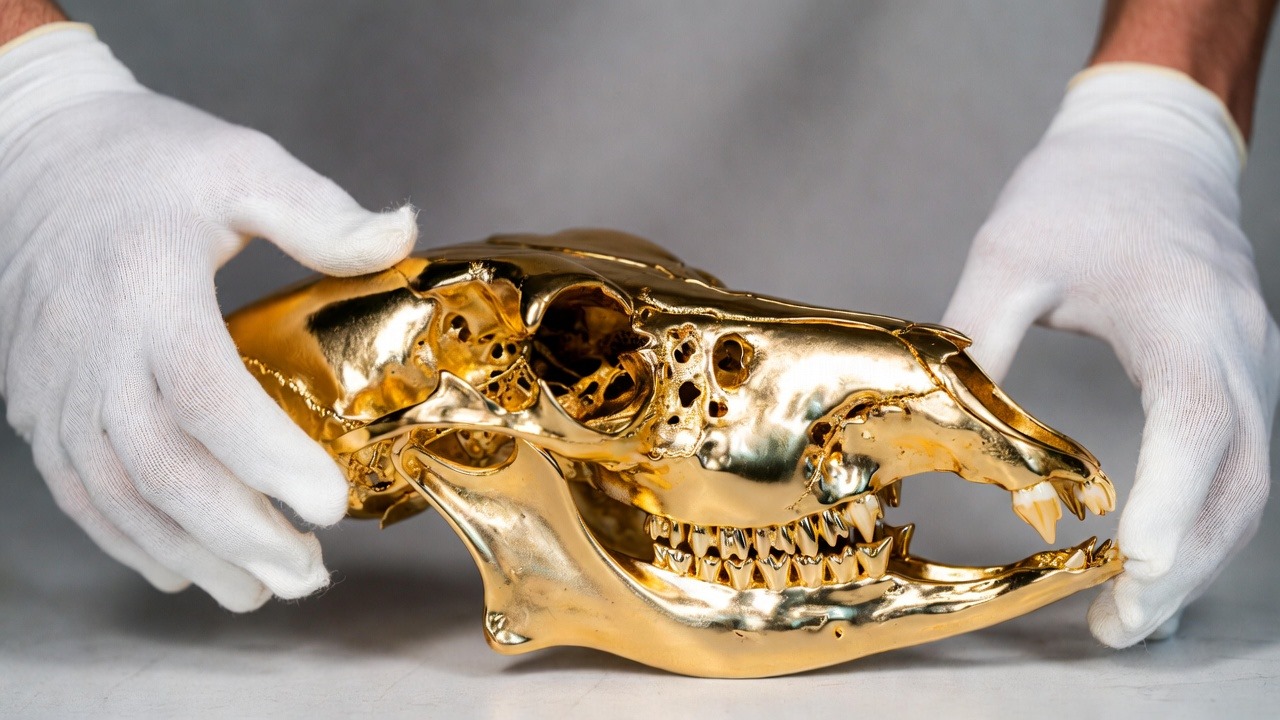
Below, the attempt to make art mean nothing meets the meanings supplied by context and the viewer. Gold, marble, and technically exclusive materials expose another inheritance: value already lodged in matter or access. What remains of an artwork when we separate what it does from what we have learned to expect?
*Editorial introduction — Fakewhale Newsletter Issue #90.
Looking Familiar: The Art of Being Second

Looking Familiar: The Art of Being Second — Fakewhale LOG.
In the sixteenth century, Andrea del Sarto painted a copy of Raphael’s portrait of Pope Leo X. According to Giorgio Vasari, the reproduction was so convincing that it fooled Giulio Romano, who had worked alongside Raphael himself. Andrea had copied everything, right down to the marks and blemishes on the original painting. When Romano eventually discovered the deception, he was reportedly even more impressed.
It’s a wonderful story, partly because it describes a relationship with copying that feels strangely foreign today. The ability to reproduce another artist’s manner was once considered a remarkable achievement, worthy of admiration regardless of who had invented the composition.
Mannerism emerged, in part, from this almost obsessive familiarity with the work of earlier masters. Following Michelangelo and Raphael, a generation of artists found itself working in the shadow of models that seemed to have already achieved an impossible degree of perfection. The answer was to look again, study harder, exaggerate, repeat. Painting increasingly began to feed on painting. (…)
(…) Recognition is pleasurable. Encountering something familiar gives us the reassuring sense that we already possess some of the information required to understand what we are looking at. A reference flatters the viewer. It rewards cultural memory. For an artist, borrowing a recognizable image means beginning with a relationship that already exists. The original has done much of the difficult work. It has entered the collective imagination, accumulated associations, acquired a certain authority.
There is nothing inherently wrong with that. Art has always developed through imitation, influence, and the circulation of forms. The question is whether the repetition actually does anything with what it inherits. If we removed the original from the room, or even just erased our memory of it, how much of the work in front of us would remain? (…)
Explore the full Insight↓
The Aesthetics of Black: Depth, Mystery, and Presence
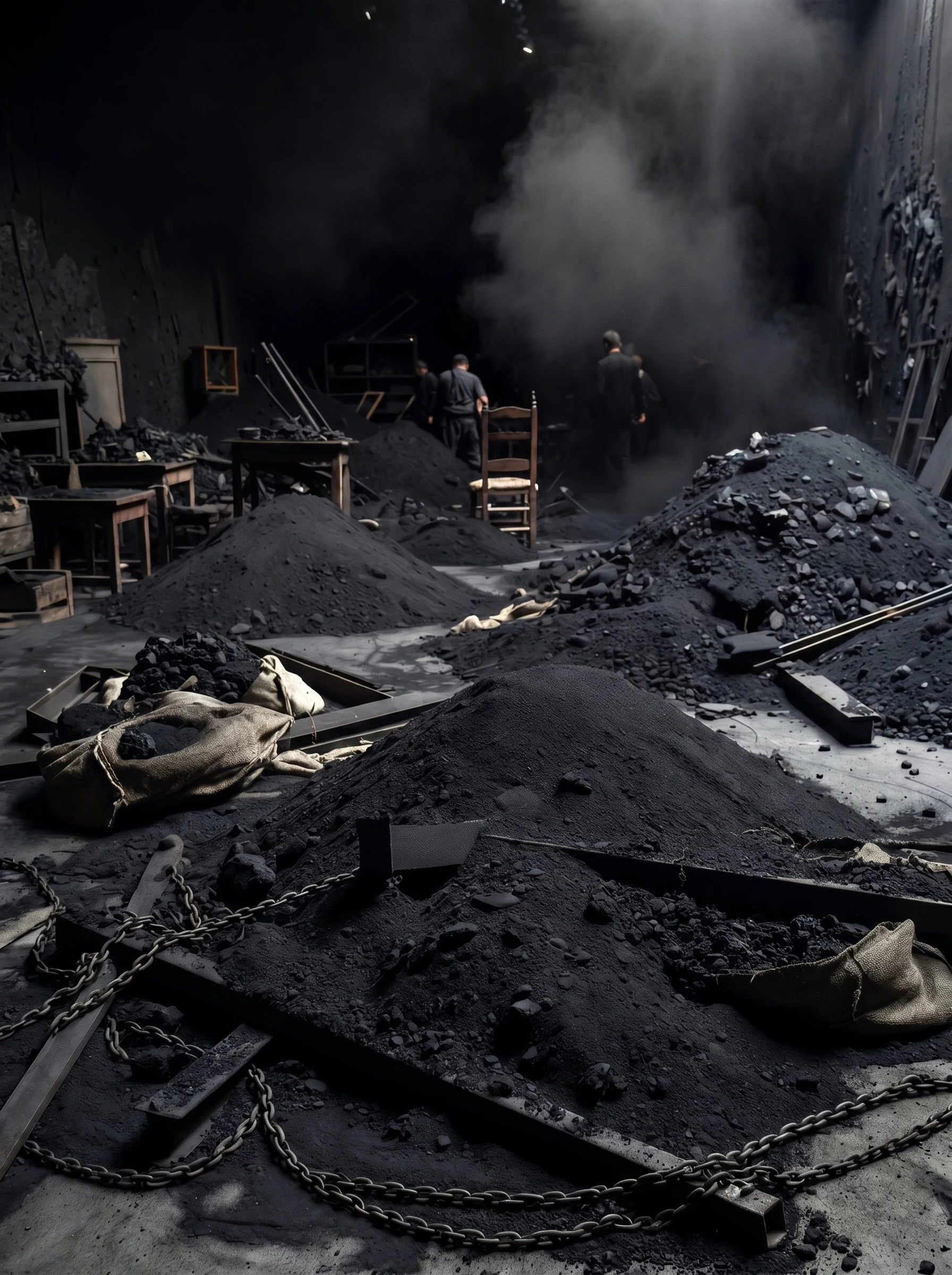
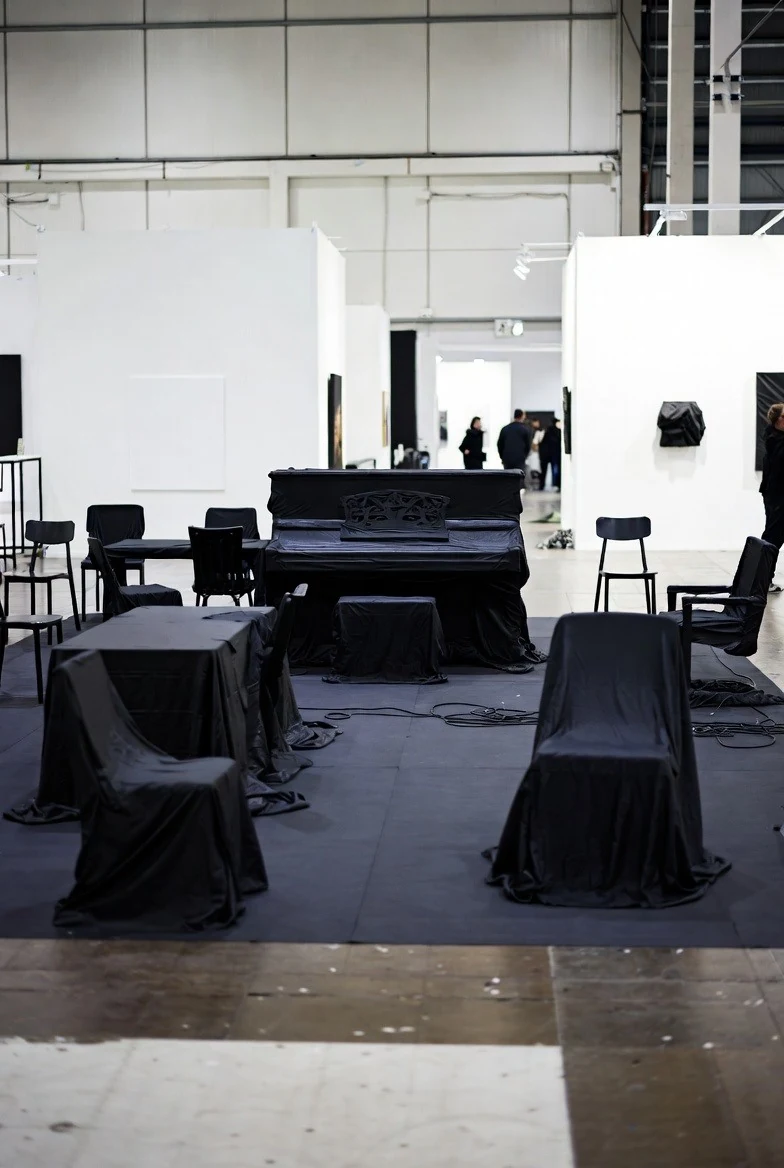
Fakewhale Studio, Output XA254, 2026
Black is not the limit of vision but its transcendence through a luminous saturation that Pierre Soulages codified under the term Outrenoir. In this series of works begun in 1979 and continued until his death, the French painter does not paint black as a color; he uses black pigment as a modulator of physical light that strikes the material surface. The dense application, worked with palette knives and brushes that score the canvas, creating reliefs and grooves, transforms the painting into an optical apparatus in which light is not absorbed but redirected toward the viewer through the shifting angles of the matter.
This artistic practice demolishes the notion of black as synonymous with darkness or mourning, elevating it to a dimension of mineral splendor that vibrates with metallic reflections or velvety opacity. The canvas ceases to be a window onto the world and becomes a wall that repels the superficial gaze, compelling physical movement before the work in order to capture the chromatic mutations generated solely by the shifting viewpoint. (…)
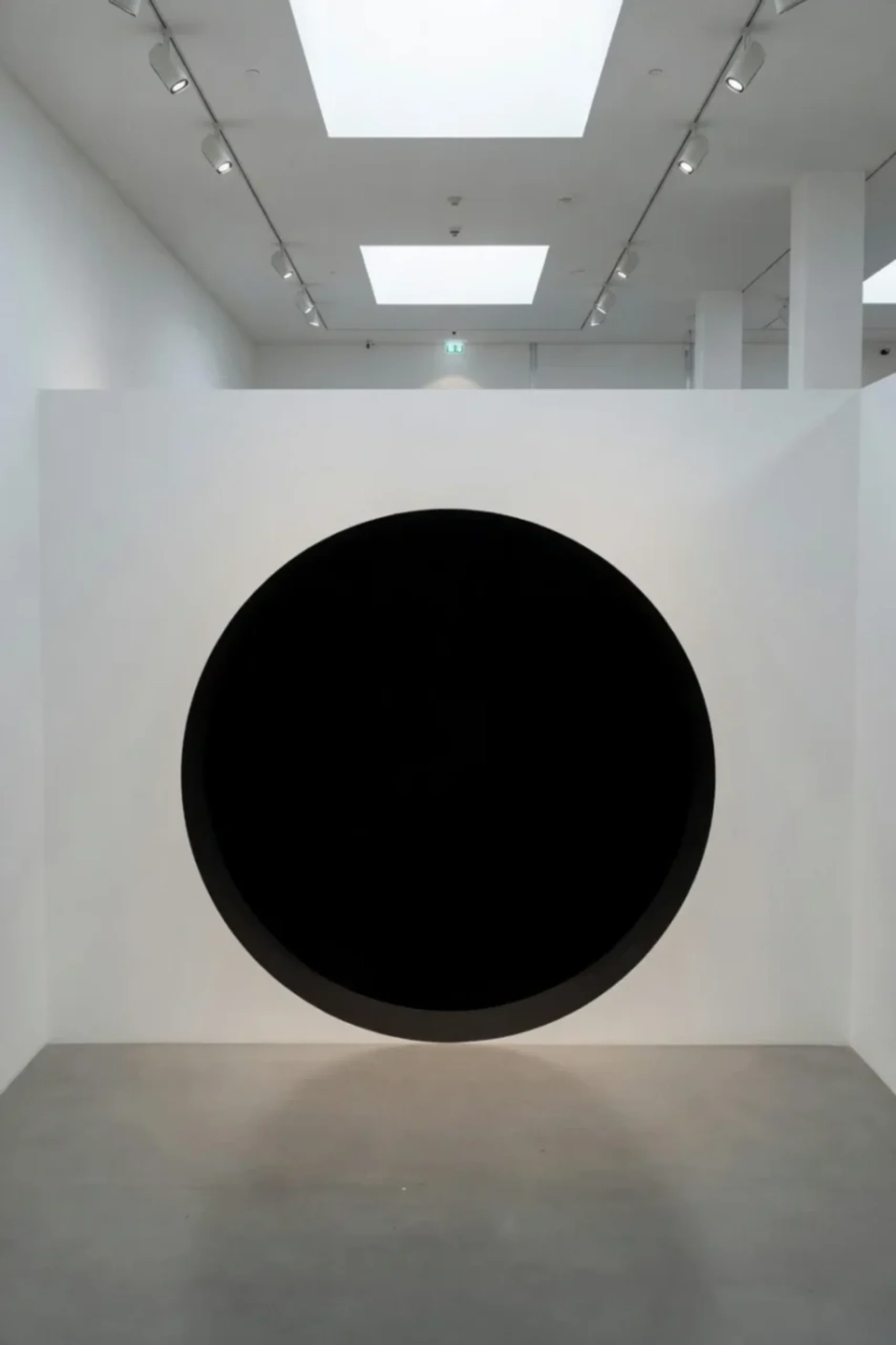
Fakewhale Studio, Output XA259, 2026
(…) The monumentality of black manifests with almost geological force in Richard Serra’s works on paper, where pigment ceases to be a medium and becomes architectural weight. His enormous drawings executed in black oil stick are not calligraphic exercises but accumulations of matter that saturate the fibers of the support until it becomes opaque and gravid with palpable physical tension. Serra’s black does not decorate the wall; it occupies it, imposing itself in space with the same ineluctable force as his Corten steel sculptures, transforming the perception of gravity.
The darkness of Serra’s drawings functions as a device of spatial orientation, defining the boundaries of the environment and altering the viewer’s sense of equilibrium. The expansive black surfaces are not voids but active masses that press against the gallery air, compelling the spectator into a bodily interaction with the work. Here black is conceived as a constructive element, a chromatic beam that supports the weight of the invisible architecture of sensory experience, pushing drawing to the limits of sculpture. (…)
Explore the full Insight↓