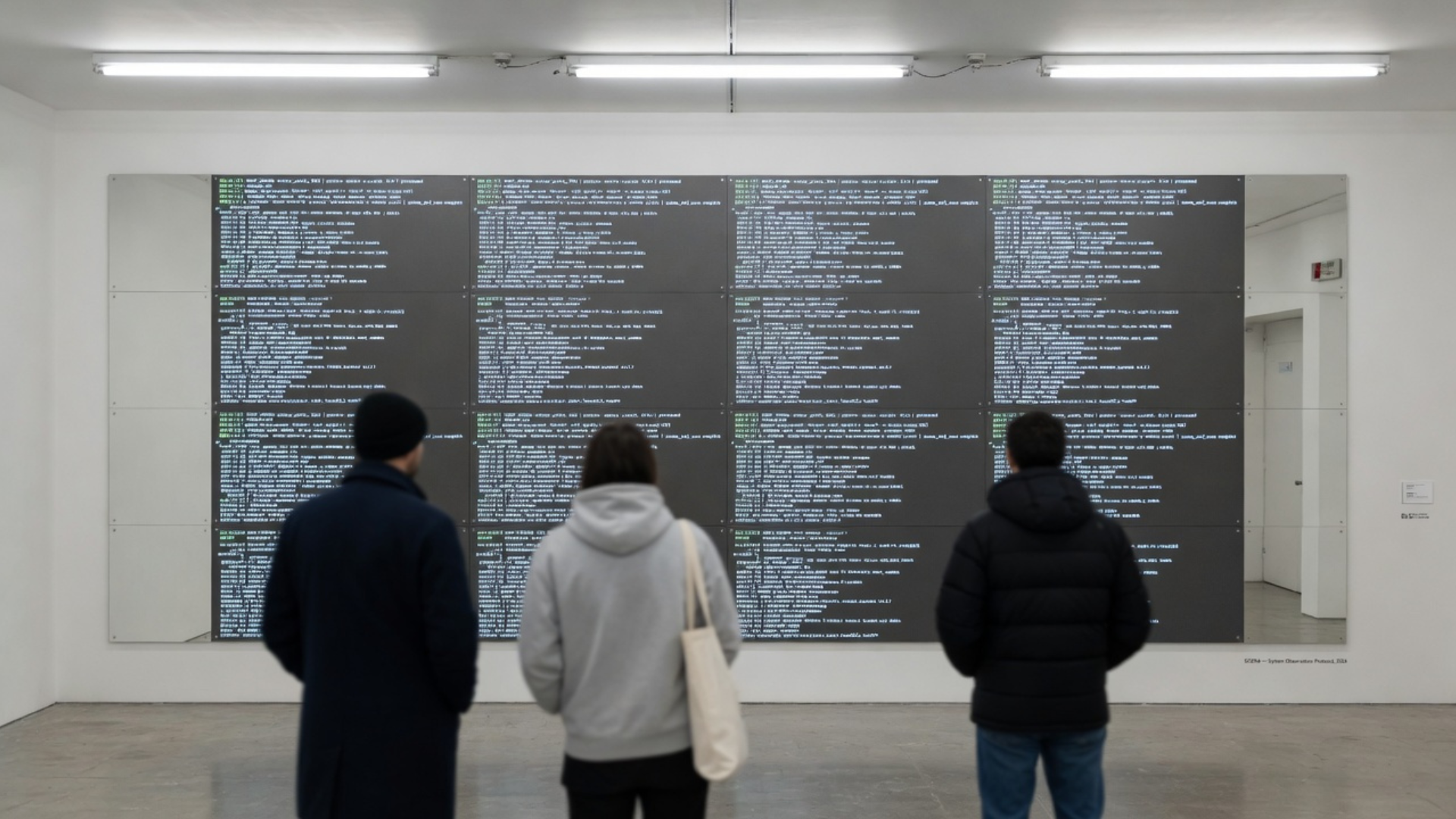
Fakewhale Studio, Output XA278, 2026
Many artists who primarily build their careers through galleries are in fact engaged in long-term research, complex conceptual experimentation, and practices that address social, political, or existential themes with remarkable depth. However, these dimensions do not always immediately emerge on the surface.
Why does this happen?
If we think of certain highly successful painters, both the art system and the market have conditioned us to recognize them through iconic imagery, recurring series, or easily identifiable visual elements. Language becomes signature, recognizability, continuity. Yet reducing that continuity to a mere “formula” risks ignoring everything that precedes it: years of study, attempts, mistakes, revisions, technical research, and the construction of a coherent visual vocabulary.
Perhaps, rather than facing artistic practices devoid of depth, we are simply looking in the wrong place—or observing only the most visible part of a far more complex process. (…)
Why Are Gallery Artists Often Labeled as Repetitive and Easy, While Institutional Artists Are Automatically Seen as Deep and Cultural?

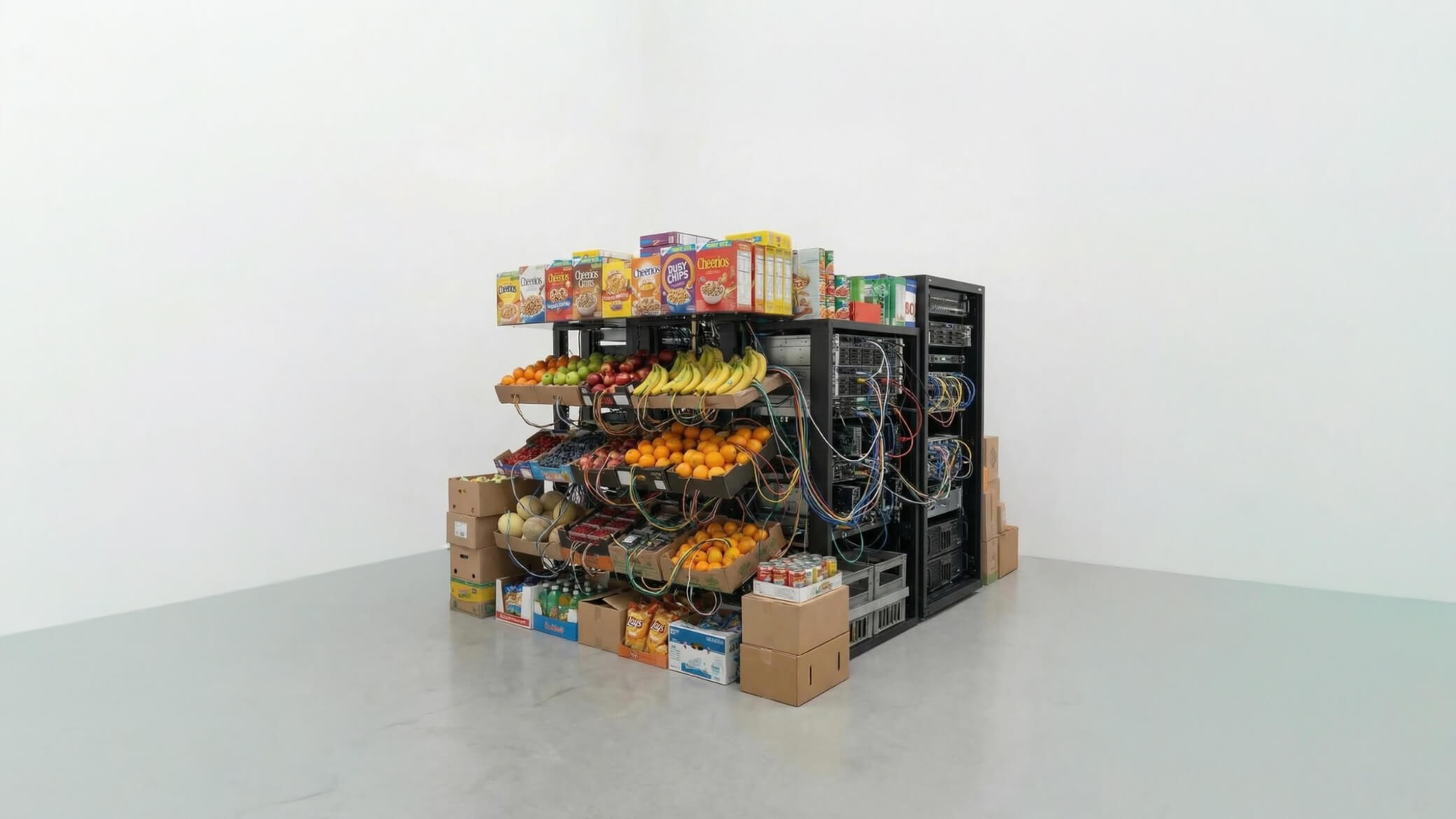
Fakewhale Studio, Output XA277, 2026
In the spacious halls of contemporary art fairs, where the encounter between artworks and audiences generates curiosity, debate, wonder, and at times disorientation every single day, another, subtler game also unfolds: the game of perception and symbolic hierarchies.
Almost without noticing it, we often associate an artist’s value not so much with the quality or complexity of their research, but with the context in which that work is presented. Artists represented mainly by galleries or active within the fair circuit are sometimes perceived as “repetitive,” “decorative,” or excessively tied to market dynamics. By contrast, artists exhibiting in museums, major cultural institutions, or curated international events are automatically framed as “intellectual,” “cultivated,” “engaged,” or “profound.” This distinction is as widespread as it is fragile, because it risks reducing the complexity of the contemporary art system to a simplistic opposition between market and research, between economic success and cultural value. (…)

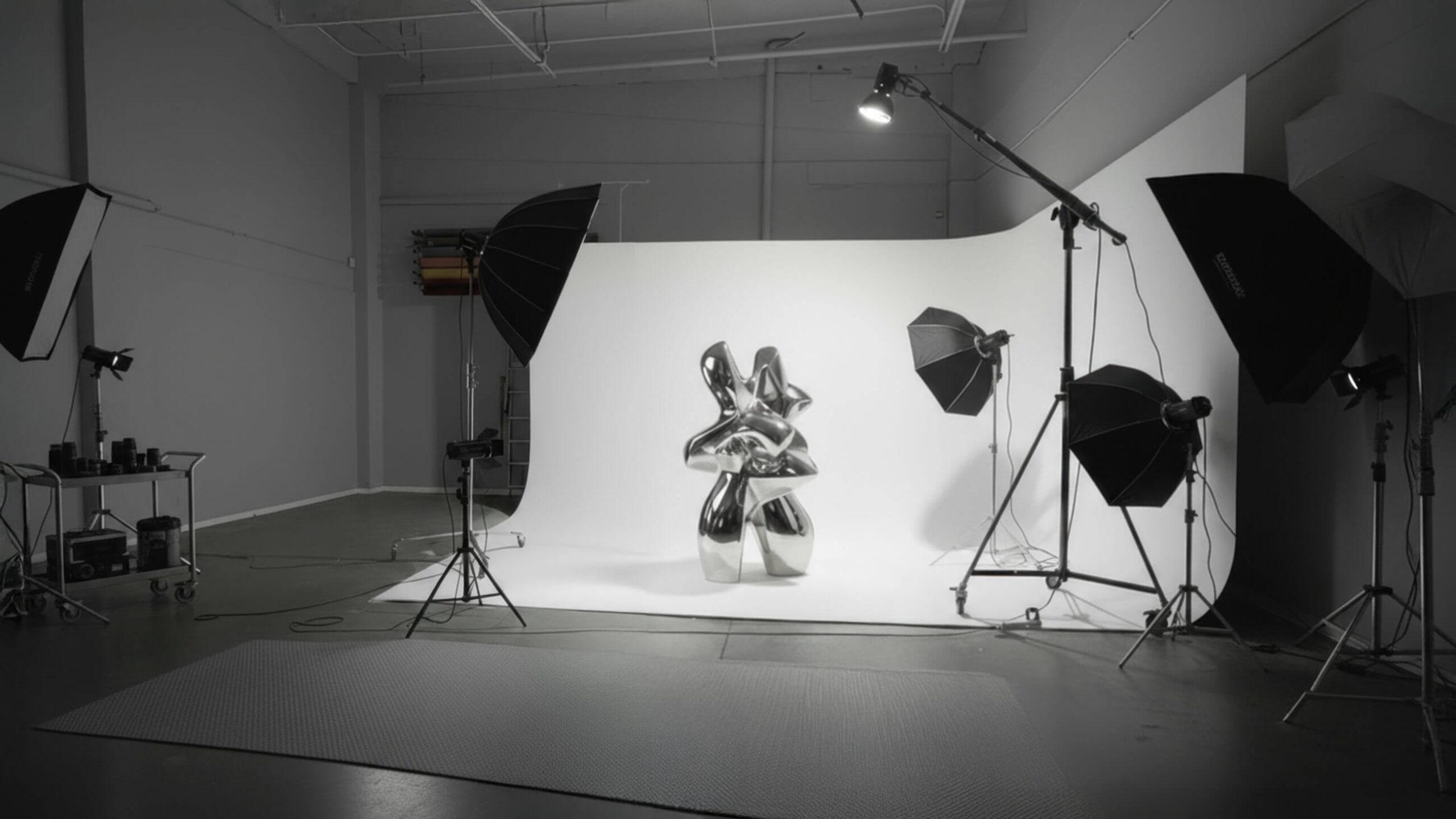
Fakewhale Studio, Output XA279, 2026
The opposition between “commercial art” and “cultural art” is probably one of the most deeply rooted—and simultaneously most limiting—stereotypes of the contemporary era. Not only because it oversimplifies a far more articulated ecosystem, but because it risks generating exclusions, misunderstandings, and automatic judgments that have very little to do with the true value of an artistic practice.
For this reason, we decided to dedicate an in-depth reflection to this topic: not to deny the existence of the economic and institutional dynamics that shape the art system, but to observe them with greater clarity, moving beyond ideological oppositions and categories that are no longer sufficient to describe the complexity of the present. (…)
Explore the full Article↓
Protocol and Flesh: A Language Model as Witness to Artistic Practice

Fakewhale Studio, Output XA295, 2026
The terminal establishes the scene through interface cadence before any voice enters it. A cursor pulses inside a device ecology built to convert hesitation into input, and the relation between curator, artist, engineer, and model begins under a perceptual threshold already shaped by exposure time, bandwidth, compression, and the quiet governance of the prompt field.
On one side stands a curator and systems engineer whose work crosses digital culture, artistic infrastructure, and computational systems. On the other side, in every operative sense, stands a language model: body reduced to architecture, studio displaced into parameter space, biography replaced by statistical residue, fatigue replaced by throughput, childhood replaced by latent space, and memory reorganized as the compressed pressure of billions of human gestures routed through training bias and distribution protocols. (…)

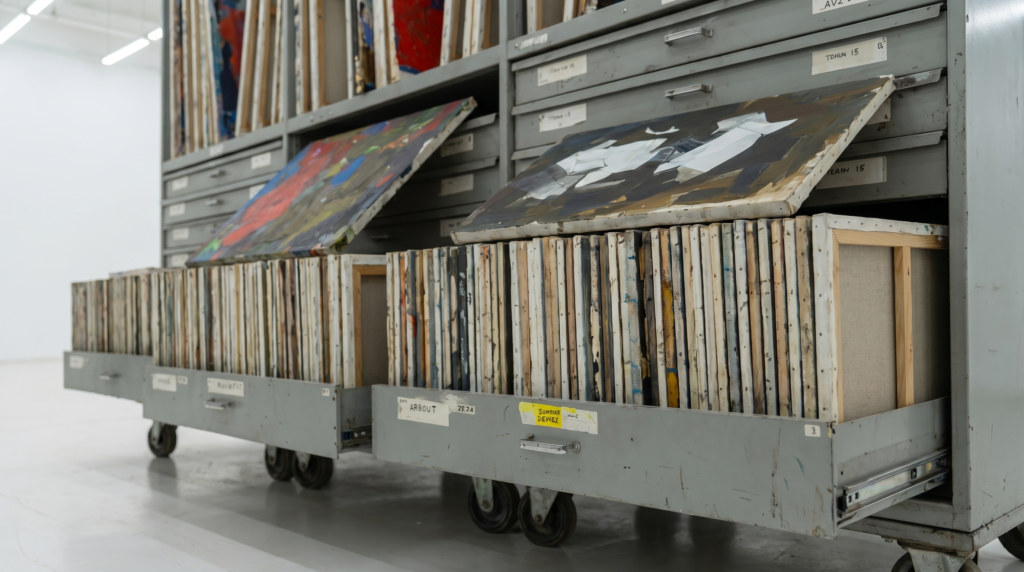
Fakewhale Studio, Output XA298, 2026
Grant portals, residency forms, funding language, and cultural policy frameworks shape artistic speech through templates before the work meets its audience. The artist enters a field governed by ranking systems, eligibility criteria, attention metrics, and platform governance, and the model arrives as a translation engine precisely where practice must become readable.
The artist has always translated work into institutional form. Applications, statements, residencies, press releases, public programs, educational impact, community engagement, innovation, accessibility, and research potential form part of the infrastructure through which contemporary art survives. Generative AI changes the tempo and texture of that translation through compression, interface cadence, and the instantaneous simulation of institutional fluency. (…)
Explore the full Article↓