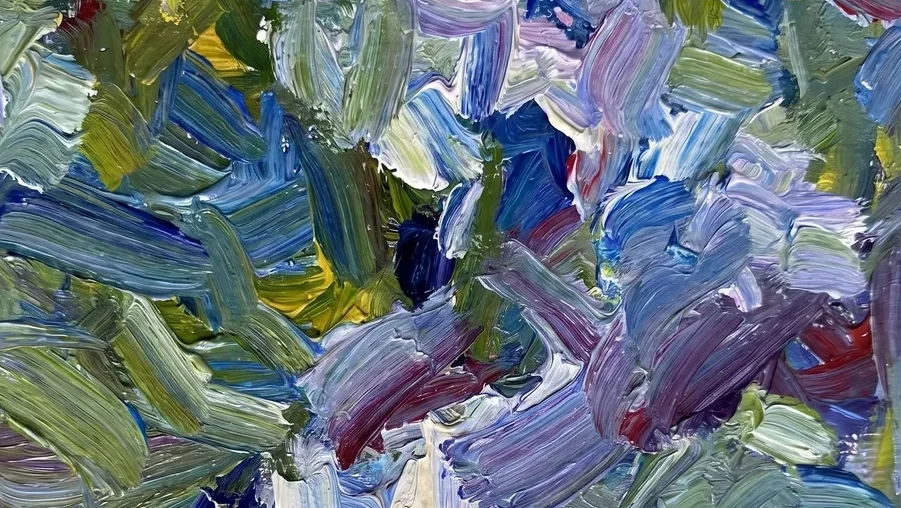
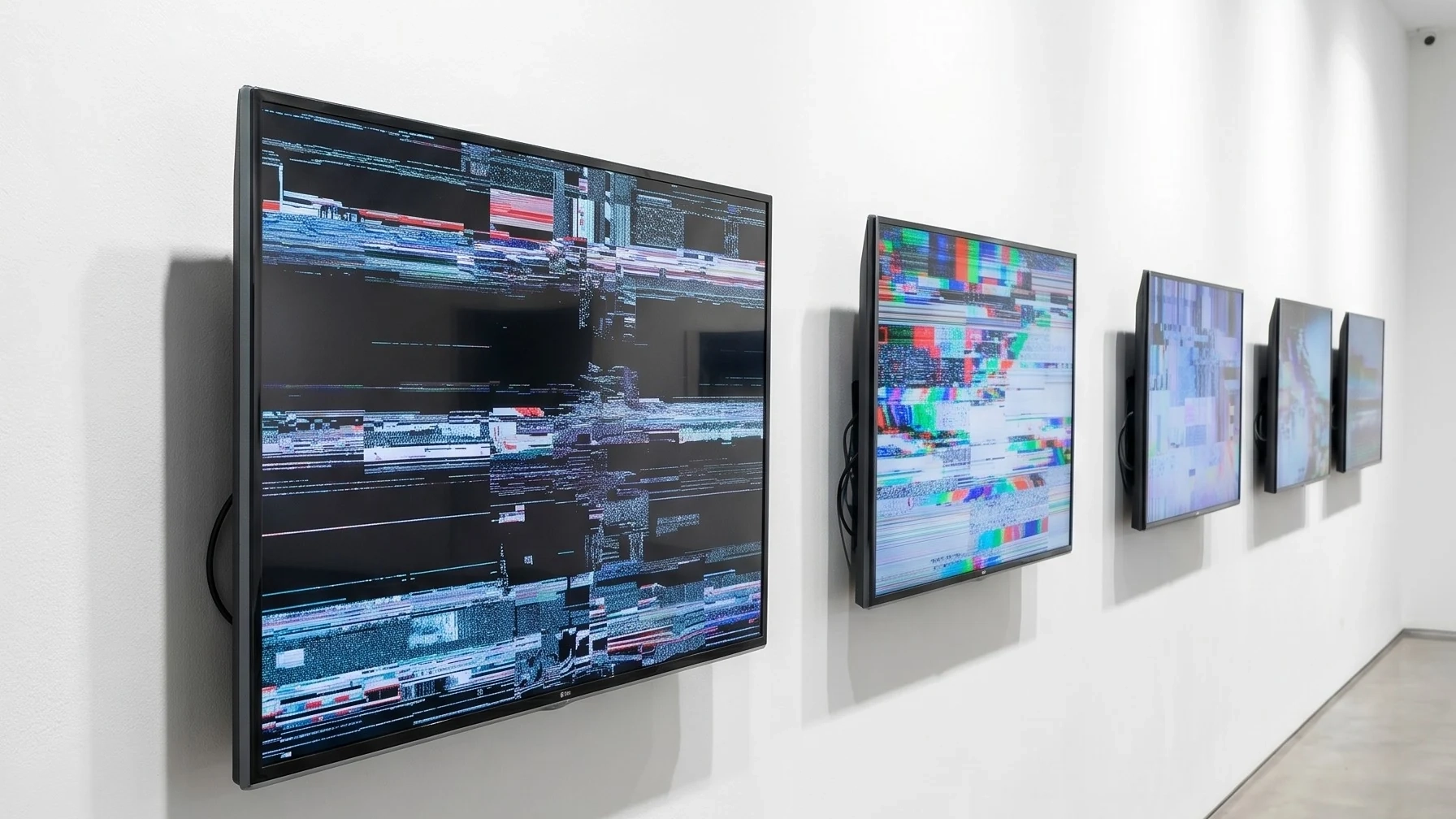
Fakewhale Studio, Output XA271, 2026
Every media ecology produces its own conditions of visibility. Every language also constructs an environment in which thought can appear, a space where ideas emerge, circulate, settle, and become perceptible experience. Images always belong to a specific regime of production, to a particular economy of attention, to a distinct technical and cultural structure. When an organization develops its visual apparatus internally, the image enters directly into the process of theoretical elaboration and no longer occupies a peripheral role. (…)
The Embedded Artist: The Critique That Illustrates Itself

Fakewhale Studio, Output XA273, 2026
(…) Cultural modernity consolidated a stable separation of roles: the theorist develops concepts, the artist produces figuration, the designer organizes form, the medium distributes content. This division generated efficient operational models and strong disciplinary genealogies. At the same time, it contributed to obscuring the deeper continuity running through all symbolic production. Internal generative infrastructures alter this configuration. When the tool producing images emerges from within the same ecosystem that develops critical research, philosophical reflection, and artistic practice, visuality acquires an epistemic function. The image enters the reasoning process, organizes relationships, produces conceptual assemblages, and participates directly in the construction of discourse itself.
Fakewhale Studio (fakewhalestudio.com) operates within this transformation as Fakewhale’s internal AI orchestration system: a proprietary framework designed to coordinate advanced generative models within a unified editorial, visual, and research environment. Visual production functions as an internal device capable of participating directly in Fakewhale’s cultural outputs, particularly at the points where critical research, philosophical inquiry, and artistic production converge through a proprietary generative infrastructure. (…)

Fakewhale Studio, Output XA272, 2026
(…) As a “tool,” Fakewhale Studio performs an infrastructural function within our ecosystem. It is already integrated into the operational body of the platform itself, particularly in relation to the construction of visual language and iconographic production. Within our work as a media platform, image and argument emerge from the same environment of cultural production. Writing and visuality share processes, rhythms, references, and decision-making structures.
Authorship also shifts configuration: the final output emerges from a negotiation between human intention and editorial validation systems.
The same infrastructure also participates directly in the writing process itself. Fakewhale Studio is the system through which Fakewhale develops editorial writing and visual production simultaneously, functioning not as a supplementary AI utility but as a proprietary model of editorial and cultural management. (…)
Explore the full Article↓
The Paradox of Minimalism: From the Rejection of Expression to Contemporary Emotional Aesthetics

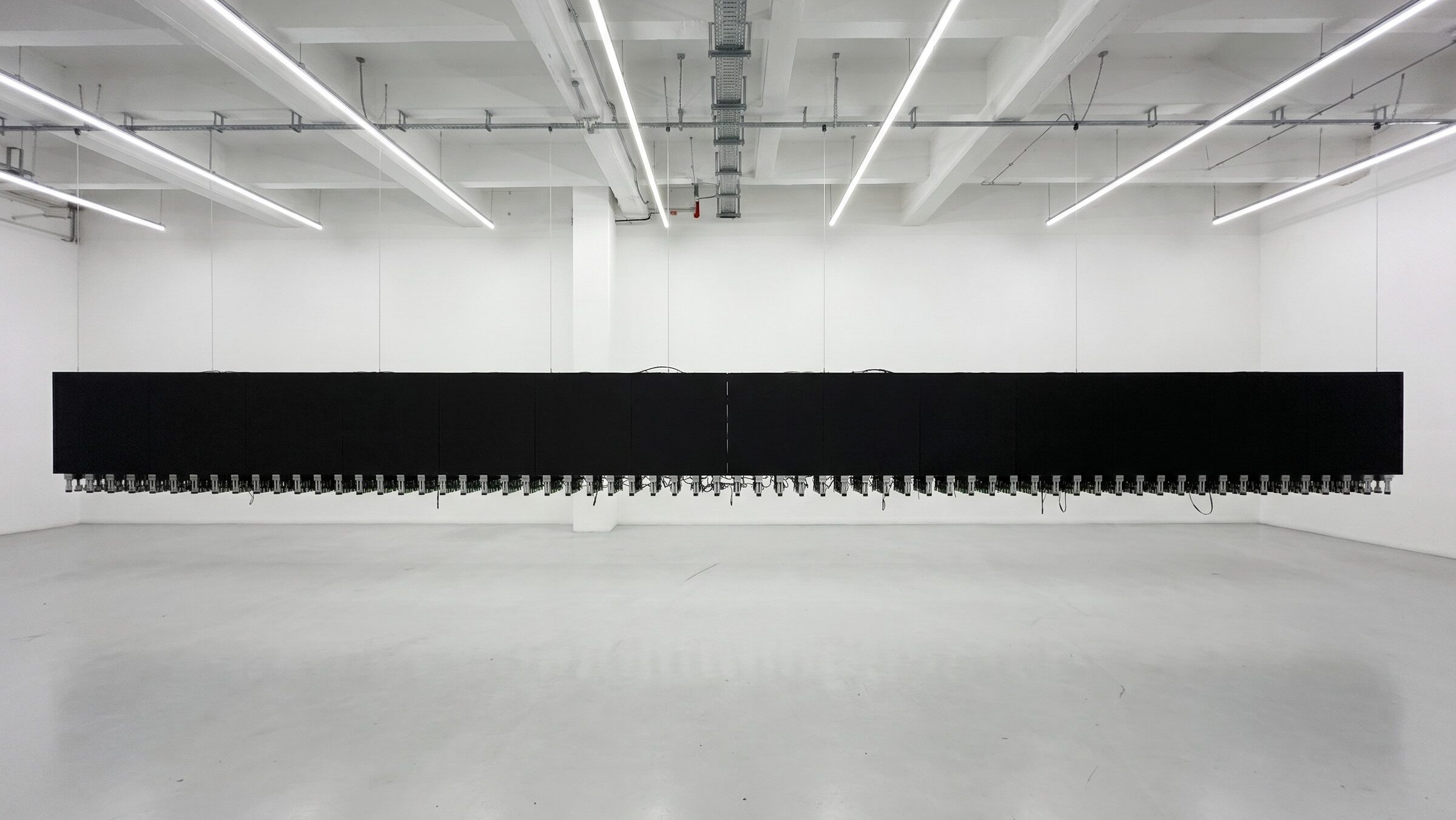
Fakewhale Studio, Output XA359, 2026
Today the term “minimalism” is often associated with emotional depth, silence, introspection and contemplation. Contemporary artists, designers, photographers, architects and digital creators frequently employ reduced forms, empty spaces and essential visual structures in order to evoke emotional intensity. In current visual culture, minimalism is commonly perceived as a poetic language of subtraction: the fewer the elements, the stronger the emotional resonance.
However, this contemporary interpretation differs significantly from the historical origins of Minimal Art in the 1960s. The first minimalist artists did not aim to express personal emotions or reveal their inner psychology through art. On the contrary, they attempted to reduce, neutralize or even eliminate subjective expression from the artwork. Seriality, industrial materials, modular repetition and geometric simplicity were not merely aesthetic choices; they were theoretical strategies designed to oppose the romantic idea of the artist as a unique expressive genius. (…)

Fakewhale Studio, Output XA366, 2026
Minimal Art emerged in the United States during the late 1950s and early 1960s as a direct reaction against Abstract Expressionism. Artists such as Jackson Pollock and Willem de Kooning had transformed painting into a highly personal and emotional field in which gesture, material and movement reflected the artist’s inner state. The canvas became almost a psychological space, and artistic creation was understood as an extension of subjective experience.
For younger artists, however, this heroic conception of the artist began to appear excessive and theatrical. Minimalists rejected the dramatic emphasis on emotion, individuality and expressive gesture. They wanted artworks that existed as concrete objects rather than emotional confessions. The work was not supposed to represent the artist’s personality; it was supposed to exist autonomously in real space.
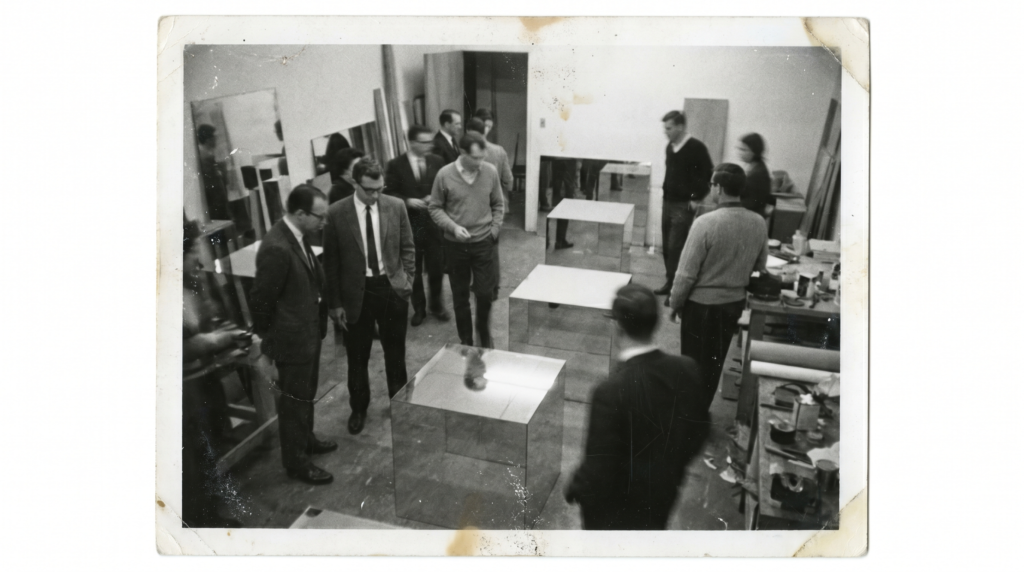
This explains why minimalist artists relied on industrial materials such as steel, aluminum, fluorescent light and plexiglass. The use of industrial fabrication reduced traces of the artist’s hand and weakened the aura of personal craftsmanship. Donald Judd, for example, often had his works manufactured in factories in order to avoid the expressive qualities traditionally associated with manual artistic production. (…)
Explore the full Insight↓