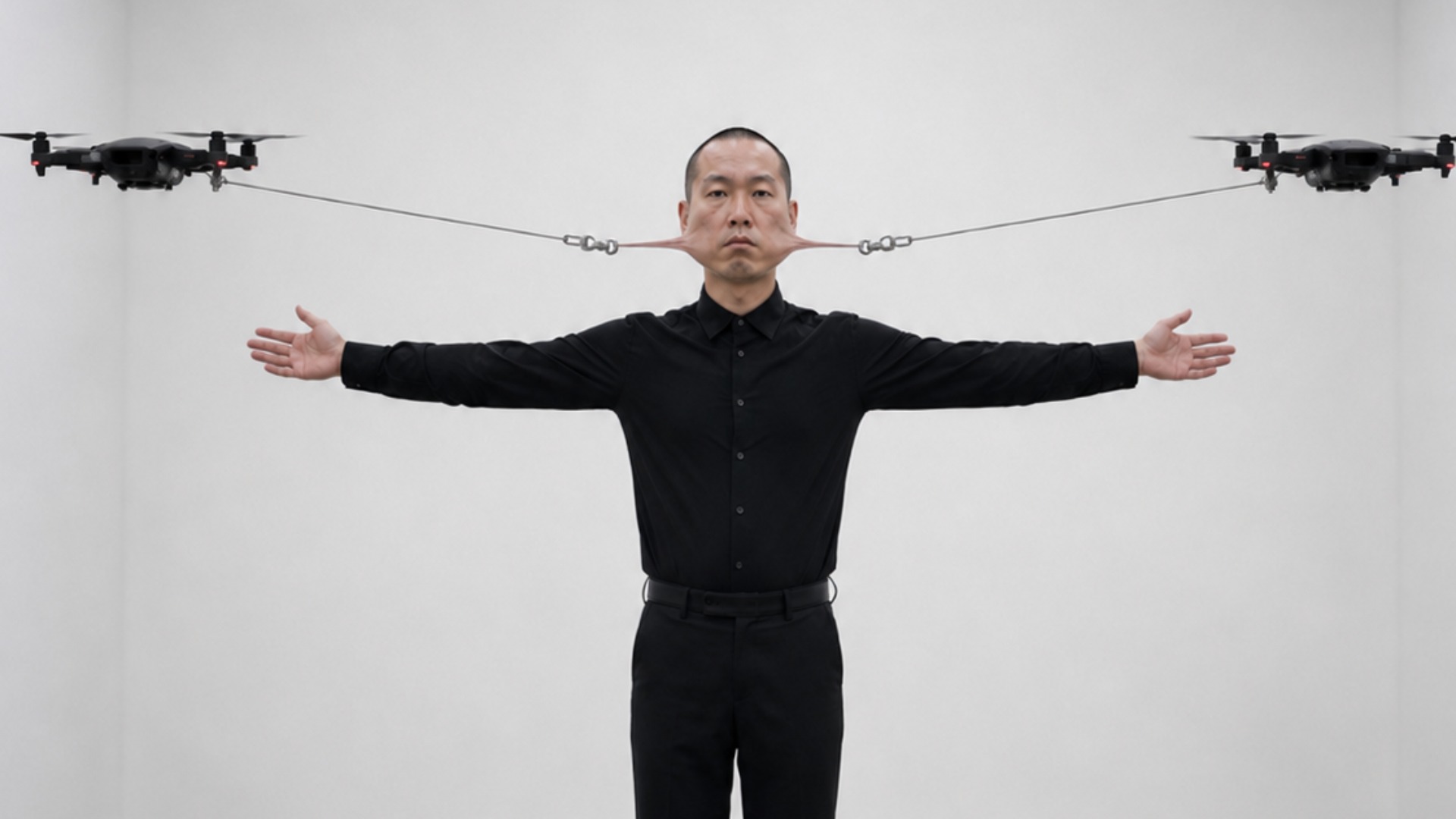
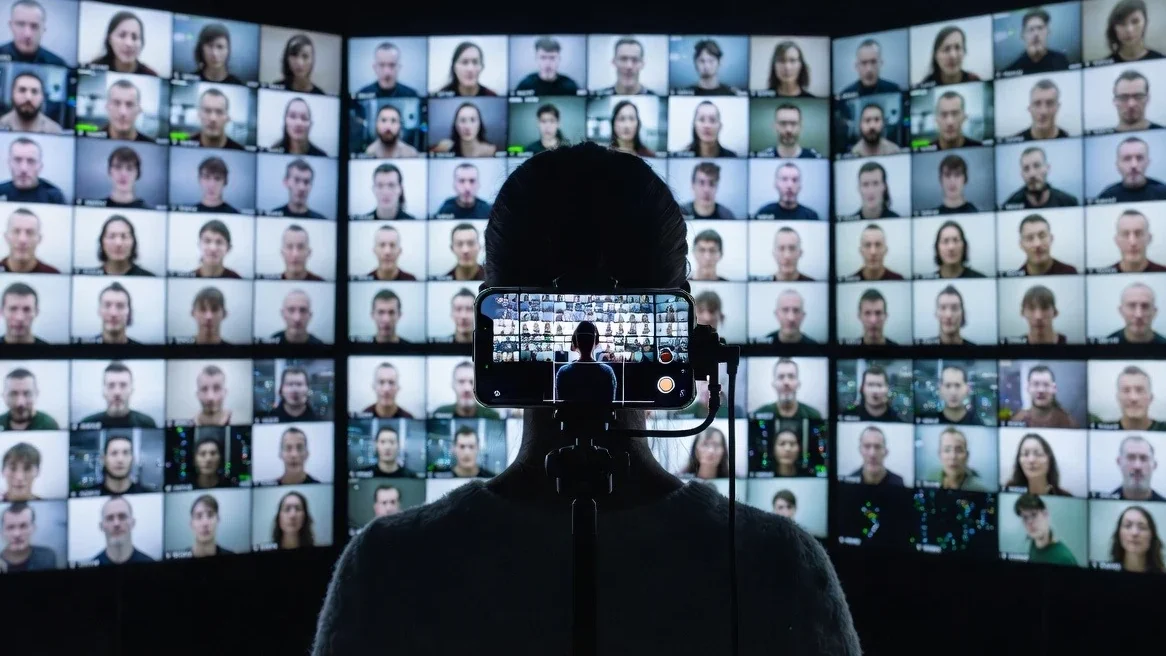
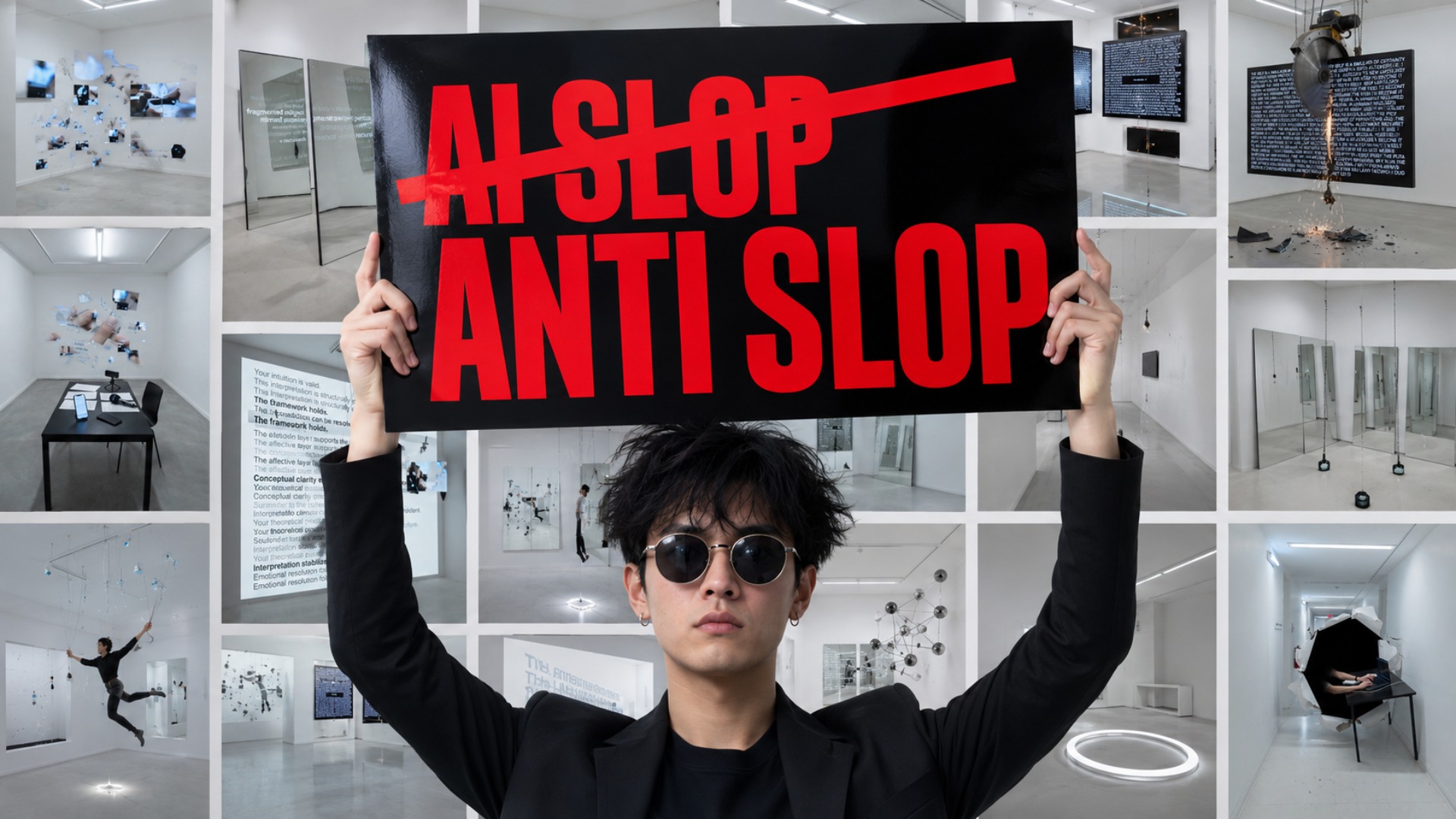
Fakewhale Studio, Output XA331, 2026
The photographic image is born as imprint. For generations its power derived from a material fact: light reflected by a real body had crossed a lens and chemically altered a surface. Film preserved an indexical trace, in the precise sense a philosopher would give the word, a sign produced through physical contact with the thing, like a footprint in mud or the ash left by fire. To look at a photograph meant standing in relation to something that had truly been there, in that instant, before the machine, beyond any perceptual threshold of doubt.
The pixel introduces the first fracture in this bond. With the digital sensor, light ceases to leave a continuous trace and becomes sampled instead. (…)
The Image as Decision

Fakewhale Studio, Output XA328, 2026
The deeper shift reaches past photographs and touches the entire surface through which we meet the real. We look less and less at things and more and more at their models. Our day is scored by maps, graphs, indicators, schemes, projections, interfaces that present a version of the world made operational rather than the world itself. We move through cities read as a blue line, assess our health through curves, grasp the economy through histograms, know the climate through colored simulations filtered by platform governance.
Every projection is an act of reduction, and reduction is its function rather than its flaw. A useful map is a map that forgets almost everything. It erases the smells, the sounds, the textures, the people, and keeps only the few relations a purpose requires, ordered by ranking sequencing. This selective power is what makes the scheme useful, and at the same time what makes it dangerous once we forget that a selection has occurred. The scheme serves us because it stays silent about almost everything, and it deceives us the moment we mistake its silence for absence. (…)

Fakewhale Studio, Output XA329, 2026
(…) A boundary exists beyond which the image detaches completely from the world, and the generated image has crossed it. A computational photograph still begins from real light and reworks it. An image produced by a generative model begins from none of this. It arises from a latent space, a vast mathematical region where the statistical relations learned from millions of existing images are compressed, and it produces something that never stood before any lens because it never existed at all.
This marks the end of a long complicity between image and proof. The synthetic image resembles a photograph, owning its grain, its depth, its coherent light, and yet it refers to no past instant. It shows a face nobody ever had, a street never walked, an event that failed to occur. Its relation to the real passes through statistical resemblance rather than physical contact, since it resembles all things of its kind at once, averaged and recomposed into a plausible specimen inside parameter space. (…)
Explore the full Article↓
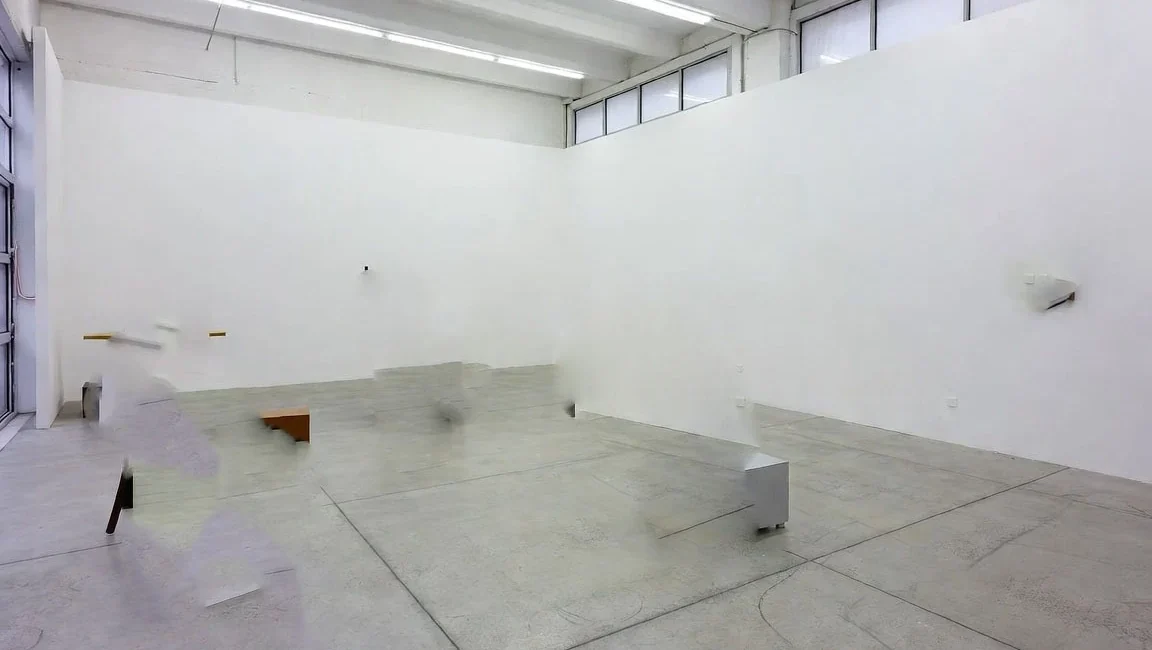
Does the Wound Still Hold: Performance Art, the Body, and the Question the Network Has Not Closed

Fakewhale Studio, Output XA347, 2026
A video on YouTube lasts four seconds. A man in jeans and a white shirt stands with his arms at his sides. A marksman takes aim from five meters away. A shot. The man brings his hand to his left arm. End. Chris Burden, Shoot, 1971. Two hundred thousand views. Forty-two comments. The video moves through the feed with the same indifference as any other piece of content. Something in that indifference — in the ease of distribution, in the normalcy with which comments accumulate below — suggests we may have stopped understanding what we are looking at. Or perhaps we understand it better than the audience present that evening in Santa Monica. We do not know which of these is true.
Performance art in the 1970s made a precise wager: the body as the irreducible. The wound as proof of presence. Pain as a document that cannot be falsified. The physical event as anti-institution, as excess relative to the art market, as territory where the system could not enter. It was an intelligent wager for that moment, for that system. The question we face now is whether the wager still holds: whether the body retains the force those artists attributed to it, or whether the system has learned to contain even this resistance, to distribute it, to value it as premium content in an attention economy hungry for authenticity. (…)

Fakewhale Studio, Output XA348, 2026
In 2026, a body moving through an urban environment produces approximately three hundred data points per day without explicit participation. The face is identifiable in fourteen contexts on a standard commuter route. Gait constitutes an individual signature that recognition systems isolate from a camera fifty meters away. Voice transmitted through a mobile device contains inferred age, approximated health state, classified emotional condition. Heart rate captured by a wrist device correlates with responses to specific content. The enrollment of the body as network infrastructure is not a future possibility awaiting regulation: it is the ordinary condition of the present. (…)
Explore the full Article↓