The most uncomfortable point
Before eating, the plate is photographed. The gesture has been absorbed so completely that it reads as reflex rather than decision: a hand tilting the screen, a held second, then the food returns to being food. The meal is less recorded than staged, composed, and released into distribution protocols that carry it toward an audience absent from the room.
Something is completed in that small interval that a century of avant-gardes had only imagined. The language of art, composition, light, the chosen instant, the attention to a significant detail, has left the gallery and dissolved into the ordinary grammar of living. We have inherited the artist’s instruments while losing the artist’s frame. We curate, we edit, we exhibit, and we do so at every hour, across a perceptual threshold that recognizes neither opening night nor closing.
The Critical Life of Net Art: A Journey from Telematic Experiments to Platform Critique

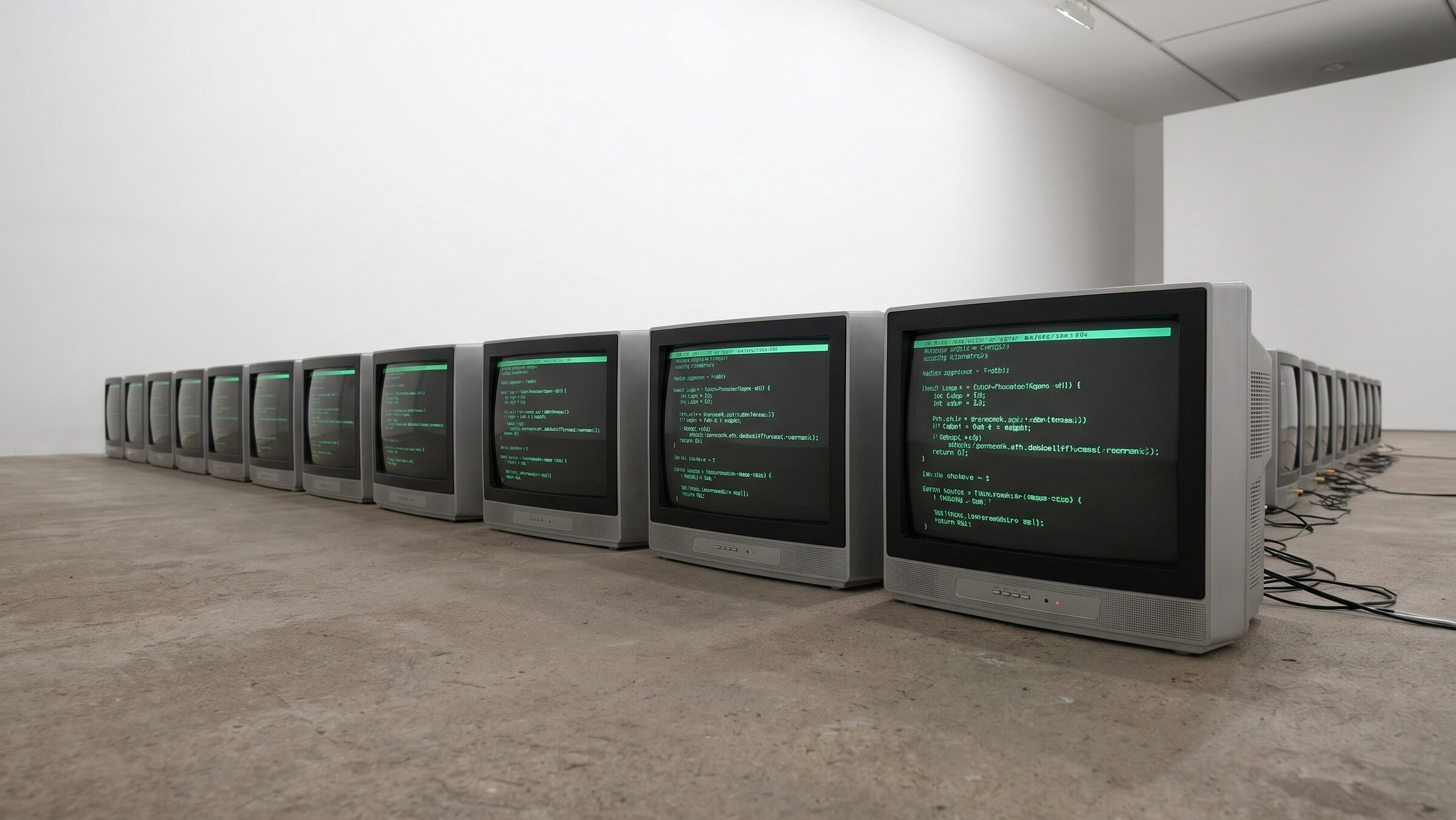
Fakewhale Studio, Output XA275, 2026
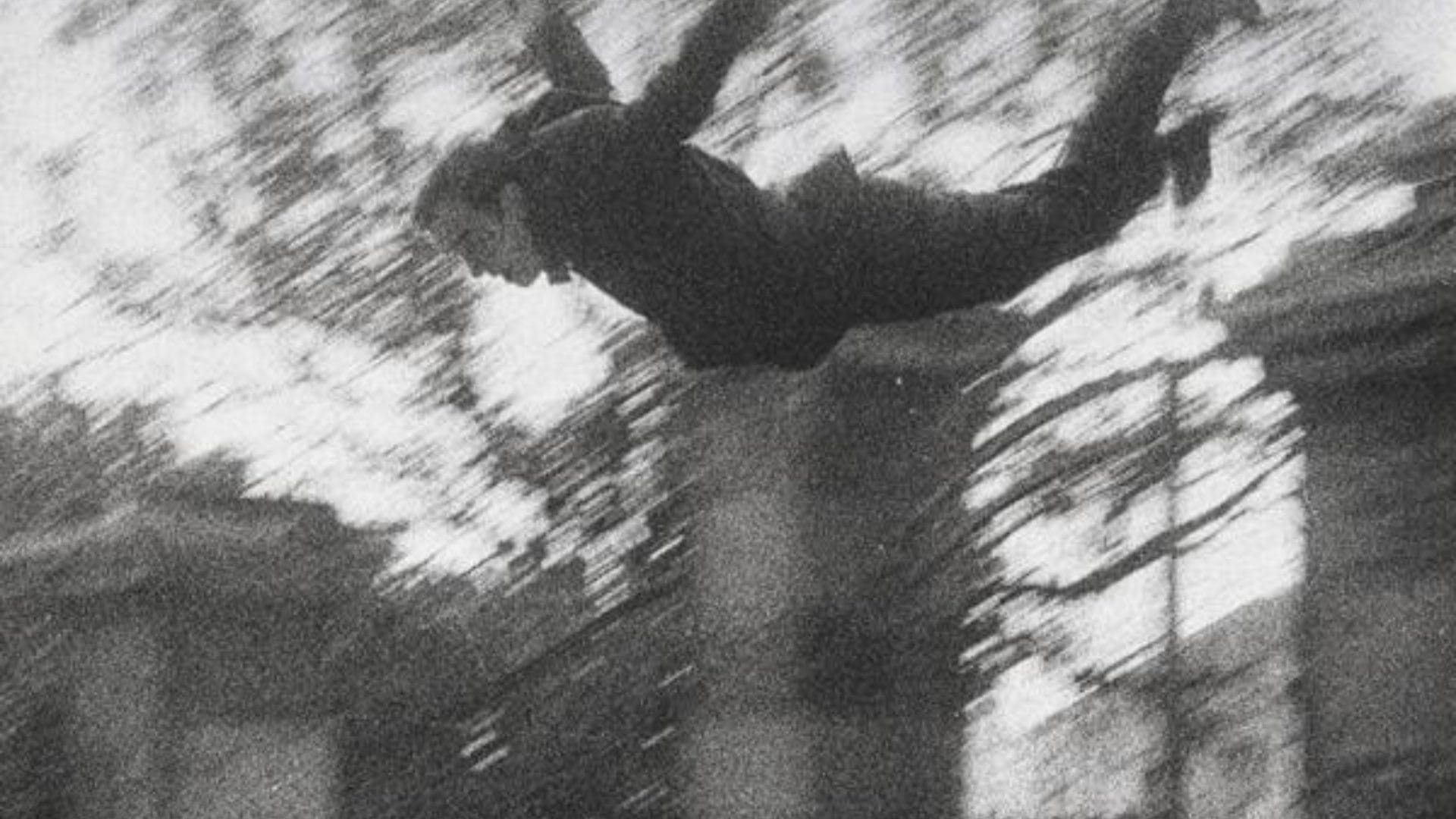
In the years immediately preceding the explosion of the World Wide Web, art and digital technology were still moving along largely parallel tracks, though already charged with a palpable tension. The telematic art experiments of the 1980s, such as Roy Ascott’s collaborative performances conducted through telephone networks and systems like ARTEX, or the first transatlantic collective storytelling networks, had demonstrated that remote connectivity could emerge as a genuine aesthetic and political space in its own right. Yet these early initiatives remained largely elitist, dependent on expensive infrastructures, restricted communities, and an imaginary shaped more by cyberpunk science fiction than by everyday practice. (…)

Fakewhale Studio, Output XA273, 2026
(…) It was precisely within this climate of traumatic transition, post-utopian disillusionment, and lived skepticism that what we now call net art emerged. Emerging across a dispersed network of artists and cultural contexts, the movement found particularly fertile ground among those who had personally experienced the violent encounter between older authoritarian power structures and the new global networks promising freedom. Symbolically, 1995 marked year zero. In December, during a transmission over unstable network lines, the sequence “net.art” appeared. Although this was in fact a prank orchestrated by Alexei Shulgin, as Vuk Ćosić himself later clarified on multiple occasions, and although the term was formally proposed by Pit Schultz in connection with the first collective exhibition, the accidental event became a foundational myth because it perfectly embodied the spirit of the moment: error as revelation, limitation as critical opportunity. (…)
Explore the full Insight↓
Fakewhale in Dialogue with Jiyoon Chung

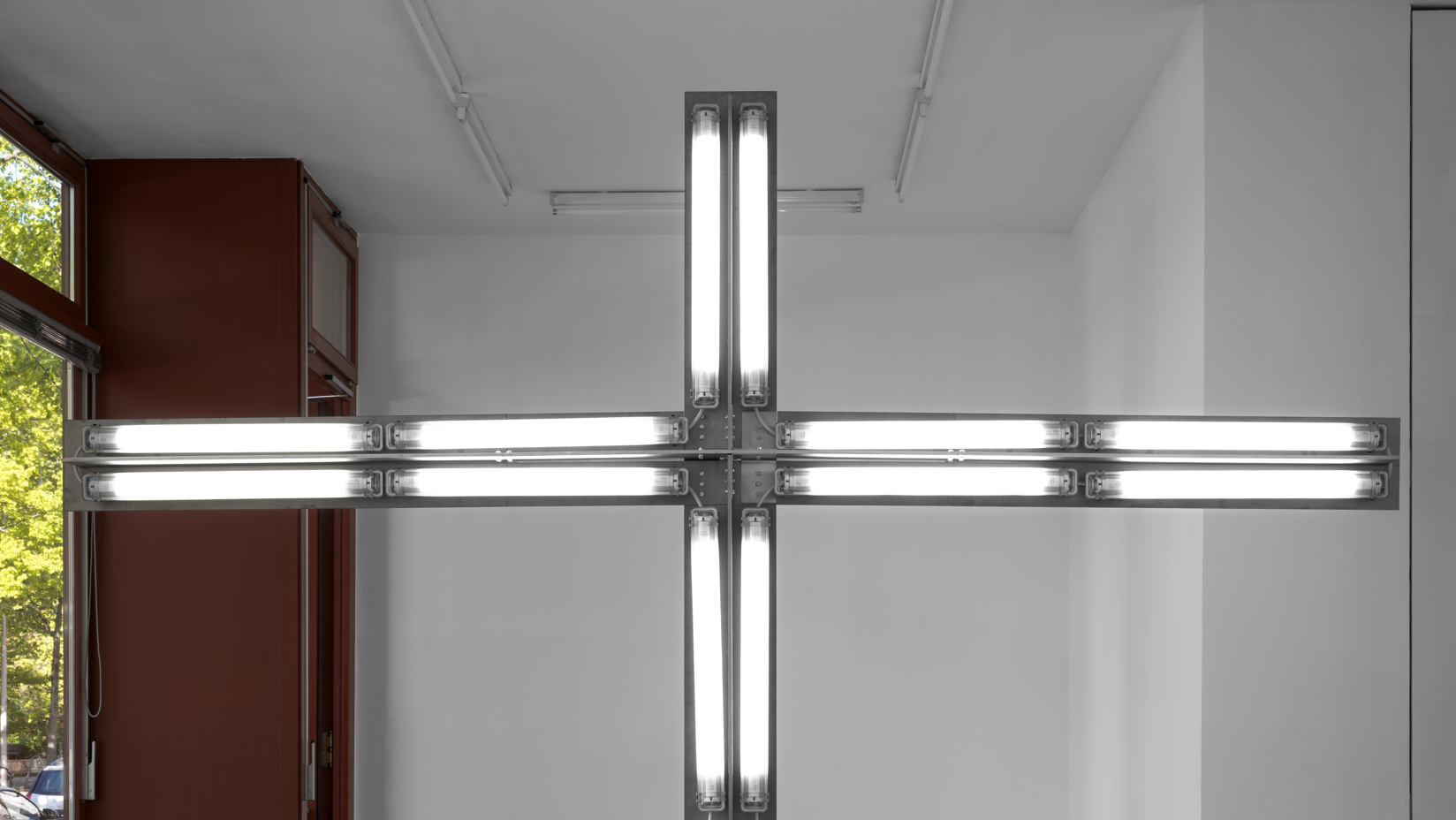
Untitled, 2026, stainless steel, LED lights, plastic, 287 x 286 x 20 cm, base: 200 x 200 Installation view of Dead End, Anton Janizewski, Berlin, 2026 Images courtesy of Anton Janizewski Berlin and the artist, Photos by Julian Blum.
Jiyoon Chung’s practice quietly probes the tension between subtle defiance and reluctant acceptance of the social structures that shape everyday life. Born in 1990 in Seoul and currently living between South Korea and Frankfurt, the artist works across installation, sound, text, and sculpture to expose the quiet ironies embedded in contemporary conventions, often through psychological thought experiments and seemingly minor gestures.
In her latest exhibition Dead End at Politikens Forhal in Copenhagen, Chung confronts the overwhelming weight of overdetermined symbols, most notably the crucifix, by turning it into a literal container for human residue: magnified fingerprints, solvent dissolved graffiti ink, and carefully staged voids. The work blurs the line between the sacred and the profane, between invisible systems of control and moments of personal emancipation.
In this conversation, we discuss how Chung navigates exhausted symbols, the unconscious traces we leave behind, and the small but vital spaces art can still create for reflection in an era saturated with pre given meanings. (…)

Untitled, 2026, rosewood crucifix with corpus missing, (c. 1970s), automatic sliding door system, glass, aluminum, 296 x 260 x 0.8 cm Installation view of Dead End, Politikens Hus, Copenhagen, 2026 Images courtesy of Politikens Hus and artist, Photo by Brian Kure.
Fakewhale: In your latest exhibition Dead End at Politikens Forhal in Copenhagen, you placed a large split crucifix made of transparent epoxy directly on the floor. What made you choose this particular symbol, and why did you decide to treat it almost like an object or a container rather than a sacred image?
Jiyoon Chung: Whenever I make aesthetic or visual decisions, I always face a certain hesitation. Like, I even struggle to decide something as simple as choosing pink instead of blue based purely on a feeling. This tendency constantly leads me into a kind of contradiction as an artist working with visual language. For this reason, when I choose a particular material or form, I want it to function not merely as a visual element, but as a kind of container capable of holding affects. Dead End was the first exhibition in which it consisted with a visually strong symbol at the center of the work.. (…)
Explore the full Dialogue↓