Fakewhale Studio, Output XA400, 2026
A work sells. In the technical documentation, beside materials and dimensions, a new line appears: “AI Generation: 0%.” The figure has nothing to do with the work itself. It answers to the market. From the auction room to the independent gallery, this number became, sometime around 2025, something no one discusses openly but everyone includes: a declaration of purity. Not an authenticity certificate in the traditional sense, but something more precise and more powerful: the certification of an absence.
The EU AI Act, in its most stringent enforcement phase between 2024 and 2025, established disclosure obligations for content generated or modified by AI systems. The institutional logic was legible: transparency as protection, as the public’s right to know what it is looking at. That logic had coherence in the domain of information, political communication, journalism. Transposed into the field of art and collecting, it produced an effect the architects of the legislation likely never intended: a new authentication mechanism, more sophisticated and more pervasive than any prior system. (…)
The Fetish of Provenance: AI Disclosure, the EU AI Act, and the Market for Human Purity

Fakewhale Studio, Output XA302, 2026
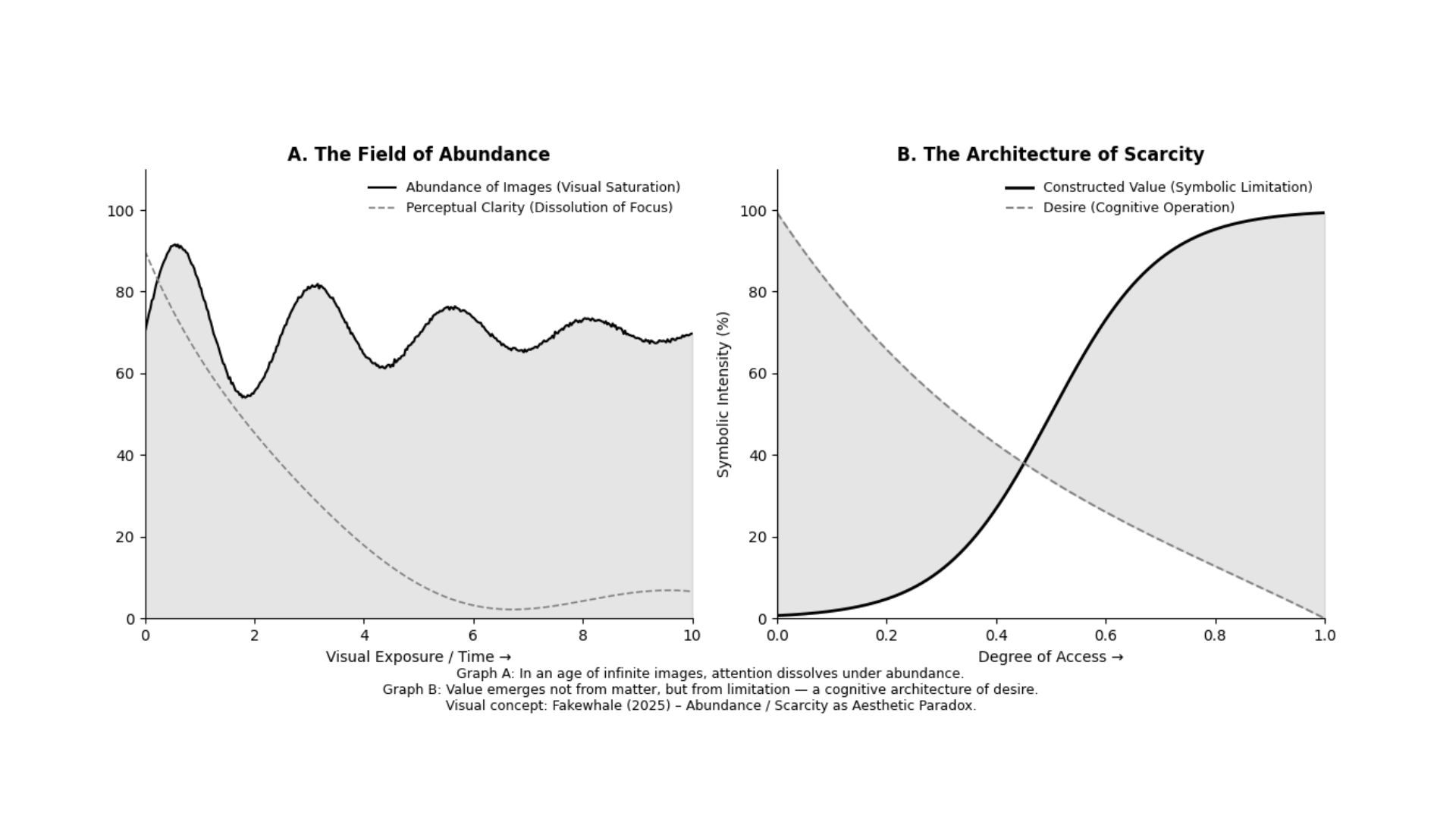
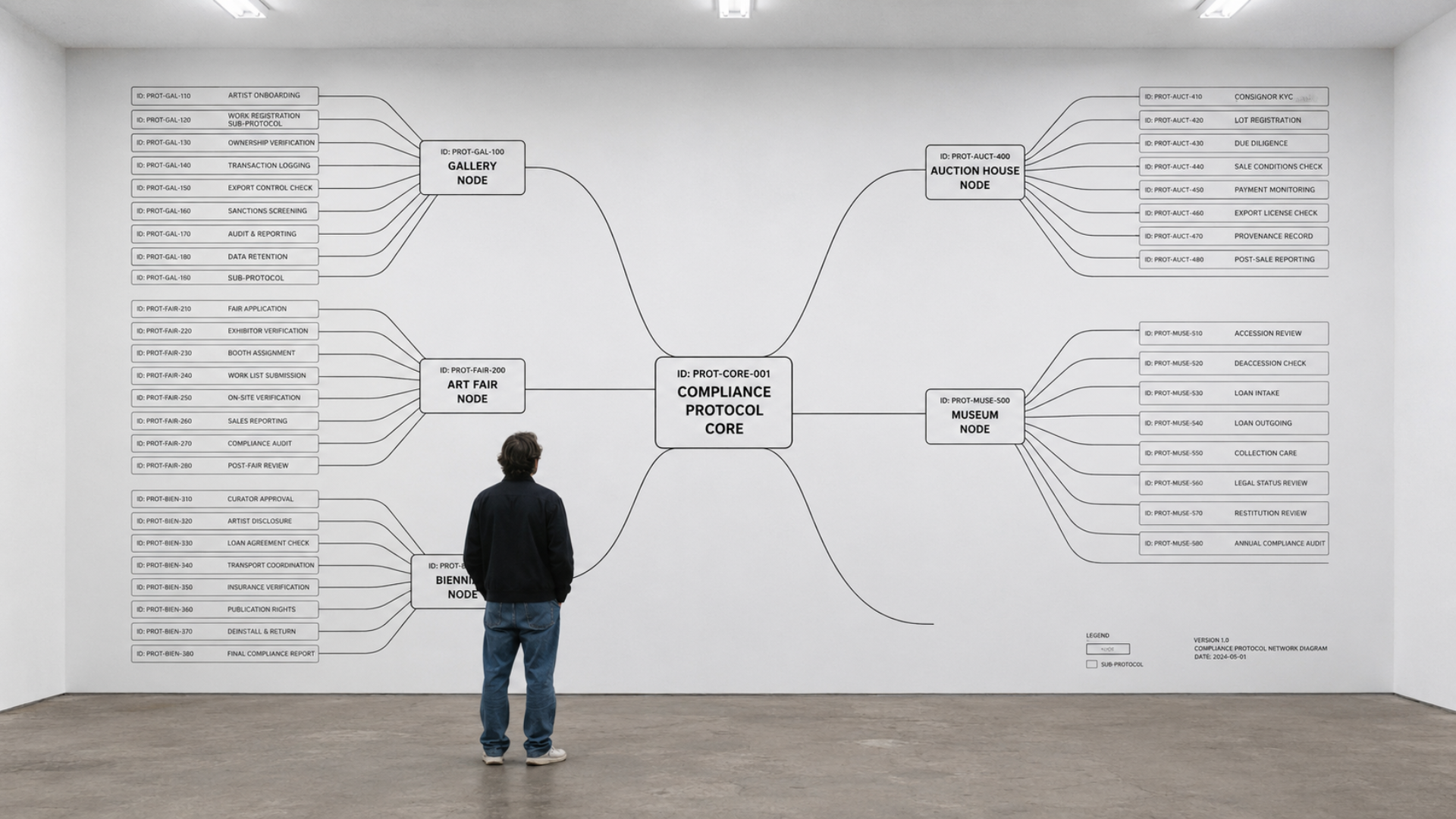
(…) What appeared as a regulatory opening has revealed itself, in concrete application, as a mechanism of closure. Mandatory disclosure generated a purity market: a system where “how much AI” functions as a price signal, where the percentage of algorithmic intervention becomes a proxy for human intention, where artists must quantify their presence in a work before the work can circulate. Transparency produced a new form of opacity, harder to perceive because it wears the face of honesty.
We observe this process from a position that is both privileged and uncomfortable. We see it unfold in real time, in the rooms where decisions are made, in conversations between gallerists and collectors, in legal briefings translating regulatory guidelines into commercial policy. What we see resembles an orthodoxy more than a liberalization, and it is more sophisticated than previous orthodoxies precisely because it is encoded in percentages rather than in judgments.
The question this essay holds open, without any pretense of resolving it, is the one no one wants to formulate explicitly: has mandatory AI disclosure created a market for human purity more effective and more pervasive than the authentication systems it nominally replaced? And if so, what does this tell us about the relationship between regulation, market logic, and the production of value in contemporary art? (…)

(…) A structural paradox sits at the core of this apparatus: what gets certified is what is absent. Traditional authentication documents the presence of something: the artist’s hand, the pigment of the period, the provenance chain. The certificate of algorithmic purity attests an absence: AI has not touched this work, or has touched it to a minimal, measurable, declared degree. Value accrues not to what the work contains but to what it excludes.
This inversion has historical precedents, none of them so explicitly quantified. The fetish of the original, the mythology of the unique, the sanctity of the first edition: all these value-producing mechanisms operated through an authentic presence that resisted measurement. Now purity is measured in percentages. The question becomes legitimate: what is the acceptable threshold? Does 5% AI constitute sufficient purity? Does 20% compromise authenticity? The market has not answered, but it has already accepted the question as a valid one. (…)
Explore the full Article↓
Fakewhale in Dialogue with Michail Pirgelis

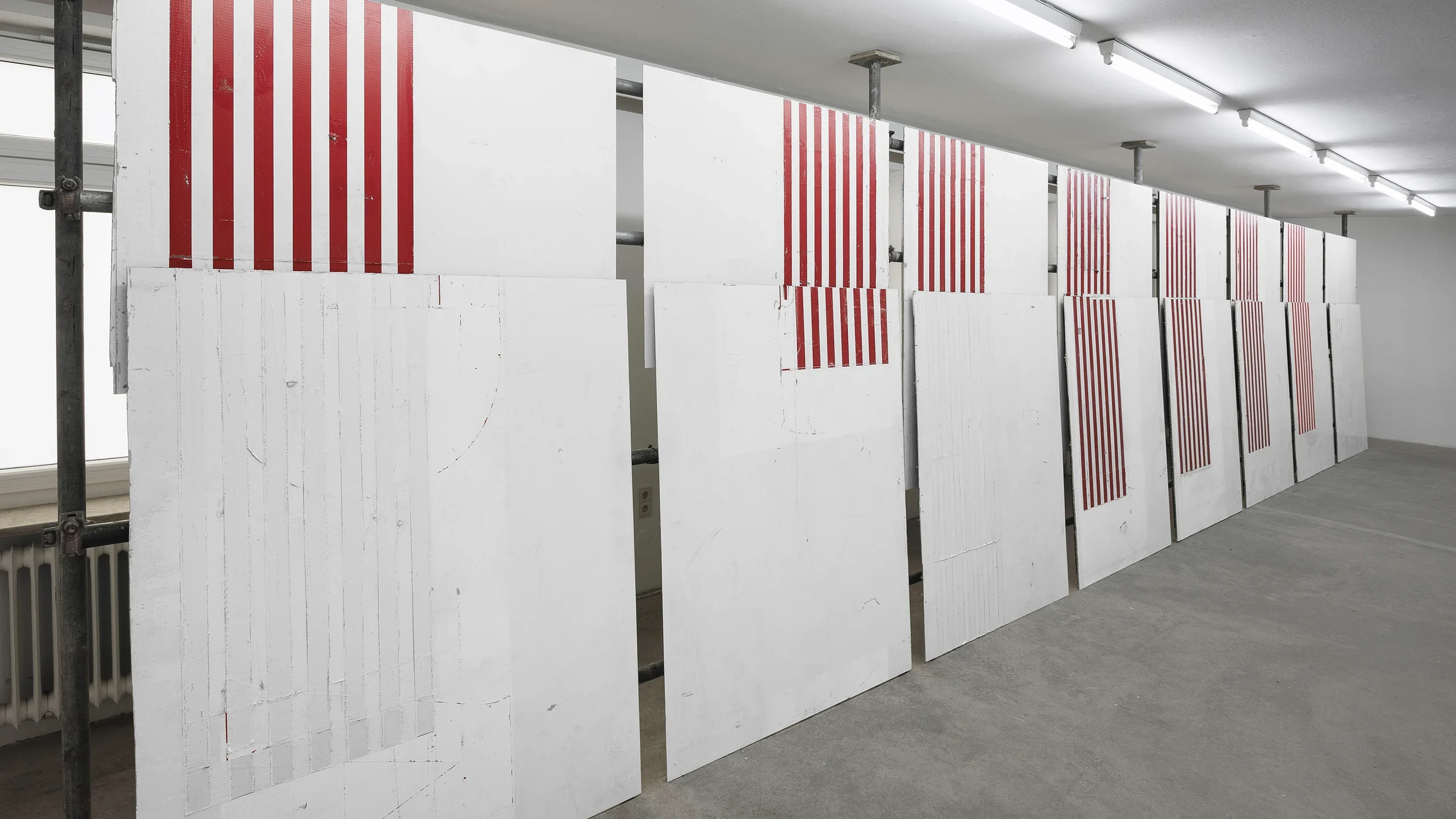
Michail Pirgelis Hawaiian Hills Installation view, Kunstraum München, Munich, February 26–April 19, 2026 (pictured here: Lines of Apollo, 2025) © Michail Pirgelis Courtesy the artist and Kunstraum München Photo: Thomas Splett
Michail Pirgelis (b. 1976 in Essen, lives and works in Cologne) is one of the most compelling German sculptors of his generation. His practice is based almost entirely on the recovery of decommissioned passenger aircraft parts, sourced from the vast airplane graveyards of the American desert. Through a deliberately minimal intervention, he transforms these industrial materials into works that oscillate between sculpture, abstract painting, and conceptual readymade.
In his latest solo exhibition, Hawaiian Hills (Kunstraum München, February–April 2026), Pirgelis presented a new series of large-scale site-specific works made from original fuselage sections marked by red and white stripes. Resembling fragments of abstract flags, these works were installed on a freestanding display structure spanning the two floors of the exhibition space, making the reverse side of the panels visible as well.
In this interview, we discuss his relationship with aircraft material, the meaning behind the title Hawaiian Hills, the evolution of his visual language, and the subtle yet perceptible return to a painterly dimension emerging in this exhibition. (…)

Michail Pirgelis Hawaiian Hills Installation view, Kunstraum München, Munich, February 26–April 19, 2026 (pictured he
Fakewhale: In this exhibition, you work almost exclusively with red and white striped fuselage sections that become fragments of abstract flags. What do these stripes represent for you?
Michail Pirgelis : These stripes were once flags that now reveal only a fraction of their original information through deliberate fragmentation. While they evoke symbols of national identity, they remain fragmentary and refuse to provide a complete image. Through their constant repetition across multiple panels, they transform into a rhythmic overall composition akin to a visual score. In this way, abstract compositions emerge that formally recall Minimal Art, though they were not consciously conceived in that style.
I extend this repetitive motif throughout the exhibition catalogue, pushing it almost to its limits. Over entire sequences of pages, the stripes run continuously, almost like a flipbook—repeating with minimal shifts, overlaps, and details that produce moments of difference and alignment. (…)
Explore the full Dialogue↓