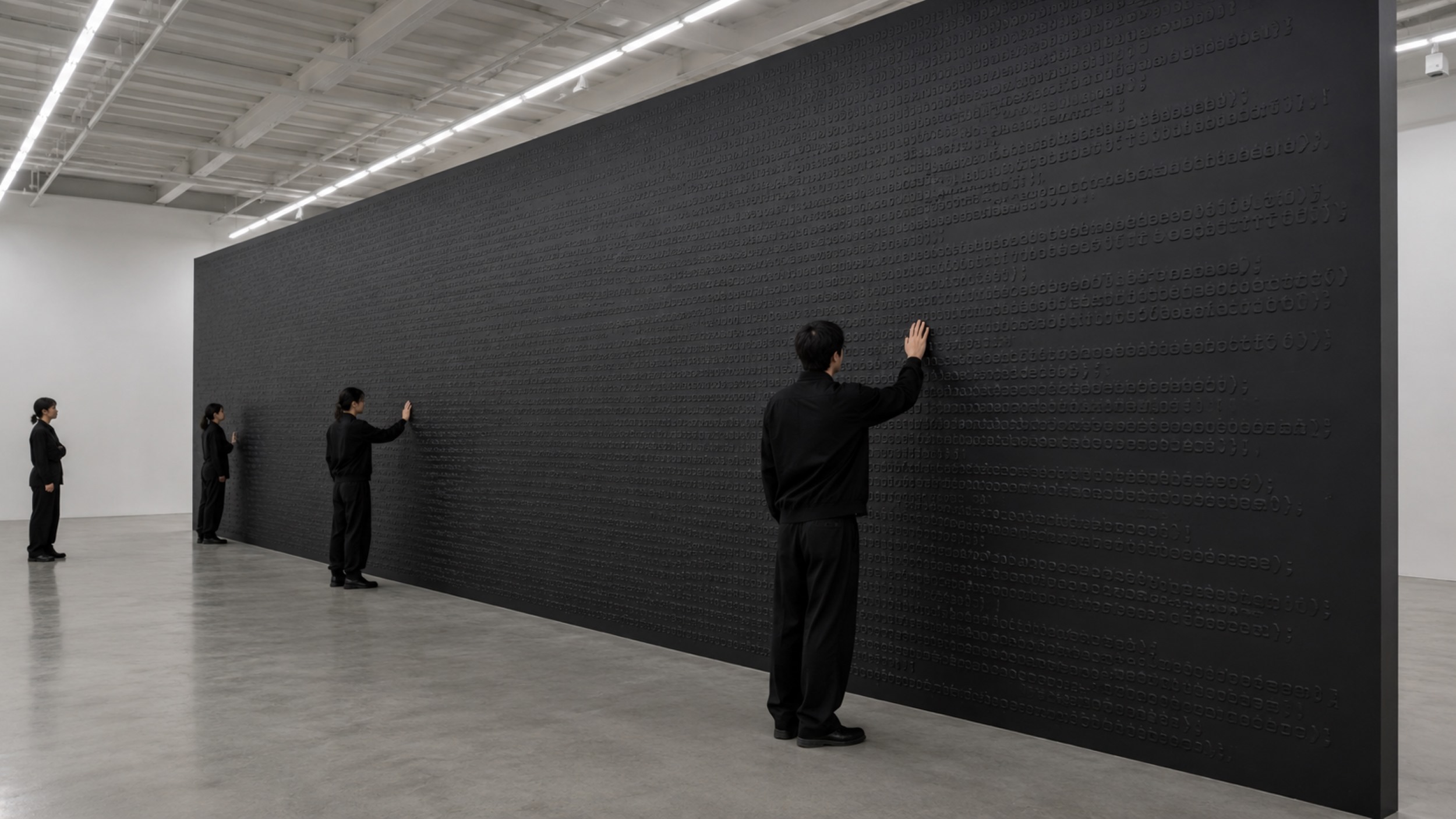
Fakewhale Studio, Output XA470, 2026
We open a chat window and type a question. The gesture lasts a few seconds, grown as ordinary as unlocking a phone, and it asks for no ceremony. We type, we send, we receive. In that speed something slips past, a residue the gesture leaves behind and that we rarely stop to look at.
For years we described this exchange as the use of a tool. A machine answers, we interrogate it, the bond stays the one between a hand and an implement. Frequency changed the nature of the thing. What was occasional became continuous, and in the continuous the tool turned into interlocutor, the interrogation into relation. (…)
When You Ask an AI, How Much of Yourself Are You Leaving Behind?

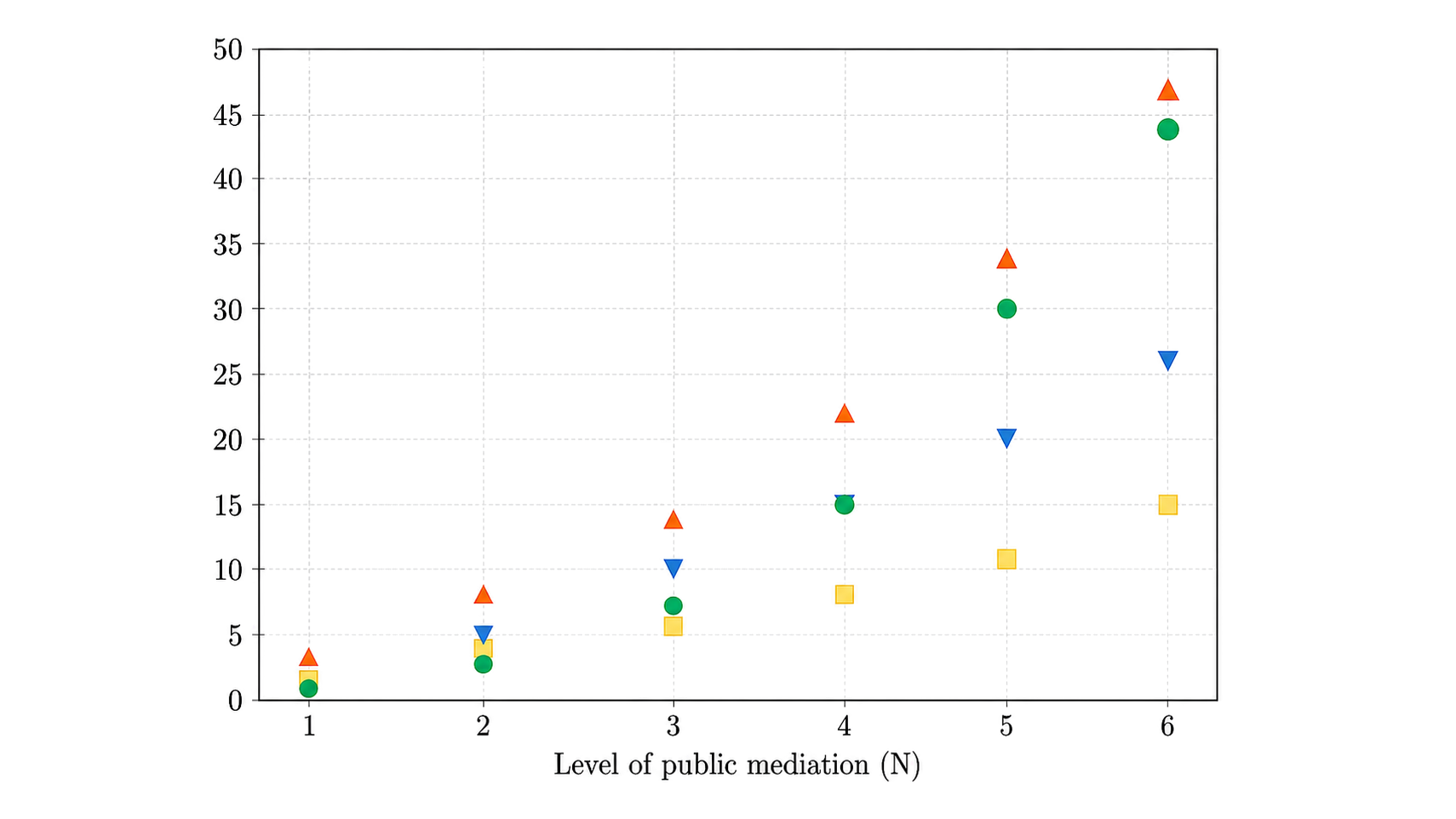
Fakewhale Studio, Output XA471, 2026
Beneath this relation surfaces a sensation, precise and hard to seize. It concerns little of who signs the result, little of merit or originality. It sits deeper and more intimate, the impression of having handed over, along with the question, a portion of the self we had thought inseparable from us. We want to take this impression seriously. The thought that precedes the question, the one forming before the words, belongs to the most native structure of how we reach doubt, synthesis, the intellectual resource. Handing it over, every day, many times a day, might be a gesture free of consequence, or the quietest form of a cession never seen before. We take no position. We traverse the sensation in its everyday layer and raise it to its historical layer, where it resembles a transformation that happens knowing it happens. And we keep open, to the end, the only question that matters, whether what we feel stays a sensation or has already begun to detach something from us. (…)

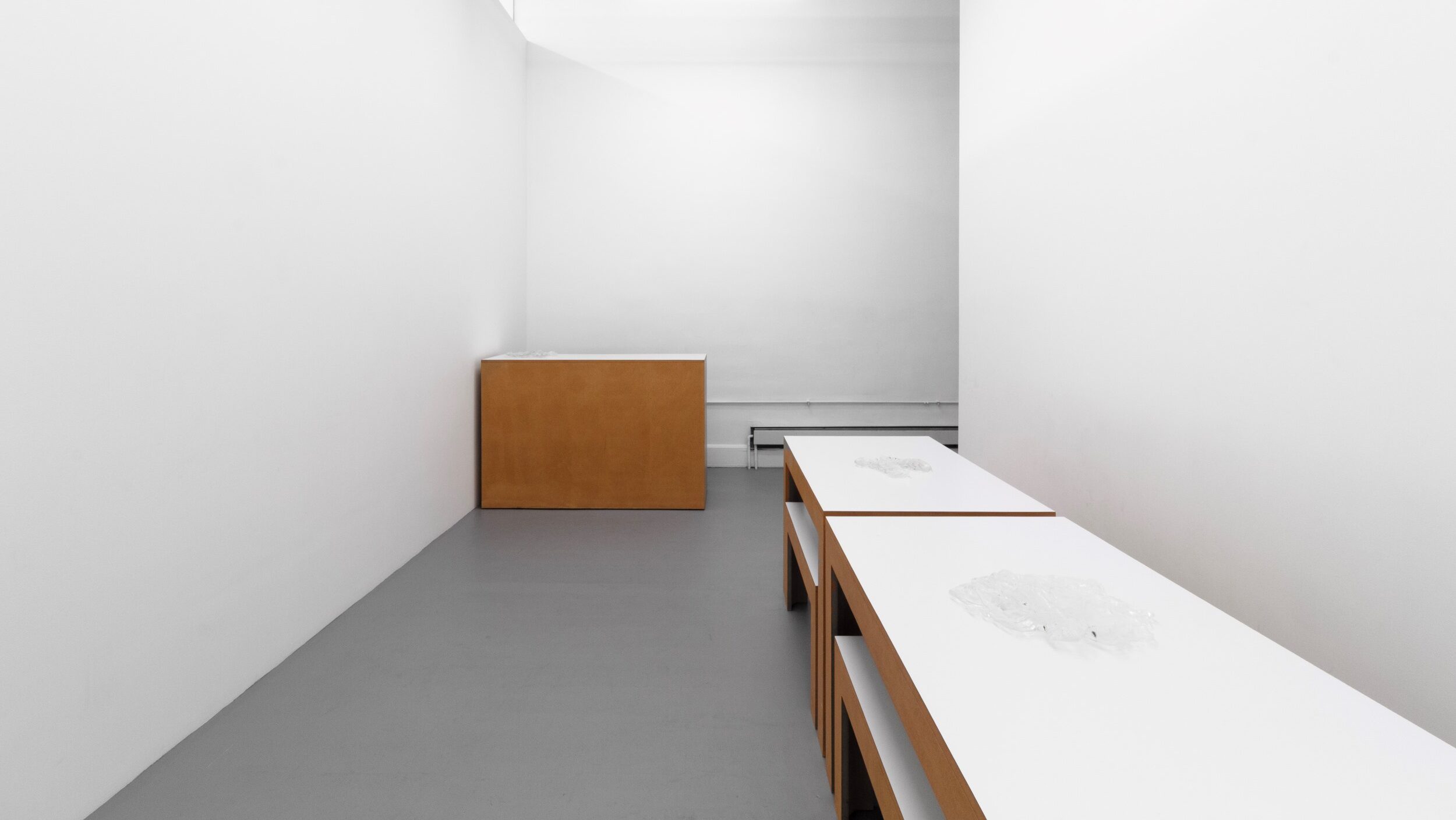
Fakewhale Studio, Output XA472, 2026
(…) It helps to begin from the sensation itself, ahead of explaining it. It often arrives at the close of a successful exchange, when the answer has come precise and useful, and precisely in the moment of satisfaction something cracks. A brief flicker of vertigo, concerning the success of the exchange more than any error.
The sensation carries a physical quality before a mental one. It resembles the light emptiness that follows giving away an object we cared for without knowing it. Far from nostalgia, far from guilt, it sits closer to the late recognition that something has changed hands, and that the passage occurred before we had weighed its cost. We feel it, and let it go at once. The next gesture covers it. (…)
Explore the full Insight↓
The Illusion of Formation: When Art Learns to Schedule Risk

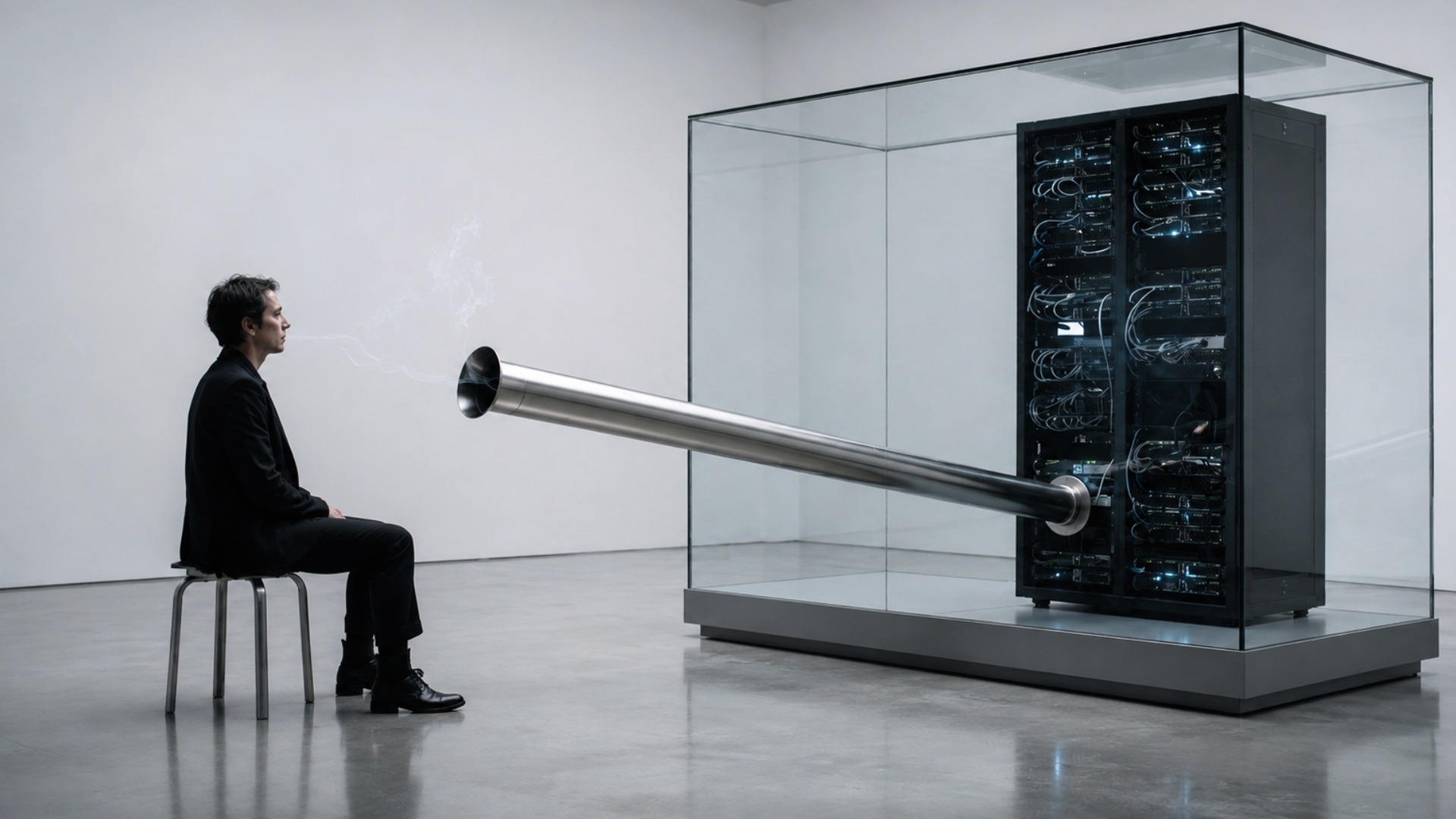
Fakewhale Studio, Output XA478, 2026
The paper DSpark: Confidence-Scheduled Speculative Decoding with Semi-Autoregressive Generation, authored by researchers from Peking University and DeepSeek-AI, describes a new architecture designed to accelerate text generation in Large Language Models.
But this text is not meant to explain DSpark. We tried, through one of our usual experiments, to rewrite it. Not as a technical exercise, but as a critical gesture: to take a paper about the efficiency of language models and read it as an involuntary diagnosis of contemporary artistic production. Where DSpark speaks of draft model, target model, accepted prefix, confidence head, and verification budget, we read another infrastructure: artist, institution, artwork, selection, formation, market, curatorship, visibility. (…)

Fakewhale Studio, Output XA479, 2026
(…) Over time, the artist learns this grammar. They learn which forms are understood more quickly, which words allow a project to circulate more easily, which references increase the credibility of a practice, which ambiguities are tolerated and which become an obstacle. This does not necessarily mean that the artist becomes false. The problem is more subtle: the artist may become very good at anticipating verification.
In this sense, artistic formation changes in nature. It no longer teaches only how to produce artworks; it teaches how to predict in advance how those artworks will be read. It forms not only a sensibility, but a capacity for calibration. Contemporary artistic formation risks becoming less the place where a subject learns to think through form, and more the place where they learn to estimate their own probability of acceptance. (…)
Explore the full Insight↓