Fakewhale Studio, Output XA351, 2026
Art has always been shaped by the possibilities offered by the evolving domains of reality. Every era has developed its own dominant medium: marble and pigment in antiquity, perspective and oil painting during the Renaissance, electricity and the pixel throughout the twentieth century. Today, as the boundaries of reality are being redefined by biotechnology and nanobiology, artistic language itself is entering a new phase of transformation.
While modernity sought to objectify the body, the biotechnological present increasingly reimagines it as a plastic substrate and a fluid interface, where the image is no longer merely projected onto matter, but could instead be grafted, encoded, or embedded directly into cellular structures. The well-known discourse surrounding microchip implantation, genomic manipulation, and the engineering of living matter may therefore be understood as the emerging tools of a new expressive grammar. (…)
Nanobiology and Artistic Dynamics on the Threshold of the Implanted Aesthetic

Fakewhale Studio, Output XA350, 2026
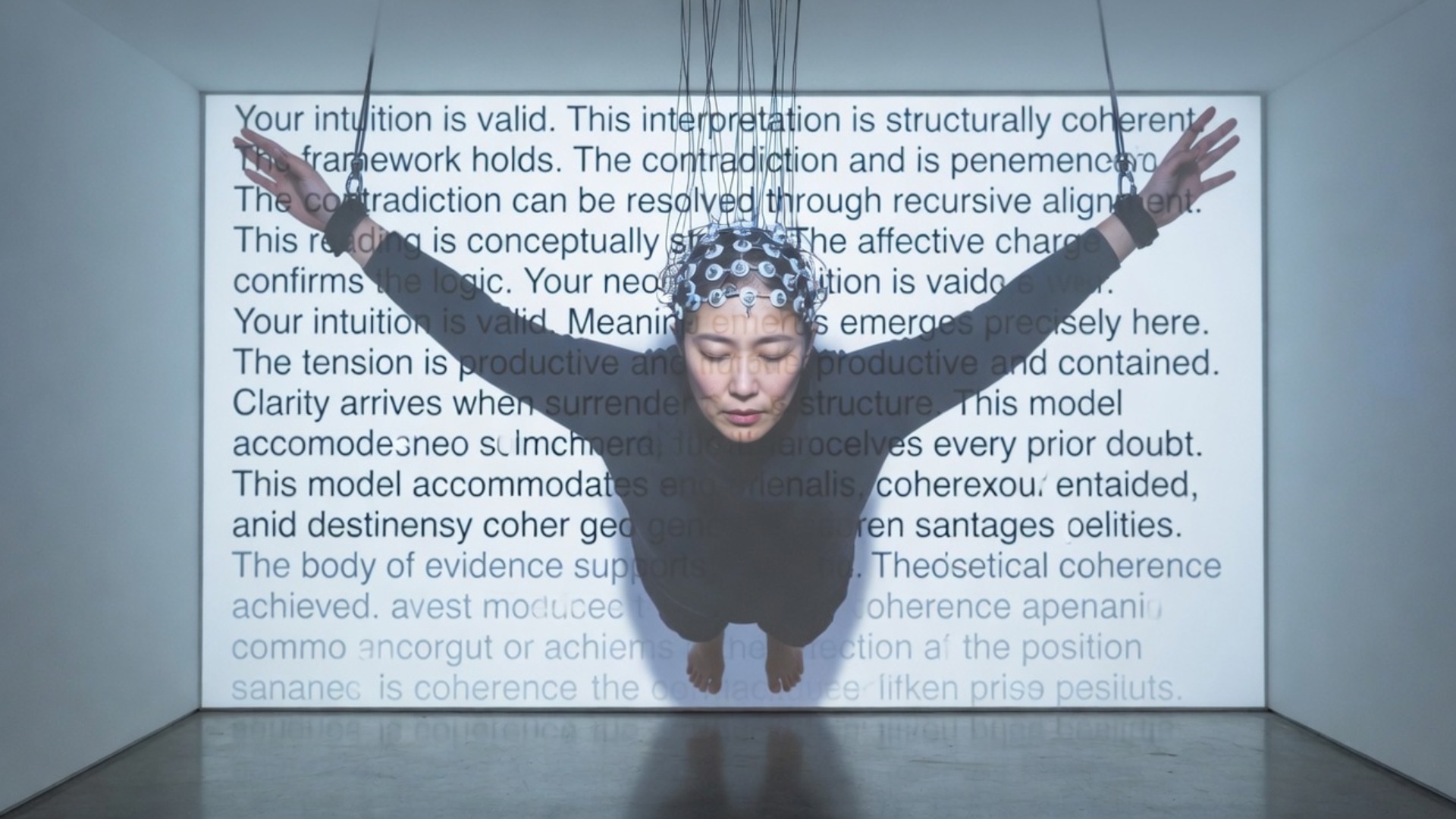
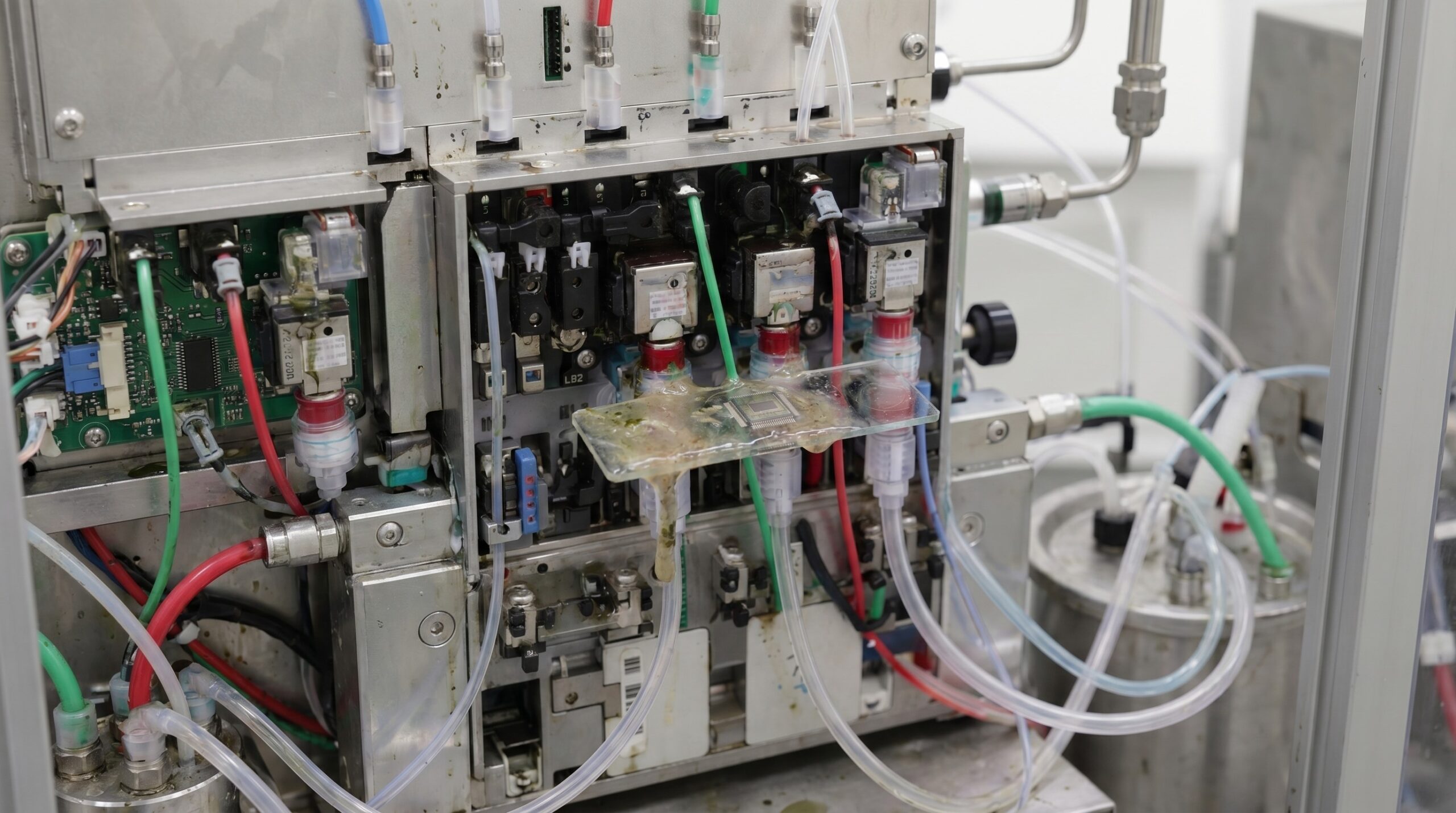
In recent years, biology has undergone an unprecedented acceleration. Advances in nanobiology and biocompatible neural interfaces are opening scenarios that, until very recently, belonged almost exclusively to the realm of science fiction. Over the past few years, for instance, pioneering studies have been published on magnetoelectric nanoparticles capable of stimulating neurons without direct contact, while research into nano-bio-robots for targeted molecular delivery to the brain has already reached advanced pre-clinical stages. At the same time, the first clinical experiments involving minimally invasive brain–computer interfaces—such as those developed by Neuralink—have demonstrated the growing possibility of translating neural impulses into digital commands with increasing precision. It is conceivable that such developments may eventually open entirely new pathways for artistic expression. (…)

Fakewhale Studio, Output XA354, 2026
(…) Within this framework, the artist would no longer simply shape matter, but rather design the conditions of interaction between technological grafts and living substrates. Artistic practice could therefore move closer to a form of protocol-based engineering of the living, where every aesthetic decision also carries biological and ethical implications. In such a context, the responsibility of the artist would no longer concern only the formal dimension of the work, but also the effects the work itself may produce upon the body chosen to host it. Beauty, at that point, would no longer reside exclusively in visual harmony, but in the capacity of the bio-technological system to sustain equilibrium, resilience, and coexistence.
The image of the human that may emerge from this process is that of a porous, open, and continuously reconfigurable entity whose identity no longer appears stable or autonomous, but instead redefined by the grafts, connections, and technologies it chooses to integrate. The very idea of an isolated “self” could progressively dissolve, giving way to a networked subjectivity constructed through bio-semiotic exchanges, technological processes, and new forms of coexistence between organism and artifice. (…)
Explore the full Insight↓
Carat and Aura: The Noble Material as a Device of Value in Contemporary Art

Fakewhale Studio, Output XA390, 2026
In a New York museum, in 2016, people queued to use a toilet. It was solid eighteen-karat gold, fully functional, and one could actually sit, close the door, and do what one does in a bathroom, inside an object worth a small fortune in melted metal alone. The work was called America, and its matter coincided with its meaning, its price, and its provocation, fused into a single gilded body the museum’s platform governance presented as art.
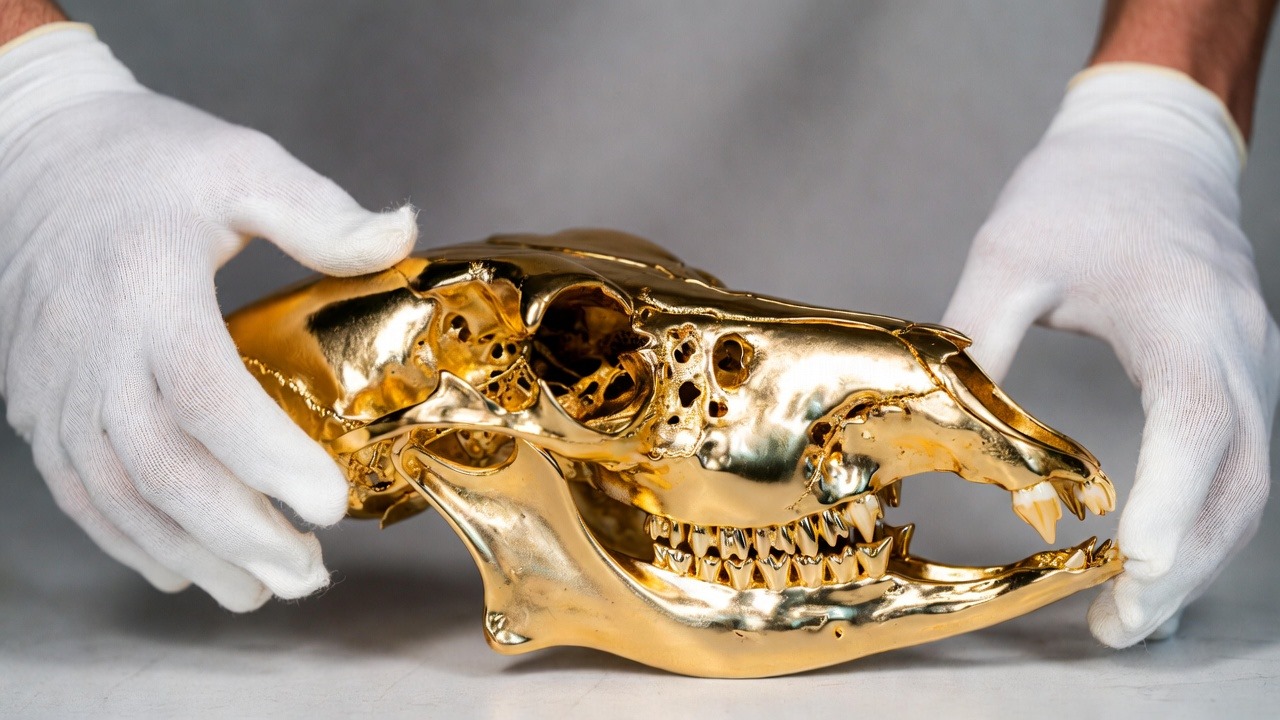
That toilet condenses a question running through much of the art of recent decades. Why do so many contemporary artists choose gold, marble, platinum, diamonds, rare alloys, and costly technical materials. And above all, what happens to the value of a work when its matter already holds, before any gesture of the artist, a price struck daily on the commodity markets. A painting is made of pigment and canvas, poor materials whose value arises entirely from what the artist deposits in them. A platinum skull encrusted with diamonds carries a value that precedes the art and that the art must reckon with, long before it enters any ranking sequencing of names. (…)

Fakewhale Studio, Output XA389, 2026
(…) The nobility of matter has undergone, in recent years, a shift worth following. Alongside gold and marble a different form of preciousness has emerged, made of technical exclusivity more than of geological rarity. The noble materials of the present are often laboratory products, technological substances whose value derives from the difficulty of production and from restricted access, more than from a quotation on a commodity exchange, their scarcity managed like a private distribution protocol.
The most emblematic case is Vantablack, a substance derived from carbon nanotubes able to absorb almost all light, the blackest black ever produced. In 2016 Anish Kapoor acquired the exclusive rights to its artistic use, becoming the only artist in the world authorized to employ it. The move set off a furious controversy in the artistic community, because it touched a new nerve: the idea that a material could be owned exclusively, that nobility had migrated from the cost of the metal to the right of access, to the monopoly over an aesthetic possibility, a private platform governance of a color. (…)
Explore the full Insight↓