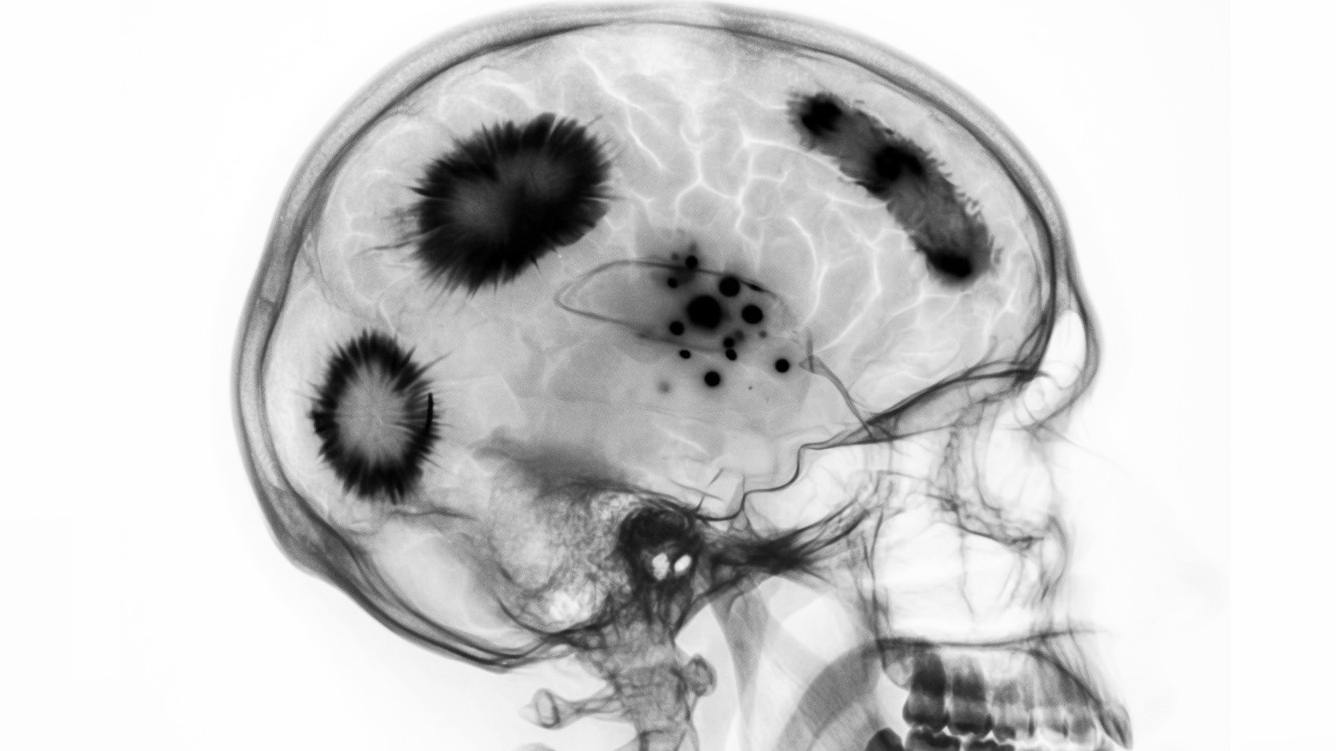
Fakewhale Studio, Output XA264, 2026
In the spring of 2026, as Neuralink announced plans for high-volume production of brain-computer interfaces, enabling early patients to play video games, browse the internet, and post on social media through thought alone, and as leading public health journals declared “dopamine-scrolling” a modern epidemic reshaping attention and mental wellbeing, the stakes of entertainment’s twenty-year metamorphosis have never been clearer. Twenty years ago, the domestic altar of the cathode-ray tube still commanded collective rituals of prime-time viewing, a vertical flow that synchronized families in moments of shared, if passive, attention. The individual stood before the image as if before a monolithic oracle, the screen’s physical frame preserving a critical distance between real space and representation. (…)
Post-Media Logics and Conditions, from TV to Social Networks: The Evolution and Engineering of Entertainment

Fakewhale Studio, Output XA268 2026
Television acted on the mass; the social network acts on the nerve fiber of the individual. This evolution has sanctioned the transition from centralized control of the narrative to the molecular management of desire, where every digital gesture is reprocessed to feed the engagement machine.
The result is a new form of subjectivity defined by its own interactions, in a regime of permanent visibility that transforms intimacy into aesthetic capital. Entertainment, once confined to precise time segments, has become the very fabric of daily life, an algorithmic fog enveloping every moment of emptiness. (…)

The television image possessed a material density and a static nature that still allowed for a form of critical detachment, as the device was clearly identifiable as an external object, an interface bounded by an insurmountable physical frame. With the progressive erosion of the television’s centrality, accelerated by the fragmentation of channels and the rise of video-on-demand services, we have witnessed the dismantling of the concept of ‘prime time,’ that moment of temporal convergence that once defined a community’s social identity.
The first cracks appeared with the proliferation of cable and satellite offerings; they widened dramatically with Netflix’s 2013 global expansion and the subsequent streaming wars, which began to undermine the solidity of scheduled broadcasting and introduced the seed of personalization that would later find its ultimate fulfillment in social networks. (…)
Explore the full Article↓

Meta Tribe v2: The AI Model That Predicts If Your Content Will “Perform Well”

Fakewhale Studio, Output XA271, 2026
On March 26, 2026, Meta released Tribe v2, a tri-modal foundation model trained to predict how the human brain responds to complex stimuli: images, sounds, videos, and language. It represents a true digital twin of neural activity, capable of generating high-resolution brain activation maps across 70,000 voxels (a 70-fold increase compared to previous models) from over 1,000 hours of fMRI recordings collected from 720 healthy volunteers. The model enables zero-shot predictions for new subjects, languages, and tasks, outperforming traditional linear encoding models by several factors.
For content creators, marketers, and advertising agencies, this opens a fascinating scenario: predicting in advance whether a video, post, or campaign will “perform well”, that is, whether it will stimulate attention, positive emotions, low cognitive load, and thus engagement or virality, without having to conduct costly tests with real subjects or relying solely on superficial metrics like views and clicks. In theory, the potential is almost limitless: testing thousands of variants in seconds, optimizing cuts, music, texts, and framing to maximize positive brain impact. (…)

Fakewhale Studio, Output XA274, 2026
Yet, just over a month after launch (May 2026), while the scientific community enthusiastically welcomes the possibilities of in silico neuroscience (testing hypotheses without human volunteers, accelerating research on neurological disorders), concrete adoption in the world of content creation and marketing remains still embryonic. A few experimental tools (like tribeV2_ViralAnalyser for Windows), isolated experiments on Reddit and LinkedIn, and media hype on Medium and Instagram, but no mainstream integration into creators’ workflows or platforms like CapCut, Adobe Premiere, or Meta Ads Manager. Why this gap between the stunning theoretical potential and such limited real adoption? This article explores data, barriers, opportunities, and the path forward. (…)
Explore the full Article↓