
Fakewhale Studio, OUTPUT y 85
We are no longer looking at tools. We are inside them. AI is no longer a mirror, it is the fog itself. As Born Inside the Tool suggests, intelligence is not arriving from outside to illuminate us, but forming within, metabolizing our gestures, normalizing its presence until the question is no longer “What is it?” but “Where does it end?” The human as author dissolves, not in disappearance, but in diffusion. Like the works in Sindelfingen, where meaning does not reside in the center, but pulses from the edges, drifting between dreams, maps, temperatures.
And if the machine watches us with no eyes, Ding’s sculptural organisms remind us that we, too, are watched by structures we do not fully sense. Tubes breathe, signals blink, life mimics data, and data mimics life, until one cannot tell whether the spiral is cooling or coiling to strike. The body, once agent, is now interface.
Elsewhere, Rojas turns surfaces into skin and spells, where archetypes, Mother, Witch, Monster, Guide, fold into each other like symbols seen through water. Her spiral does not swirl inwards, but spreads like a haunting, organizing and unmaking sense in the same breath. Her gesture rhymes with Porritt’s, whose drawings are less answers than suspensions, questions left to echo in paper, ink, time.
And then there’s Roger, the gallery owner who reminds us that understanding is not the point. That art is not a thing to grasp, but a fog to move through. The more we seek to decode, the more we’re asked to feel, to notice, how even clarity can be a kind of blindness.
So we spiral, again. Not towards resolution, but toward sensation. Toward the atmospheric, the relational, the barely perceptible tremor of a machine that no longer speaks, but shapes the silence we inhabit.
What if the real question is no longer what art means, but whether meaning, now, is even the right medium?
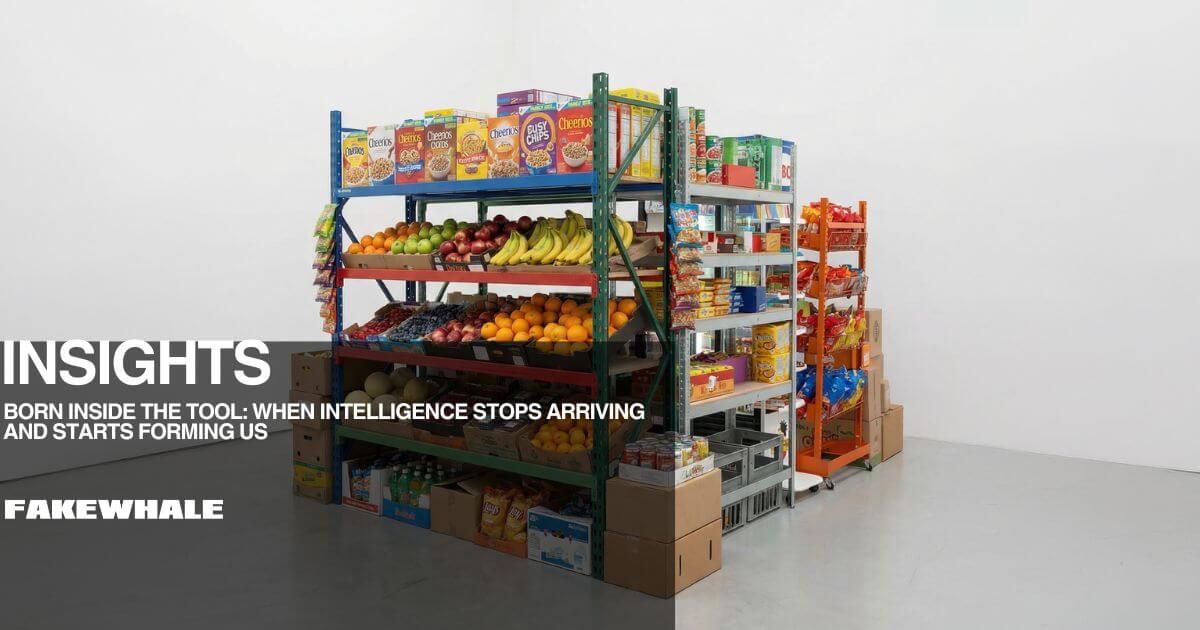
INSIGHTS/ Born Inside the Tool: When Intelligence Stops Arriving and Starts Forming Us

Fakewhale Studio, OUTPUT y 83
In recent years, artificial intelligence has taken a central place in artistic and cultural debate, not so much for what it produces, but for what it represents. It has been read as a threshold, a rupture, a promise, or a threat. In this initial phase, AI functioned primarily as a symbolic device, a condenser of narratives reflecting collective anxieties, technological expectations, and unresolved tensions surrounding the role of the human in creative processes.
Today, however, this symbolic centrality is gradually eroding. Artificial intelligence is no longer an exception to be foregrounded, but a pervasive presence integrated into the flows of cultural production. In the contemporary art world, AI is ceasing to be a topic and becoming an operational condition, an environmental element that structures practices, temporalities, and modes of work without necessarily announcing itself.

Fakewhale Studio, OUTPUT y 83
This shift marks a crucial transition, from AI as an ideological event to AI as an everyday medium. This does not imply a neutralization of its impact, but rather its normalization. When technology loses its spectacular character, it becomes possible to observe its cultural, political, and symbolic effects with greater clarity.
This article examines this transition by questioning how artificial intelligence is reshaping the role of the artist, authorship, and institutions, ultimately challenging the very need to assign explicit meaning to the use of technology. The question is no longer what AI means for art, but what kind of art becomes possible in a world where AI is already part of the environment. (…) (…)
CONTINUE READING ↓
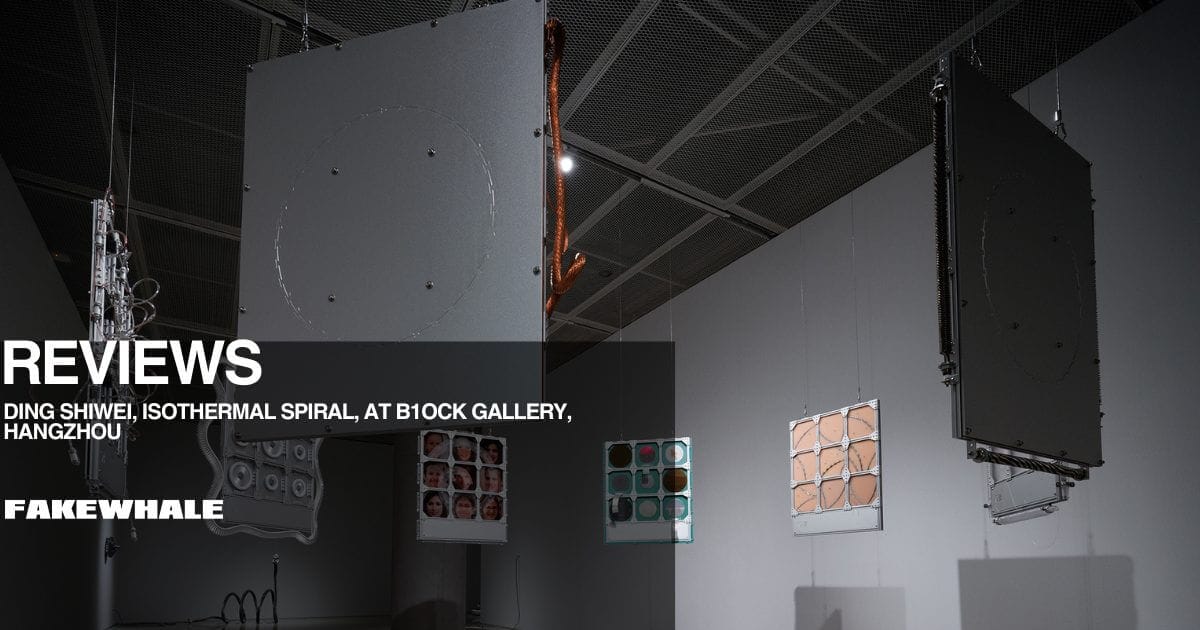
REVIEWS/ Ding Shiwei, Isothermal Spiral, at B1OCK GALLERY, Hangzhou

Exhibition view: Isothermal Spiral, Ding Shiwei, B1OCK GALLERY, Hangzhou.
There are spirals that soothe, and spirals that swallow. This one does both.
The moment you step into Isothermal Spiral, you’re no longer simply inside an exhibition, but inside an atmosphere, dense, pulsing, uncannily alert. The title whispers a scientific promise, “isothermal,” a term of thermodynamic balance. But what unfolds is something else entirely, a drama of dysfunction and biomimicry, of heat that thinks and tubes that breathe. Ding Shiwei hasn’t merely sculpted forms, he has staged an ecology of interface. Here, perception isn’t passive, it is processed, diverted, confused. You don’t look at the work, you are absorbed into its cycle.
The space is dark, precise, eerily silent, as if under surveillance. Spotlights isolate each organism-sculpture, creating zones of clinical reverence, as if every object were a patient or a sensor. The floor glows faintly, crossed by luminous signals. Corrugated tubes rise and twist, part snake, part conduit, part question mark. There is almost no sound, yet you feel the pressure of being watched by machines that have no eyes.

Exhibition view: Isothermal Spiral, Ding Shiwei, B1OCK GALLERY, Hangzhou.
Materially, Ding begins with the familiar and pushes it toward estrangement. Industrial hoses, cooling ducts, electrical wiring, components scavenged from the hidden back-end of media infrastructure, are reassembled into sinuous, animal-like configurations. One tube rises as if listening, another coils languidly, tipped with a metallic probe. In a corner, a tangle of semi-living limbs houses small circular screens that emit dim, unreadable signals. These are not objects to be understood. They want to be sensed. “Isothermal” here no longer means balance, but submission, the human body folded into feedback loops it cannot flee or decode.
Suspended from the ceiling or hanging on the walls, gridded panels resemble skins torn from machines. Some display fragmented faces, others diagrams, others something like abstracted memory. Even the ceiling becomes part of the work, a massive tubular spine slithers overhead, encircling the gallery like a parasite too large to be seen in full. This is not metaphor, it is system. (…)
Isothermal Spiral by Ding Shiwei, at B1OCK GALLERY, Hangzhou, 17/11/2025 – 04/01/2026.
CONTINUE READING ↓
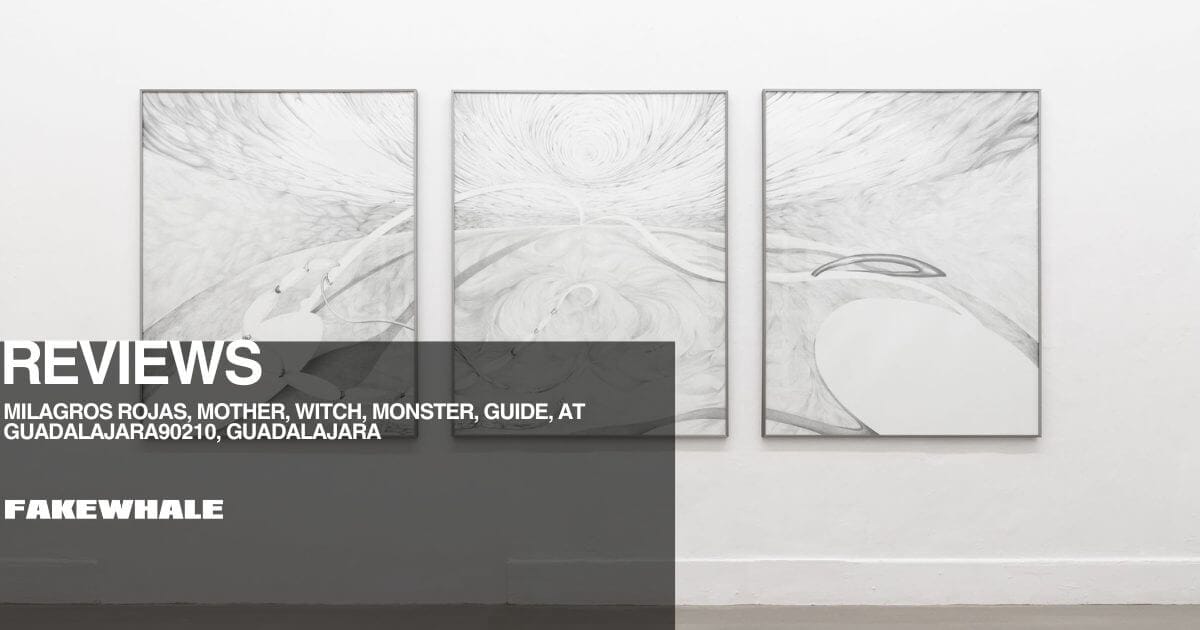
REVIEWS/ Milagros Rojas, Mother, Witch, Monster, Guide, at guadalajara90210, Guadalajara

Exhibition view: Mother, Witch, Monster, Guide, Milagros Rojas, guadalajara90210, Guadalajara.
If I were to stare at my hands upon entering the exhibition space, I’d see a spiral too, the same shape that once terrified Blaise Pascal. A form that tightens and expands at once, that gestures toward the infinite only to recoil from it, like a thought coiling beneath the visitor’s skin. Stepping into guadalajara90210, the spiral follows me, not as ornament, but as an intelligence: organizing, repeating, and subtracting meaning as it moves. What does it mean to inhabit a surface that feels like both promise and threat? It’s a question that clings to you, slowly, sharply, as you move through Mother, Witch, Monster, Guide. Rojas doesn’t merely invite you to look, she asks you to navigate a mesh of signs, tensions, and absences that refuse to remain silent. (…)
Mother, Witch, Monster, Guide by Milagros Rojas, at guadalajara90210, Guadalajara, 27/09/2025 – 20/12/2025.
CONTINUE READING ↓
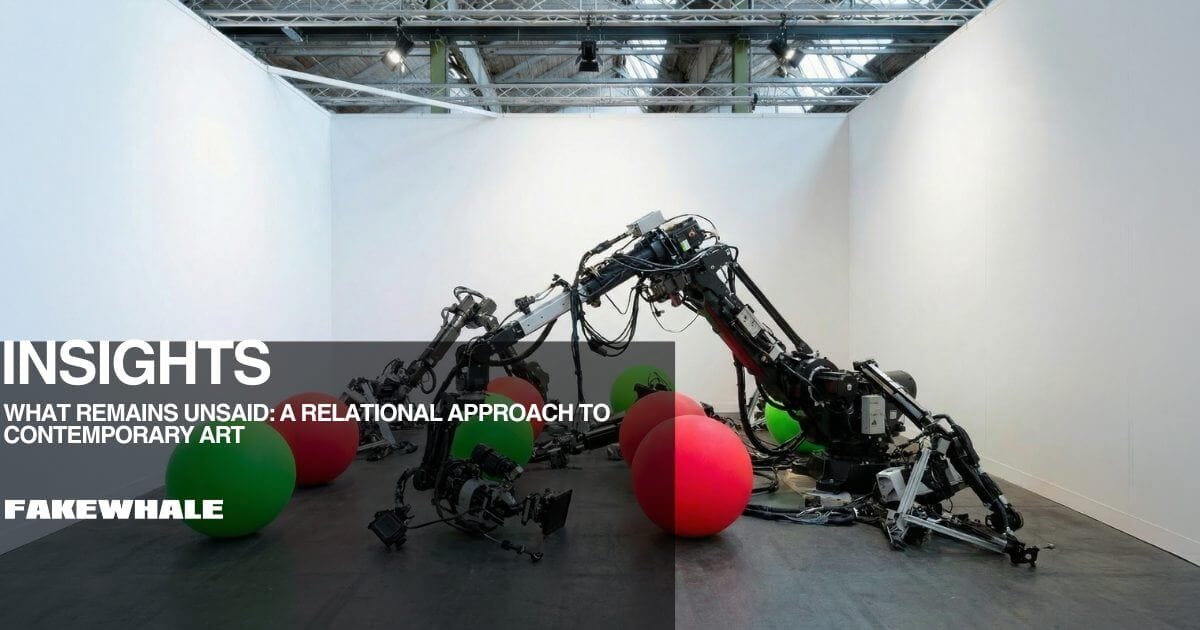
INSIGHTS/ What Remains Unsaid: A Relational Approach to Contemporary Art

AI-generated image created by Fakewhale.
The truth, old Roger liked to say, is that no one really understands contemporary art. “It’s already a miracle if the professionals understand anything at all…” he would sigh, lighting yet another cigarette behind the counter of his small gallery, which he had run for years in a remote corner of northern Washington State. A respectable place, of course, but still peripheral to the major art centers.
And it almost made us laugh, because he spoke as though there were actually something to understand. As though comprehension were a clear destination, a reachable end point. Yet the very idea of understanding, in contemporary art, is a slippery terrain: a semantic swamp where every step sinks into a new patch of quicksand. One does not advance through certainties here, but through approximations, attempts, hypotheses that last only as long as a gesture.

AI-generated image created by Fakewhale.
Roger knew this. Which is perhaps why he never spoke of “understanding” but of entering the work. He said that art is not something to be understood; it is something to be crossed, like a fog-drenched landscape where one glimpses more than one could ever grasp. The point is not to understand, but to accept that something will always escape us. (…)
CONTINUE READING ↓
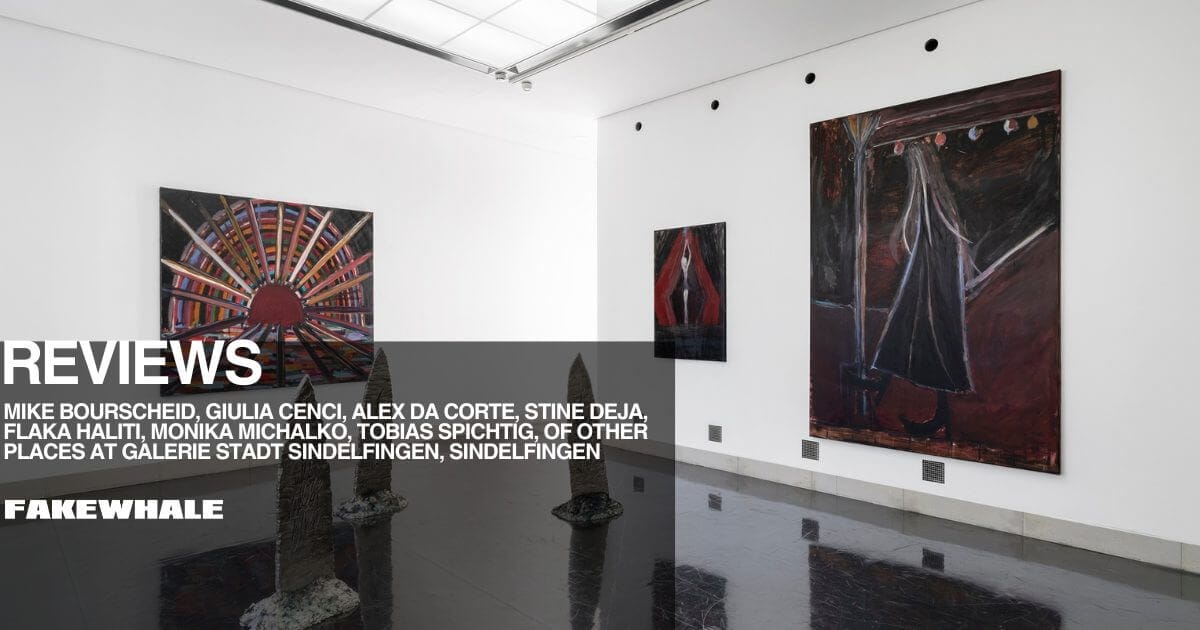
REVIEWS/ Mike Bourscheid, Giulia Cenci, Alex Da Corte, Stine Deja, Flaka Haliti, Monika Michalko, Tobias Spichtig, Of Other Places at Galerie Stadt Sindelfingen, Sindelfingen

Exhibition view: Of Other Places, Mike Bourscheid, Giulia Cenci, Alex Da Corte, Stine Deja, Flaka Haliti, Monika Michalko, Tobias Spichtig, curated by Hannah Eckstein, Galerie Stadt Sindelfingen, Sindelfingen. Courtesy of Galerie Stadt Sindelfingen.
What could be more real than a place that doesn’t exist? A space that mirrors our world like a funhouse mirror, not returning what we are, but what we might be, or what we’ve repressed. The moment you step into the Galerie Stadt Sindelfingen and the city’s noise dissolves behind you, Foucault comes to mind, with his idea of “heterotopia.” But here, it’s not just a concept; it’s a slippery path, a series of rooms that feel like lucid dreams or gentle nightmares. I found myself wondering: can one place contain many without collapsing? Can reality withstand so many fractures, so many alternatives? The exhibition Of Other Places, curated by Hannah Eckstein, doesn’t offer answers. It suggests them. It whispers them.

Exhibition view: Of Other Places, Mike Bourscheid, Giulia Cenci, Alex Da Corte, Stine Deja, Flaka Haliti, Monika Michalko, Tobias Spichtig, curated by Hannah Eckstein, Galerie Stadt Sindelfingen, Sindelfingen. Courtesy of Galerie Stadt Sindelfingen.
The exhibition unfolds like a map without a legend. No center, no cardinal directions. One moves by pull or disorientation. The lighting is precise, never invasive, leaving room for shadows, not the physical kind, but conceptual ones. Each room pulses with a different temperature, as if moving through emotional microclimates: a sterile blue here, an earthy red there. The works don’t converse; they watch each other from a distance, like satellites in orbit, each with its own gravity. (…)
Of Other Places by Mike Bourscheid, Giulia Cenci, Alex Da Corte, Stine Deja, Flaka Haliti, Monika Michalko, Tobias Spichtig, curated by Hannah Eckstein, at Galerie Stadt Sindelfingen, Sindelfingen, 16/11/2025 – 22/03/2026.
CONTINUE READING ↓
REVIEWS/ Sam Porritt, One Thing After Another (Drawings 2005–2025), at Kunst Halle Sankt Gallen, St.Gallen

Exhibition view: One Thing After Another (Drawings 2005–2025), Sam Porritt, curated by Giovanni Carmine, Kunst Halle Sankt Gallen, St.Gallen.
“What are we doing here? And why should we care?”
The question opens the exhibition like a short, disarming breath.
In the calibrated silence of Kunst Halle Sankt Gallen, One Thing After Another is not simply a retrospective. It is a line that complicates itself, knots, transforms. Sam Porritt guides us through twenty years of drawing as a daily practice, as an immediate and irreversible gesture, as an essential language for navigating the disorder of the world. No virtuosity, no illusion, only line, colour, form. And a hand that tries, draws, fails, repeats, as if every sheet were a question left deliberately open.
The exhibition space is bright, austere, almost disciplined. Yet the work is not so much observed as walked through. Sheets cover entire walls, sometimes arranged in tight grids, sometimes allowed to breathe. The journey begins with black ink on white paper, Porritt’s chosen medium for more than a decade. The early works reveal a searching mind. Between gestural tangles and recognisable forms, a constant tension unfolds between abstraction and figuration, between chance and intention. It is not so much about what is seen, but about how seeing begins. A face appears, then vanishes. A line coils, twists, then turns into a cage. (…)
One Thing After Another (Drawings 2005–2025) by Sam Porritt, curated by Giovanni Carmine, at Kunst Halle Sankt Gallen, St.Gallen, 29/11/2025 – 15/02/2026.
CONTINUE READING ↓

REVIEWS/ SUCK MY CODE! at Exhibit Galerie, Vienna

Exhibition view: SUCK MY CODE!, Anna Ehrenstein & House of Tupamaras, Anan Fries, Anja Lekavski & Rosanna Marie Pondorf, Christiane Peschek, Patrícia J. Reis, Sophie Thun, RA Walden, VNS Matrix, curated by Rosanna Marie Pondorf and Mareike Schwarz, Exhibit Galerie, Vienna. PH: ©VincentEntekhabi
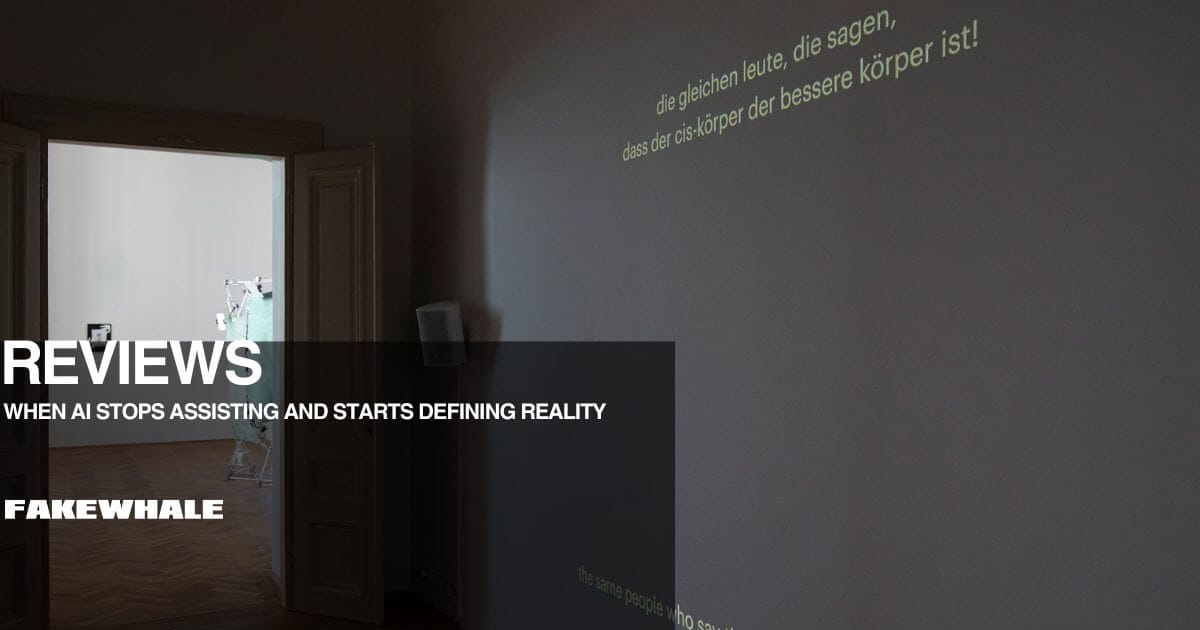
As we cross the threshold of the exhibition, a blunt, almost childlike choice comes back to us, spit or swallow. The thought arrives before looking really begins, like a conditioned reflex, while the air seems to vibrate with a held tension. In a time when FLINTA* bodies are constantly translated into data, over sexualized to the point of exhaustion or erased with equal efficiency, we find ourselves asking who is speaking, and in what language. The answer never takes the form of a manifesto. Instead, it appears as interference, an error that forces us to slow down, to remain inside the question.
The space of Exhibit Galerie is permeated by an unstable light, never purely functional, guiding visitors through a deliberately non linear path. Movement feels like navigating a system that refuses optimization, detours are necessary, backtracking inevitable, pauses unavoidable in front of works that seem to look back at us. The circulation of bodies is never neutral, it becomes an integral part of the exhibition, another layer of material. Digital and analog forms coexist without striving for reconciliation, instead they brush against and contradict one another, making visible how deeply technology is entangled with our physical existence.
SUCK MY CODE! by Anna Ehrenstein & House of Tupamaras, Anan Fries, Anja Lekavski & Rosanna Marie Pondorf, Christiane Peschek, Patrícia J. Reis, Sophie Thun, RA Walden, VNS Matrix, curated by Rosanna Marie Pondorf and Mareike Schwarz, at Exhibit Galerie, Vienna, 6.11.2025–8.2.2026.
CONTINUE READING ↓
REVIEWS/ Charlotte Thrane, Everest Life at DISPLAY, Parma

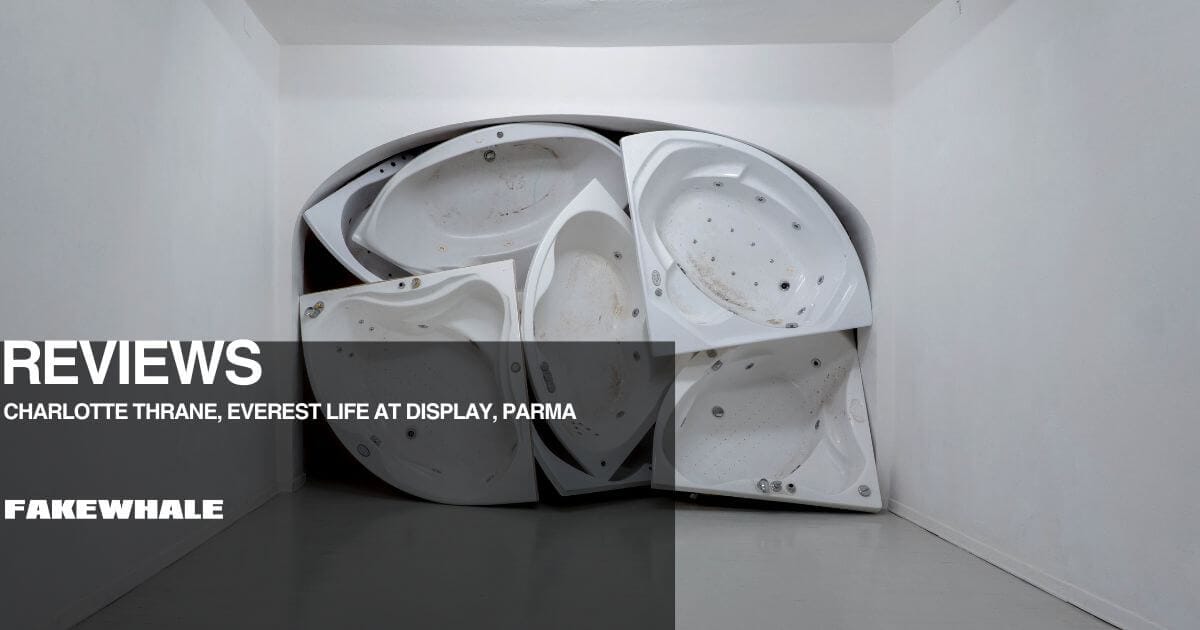
Exhibition view: Everest Life, Charlotte Thrane, curated by Ilaria Monti, DISPLAY, Parma.
Inside DISPLAY in Parma, Charlotte Thrane has composed a poetic graveyard of domesticity, a monument to prefab comfort stripped of its name. The hot tubs, once labeled with catalog names like “Tahiti,” “Eden,” “Dream,” now reappear in clusters, altered, stacked like tectonic plates of a landscape that no longer serves. No longer functional objects, but remnants, husks, matter that becomes memory.
The installation draws on the architecture of the space with almost musical precision: the arched glass façade and its internal echo are mirrored in the soft profiles of the tubs, arranged in a spiral that leads the eye toward a hypothetical center, like a drain. There’s a sense of still motion, a tension between centrifugal force and centripetal pull: the show unfolds in a loop, repeating itself, drawing you in. Silence is thick, interrupted only by the sound of your own steps. The glossy white of the surfaces, dulled by dust and natural light, mimics corrupted marble, an industrial echo of the Baroque, or, as curator Ilaria Monti suggests, a “synthetic Baroque,” feeding on contradictions: spectacle and oblivion, luxury and decay, the body and its absence.
Everest Life by Charlotte Thrane, curated by Ilaria Monti, at DISPLAY, Parma, 13.12.2025 – 25.01.2026.
CONTINUE READING ↓
REVIEWS/ Erris Huigens, Anti-Monuments at FORM, Wageningen / Amsterdam

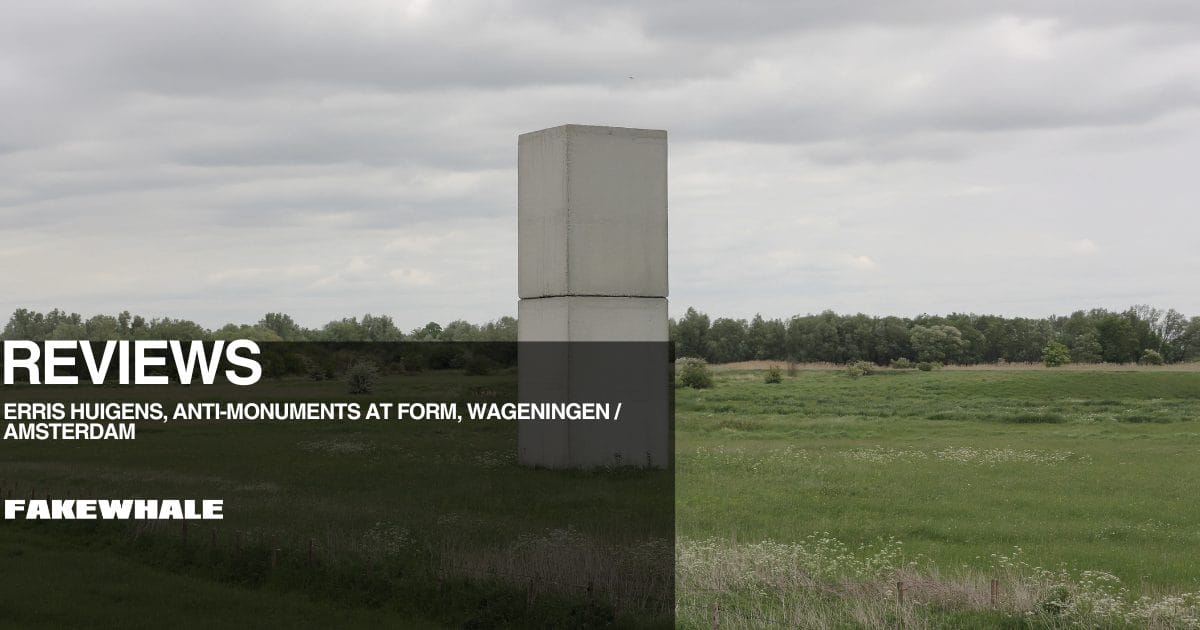
Erris Huigens, Anti Monuments, at FORM, Wageningen / Amsterdam, 5–30 January 2026, video still, courtesy of the artist and FORM, Wageningen / Amsterdam.
“They are not meant to be read, they are meant to be encountered.”
We began in silence. Or rather, we were received by silence, the kind of dense quiet that does not precede speech, but presence. Before images, before gestures, before meaning, there was concrete: bare, self-contained, unyielding. What are we to make of a block that explains nothing, of a gesture that offers no path toward us? Perhaps this is precisely the point, to be thrown into a space that resists deciphering, asking instead to be inhabited in its density. This is Anti-Monuments, and rather than beginning, it continues, without our consent, and without the promise of revelation.
Erris Huigens’s exhibition unfolds as a single-channel video work. No rooms to traverse, no customary objects. This time, no labels to guide us, no surfaces to touch or scrutinize. We move instead through a sequence of sparse, motionless shots: transitional sites, half-built, half-forgotten, where blocks of concrete have been inserted not as additions, but as interruptions. In this video work, viewing itself becomes architecture. The rhythm is slow, controlled, indifferent to narrative expectation. We find ourselves drifting through a geography of friction. (…)
Anti-Monuments by Erris Huigens, at FORM, Wageningen / Amsterdam, 5–30 January 2026.
CONTINUE READING ↓
EXPLORE THE LATEST ARTICLES ↓
That wraps this week’s issue of the Fakewhale Newsletter, be sure to check in for the next one for more insights into the Fakewhale ecosystem!


1